
The Istiqlal Party has entered an advanced stage in its preparations for the highly anticipated legislative elections scheduled for September 23, 2026. The party's leadership is shifting from internal candidate management to a comprehensive reconfiguration of its electoral map across several constituencies, revealing early indications of the competitive landscape that will characterize the upcoming electoral process.
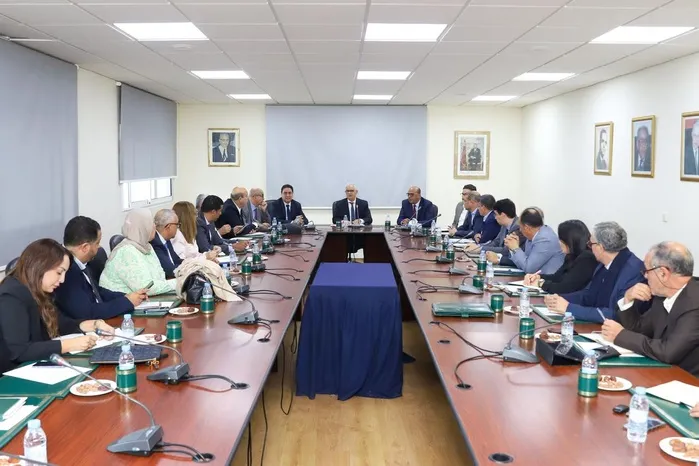
Following a meeting of the party's executive committee on Monday, August 3, a new wave of endorsements was announced. This decision came after a thorough review of the submitted applications, which were scrutinized by the ethics and conduct committee. The leadership asserts that this initiative aims to align candidacies with the principles outlined in the party’s statutes and internal code of conduct.
The latest endorsements spanned various regions from north to south, signaling the party's intention to expedite the formation of its local lists without waiting for the election date to finalize candidate selections. For instance, in the Tangier-Tetouan-Al Hoceima region, the party nominated Mohamed Hammoudani to lead its list in the Al Hoceima constituency. Meanwhile, in the Eastern region, it selected Touhatouh Mohamadi for the Nador constituency, a candidate who previously belonged to the National Rally of Independents, a member of the ruling coalition.
Similar decisive moves were made in the Fez-Meknes region, where the party backed Hassan Slihgou in the northern Fez constituency, Hassan Yamani in the Meknes constituency, and Mohamed Soufan in the Taounate-Tissa constituency. In the Marrakech-Safi region, the party chose Abdel Aziz Drouich for the Sidi Youssef Ben Ali constituency, while in the Rabat-Salé area, Idris Sentissi, a former leader and parliamentarian from the Popular Movement Party, was nominated for the Salé City constituency.
In the Béni Mellal-Khénifra region, the party confirmed the candidacy of Abdel Ali Broki for the Azilal-Demnat constituency, while in the Marrakech-Safi region, Drouich was also selected for the city of Sidi Youssef Ben Ali, alongside Chadi Bouloon for the Tan Tan constituency.
However, the significance of this batch of nominations extends beyond the number of names announced; it lies in the nature of the political choices behind them. Attracting candidates with prior experience from other parties, particularly those within the ruling majority, indicates that electoral competition is beginning to assert itself within the government coalition even before the ballots are cast.
This aspect is especially crucial given that the parties forming the ruling majority are also preparing for the same electoral event, turning many local constituencies into potential battlegrounds for candidates affiliated with political factions that are expected to collaborate within the government. Nevertheless, they are entering the elections with different strategies dictated by calculations surrounding seats, local presence, and the ability to mobilize voters.
From this perspective, the Istiqlal Party's maneuvers appear to be aimed at effectively reshaping its local electoral presence by combining the retention of established party names with the introduction of candidates who possess significant electoral networks and a robust on-ground presence, thus allowing the party to broaden its maneuverability in constituencies that require strong contenders rather than limiting itself to the traditional internal nomination logic.
This dynamic is unfolding within a political context that is gradually witnessing parties transition from internal preparation to testing their strength on the ground. As the September 23 date approaches, the candidate selection process is shifting from an organizational decision to a crucial factor in shaping local alliances, attracting influential actors, and redistributing centers of power within various constituencies.
The party's recourse to the ethics and conduct committee for candidate vetting adds an organizational dimension to the process, as the leadership seeks to present endorsements as outcomes of an internal institutional path rather than mere responses to local electoral pressures. This approach provides the leadership with greater control over its choices, particularly during a phase where competition within the party regarding who has the right to run and who holds the best electoral prospects may intensify.
The second wave of endorsements simultaneously reveals that the Istiqlal Party's battle will not only be fought internally but will also be influenced by the leadership's capacity to reorganize its local map and attract personalities capable of altering the competitive balance in specific districts.
Future batches of endorsements are expected to provide clearer indicators regarding the party’s electoral vision, particularly in constituencies where the electoral ambitions of candidates from majority parties intersect. As the election date draws nearer, the distribution of nominations within these constituencies will become increasingly sensitive, potentially presenting the ruling coalition parties with a difficult test of how to balance governmental coexistence with electoral competition.
Therefore, the endorsement process should not be viewed merely as an organizational procedure to cover electoral districts, but rather as one of the initial arenas of actual electoral conflict. Parties that successfully finalize their candidates early will have more time to build their local campaigns, organize their networks, attract influential stakeholders, and gauge voter trends before entering the official campaign phase.
The Istiqlal Party presents this process as part of an ongoing effort to select candidates who embody the principles of competence, integrity, and merit, capable of representing citizens and advocating for their issues, while emphasizing the principles of accountability and responsibility.
However, what the upcoming endorsements reveal will be more significant than the organizational data themselves: Will the party succeed in transforming these endorsements into actual electoral strength? Will attracting figures from the majority parties enhance its position within the coalition, or will it expand the competitive landscape among its components before the election day? These questions will gradually find answers as the electoral map of parties becomes clearer and the competition shifts from the offices of political organizations to the constituencies that will ultimately determine the balance of power in the upcoming parliament.
As reported by kechpresse.com.