
Italian Foreign Minister's Tough Stance on Morocco
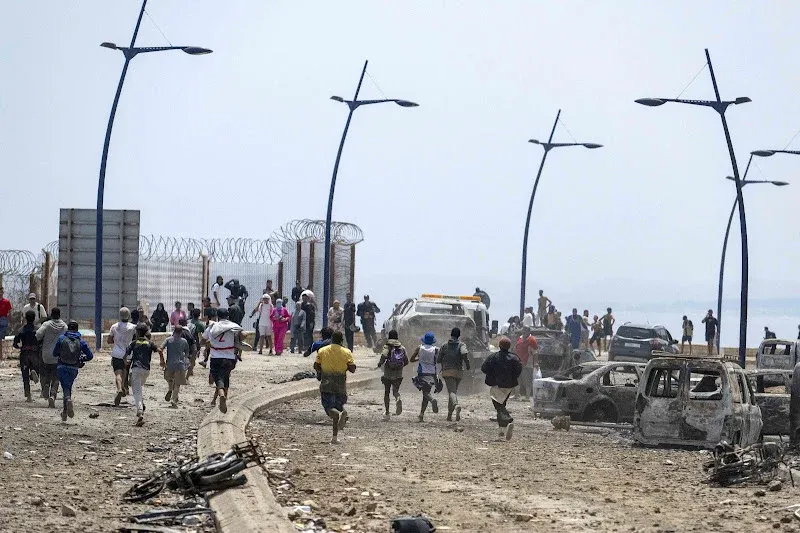
In a recent escalation, Italian Foreign Minister Antonio Tajani has intensified his rhetoric towards Morocco amid rising tensions between Rome and Madrid over immigration management. The Italian government's decision to tighten border controls follows a significant increase in attempted crossings towards the occupied city of Ceuta, raising alarms within Spanish security agencies regarding a potential new wave of migrants. In an interview with the Italian newspaper "Corriere della Sera," which was published by the Italian Ministry of Foreign Affairs, Tajani defended the measures taken by Italy, denying accusations that Rome is engaged in a "battle" against Spain. He emphasized that the Italian authorities are merely enhancing monitoring of incoming migrants, having already prevented individuals from entering the country for failing to meet entry requirements.
Tajani's statements came in response to concerns regarding the situation in Ceuta, where he cited warnings from Spanish intelligence about the likelihood of a new influx of migrants. He pointed out that these warnings also encompass terrorism-related risks, reinforcing the need for vigilance and caution as the situation unfolds. In a direct message to Madrid, Tajani remarked that rather than worrying about Italy's actions, Spain should focus on addressing issues originating from Morocco, implying that the root of the migration challenges lies there. He stressed the importance of preventing irregular migrants and potential terrorists from reaching Europe.
Moroccan Response to Italian Accusations
The Moroccan response to Tajani's remarks was swift and emphatic. Sidati Benmessaoud, the president of the Dcheira municipality in Laayoune, condemned the Italian Foreign Minister's statements as irresponsible accusations that overlook the complexities surrounding the migration issue. Benmessaoud articulated that linking Morocco to security problems and migration challenges in Ceuta presents a skewed interpretation of the facts. He reaffirmed Morocco's clear stance against using irregular migration as a tool of pressure and noted that the recent surge in attempted crossings is primarily driven by the activities of human trafficking networks that exploit vulnerable migrants.
Highlighting the collaborative efforts in managing migration, Benmessaoud emphasized the importance of joint responsibility and coordinated security measures with international partners. He rejected the notion of attributing the complexities of cross-border migration solely to Morocco, advocating instead for a comprehensive approach that addresses the root causes of migration issues and dismantles trafficking networks rather than assigning unilateral blame.
Similarly, Ramdane Masoud Al-Arabi, a member of the Royal Advisory Council for Saharan Affairs, echoed these sentiments, asserting that Tajani's comments reflect a narrow perspective that reduces the Ceuta crisis to mere migration issues while neglecting the broader political context. He mentioned that Morocco has consistently cooperated with Spain on immigration matters and has implemented measures to combat human smuggling and trafficking. Masoud underlined that the collective attempts to cross into Ceuta cannot simply be attributed to the Morocco-Spain relationship but rather are influenced by expansive cross-border criminal networks that exploit migrants’ precarious situations.
In conclusion, the discourse surrounding the migration crisis at Ceuta has resurfaced with renewed intensity, highlighting the need for responsible cooperation and dialogue among European partners. The Moroccan stance focuses on collaborative action against irregular migration while rejecting the framing of the kingdom as a scapegoat for broader European challenges. As the situation continues to evolve, it remains imperative for all involved parties to engage in constructive discussions rather than resorting to blame, fostering a more effective response to the complex realities of migration in the region.
As reported by hespress.com.