
Judge María Tardón is determined to uncover who might have been monitoring the border prior to the mass entry into Ceuta. She has taken significant steps to initiate an investigation into whether anyone requested satellite images of Moroccan territory in the days immediately leading up to and following July 30 and 31. Tardón has formally requested that the technology company HI Iberia provide a detailed account of all requests received between July 20 and August 7 for satellite imagery through its SEDA tool or any of its other platforms. This request is part of a ruling issued on Wednesday.
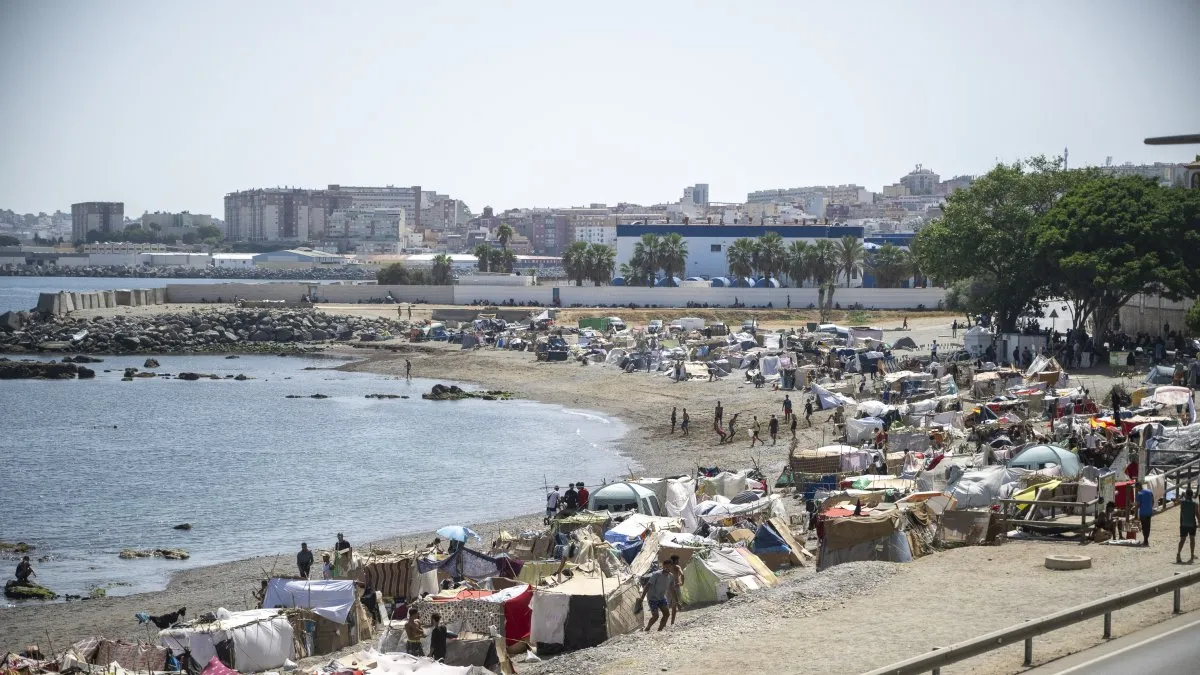
The geographical precision of this inquiry is noteworthy. The National Court seeks to understand any orders related to the border between Ceuta and Castillejos, specifically focusing on the area around El Tarajal, extending five kilometers into Moroccan territory and one kilometer into Spanish territory. If such requests were made, the company will need to identify who initiated them, whether it was an individual, a corporation, or a public entity. It is essential to note that the ruling does not assert that any images were indeed commissioned, nor does it point to any potential requestor; rather, it aims to determine if such requests existed and who was behind them.
In a broader scope, Tardón has expanded the investigation to include the Ministry of Defense. She has called upon the Defense Staff to provide available images of Fnideq, Morocco, and El Trampolín in Ceuta during the same timeframe, including those obtained by the Operations Command, CIFAS, and other military agencies.
Moreover, the magistrate's request goes beyond mere photographs. She has sought alerts and risk analyses that were prepared before the crisis, particularly focusing on their distribution: who received them, when they were sent, and through what means. Among the documents included are prior warnings from the National Intelligence Center (CNI) regarding calls to access Ceuta.
The investigation is also extending towards Morocco. The National Police and Civil Guard are tasked with identifying uniformed personnel depicted in images from Fnideq-Castillejos and reconstructing their operational chain of command during the critical days of July 29, 30, and 31. Tardón is meticulously tracing the digital and economic footprints of the mobilization. She has requested an investigation into social media accounts, group administrators, devices, and potential financial movements, while UDEF and UCO will scrutinize even informal money transfer systems. The judicial inquiry now begins several days before the events of July 30: who knew what and when.
As reported by esdiario.com.