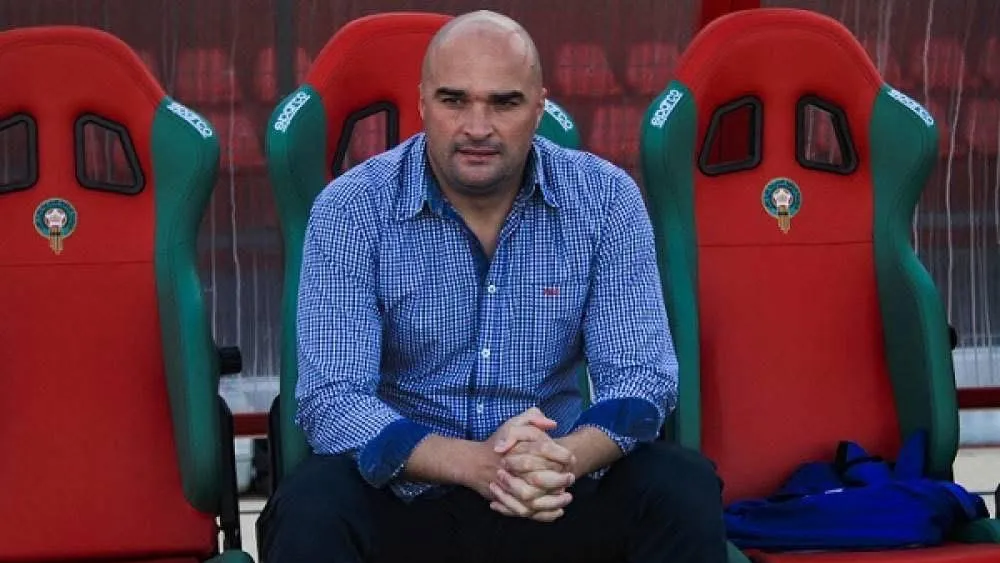

The recent decision by Reda Hakam to step down from his role as the coach of Kawkab Marrakech just days after his appointment has left supporters of the club in shock. This unexpected resignation not only marks a new chapter in the club's tumultuous journey but also reignites questions regarding its governance and the processes behind its sporting decisions.
In a statement on his Facebook page, Hakam revealed that he had submitted his resignation to club president Idriss Hanifa, citing the backlash generated by his appointment on social media. He expressed concerns about maintaining a serene environment and ensuring that his departure would not harm the club's interests, prompting him to withdraw before even beginning his tenure.
While this explanation sheds light on part of the situation, it does not encapsulate the complexity of the matter. Reports circulating within the club suggest that there were disagreements regarding the direction of this new sporting phase, particularly concerning technical choices and governance methods. However, at this point, these claims remain unverified by the club’s management.
This turn of events is particularly surprising given that Reda Hakam is credited with guiding Kawkab Marrakech back to the elite Botola Pro league, a feat that had long been anticipated by the club's loyal supporters. His name is synonymous with one of the most significant sporting achievements for KACM in recent years.
Following this promotion, Hicham Dmiî took on a challenging task as the new coach. He arrived after a difficult start to the season under Rachid Taoussi and successfully stabilized the team, ensuring their survival in the top tier of Moroccan football. Both coaches have played pivotal roles in the club's sporting reconstruction, and their successive departures under unique circumstances inevitably raise questions about the continuity of the sporting project.
These developments have sparked renewed discussions about what many observers describe as a lack of stability in the club's management. The recent changes within the coaching staff and player recruitment have fueled concerns, especially as Kawkab, freshly promoted to Botola Pro, desperately needs continuity to solidify its return to the top level.
Reda Hakam's departure once again leaves the head coach position vacant and reignites speculation around a potential return for Hicham Dmiî. Although his name is frequently mentioned in conversations about the club's future, several questions arise: Would he be willing to return given the circumstances of his departure, which many believe were misaligned with the success achieved? Would he have the necessary leeway to lead the sporting project, particularly regarding technical choices and recruitment?
Ultimately, the pressing issue extends beyond merely selecting the next coach. It concerns the club's ability to establish stable governance, clarify responsibilities, and build a coherent sporting project grounded in collaboration, continuity, and a long-term vision.
This season, Kawkab Marrakech has returned to the upper echelons of national football after a long and challenging journey. At this level of expectation, institutional stability becomes as crucial as the quality of the squad or the competencies of the technical staff.
In the coming days, clarity regarding the exact circumstances of Hakam's departure is anticipated. However, beyond the potential explanations that may emerge, the focus will now shift to the management's capacity to learn from this episode. Supporters, along with the broader Marrakech football community, are not merely awaiting the appointment of a new coach; they are hoping for decisive actions that promote peaceful governance, a clearly defined sporting vision, and lasting stability—elements essential for a club whose storied history and prestige demand management that meets its aspirations.
As reported by lopinion.ma.