Less than 24 hours after Senegalese President, Bissau Dioumaï Faye, announced the dismissal of Prime Minister Ousmane Sonko and the dissolution of his government, a royal decree was issued today, Saturday, granting a pardon to all Senegalese fans convicted in connection with the disturbances during the Africa Cup of Nations final. This decree, which was linked to the celebration of Eid al-Adha, highlighted the deep ties of brotherhood, friendship, and cooperation that consistently unite the Kingdom of Morocco and the Republic of Senegal. It embodies the enduring values and traditions that underpin Morocco's authentic identity, with a particular emphasis on compassion, mercy, kindness, generosity, and the spirit of tolerance. This gesture was viewed as a 'Eid gift' and a direct support for President Faye's initiative to rectify the bilateral relations.
In a swift response, President Faye expressed his gratitude in a post, stating, 'Our citizens who were imprisoned in Morocco due to events related to the Africa Cup of Nations are now free and will soon return to their families, thanks to the royal pardon graciously granted by His Majesty King Mohammed VI on the occasion of Eid al-Adha.' He further acknowledged the king's decision as a move with profound humanitarian implications and a spirit of forgiveness and compassion, stating, 'Senegal and Morocco continue to strengthen their longstanding brotherly relations, and this position reaffirms and solidifies them once again.'
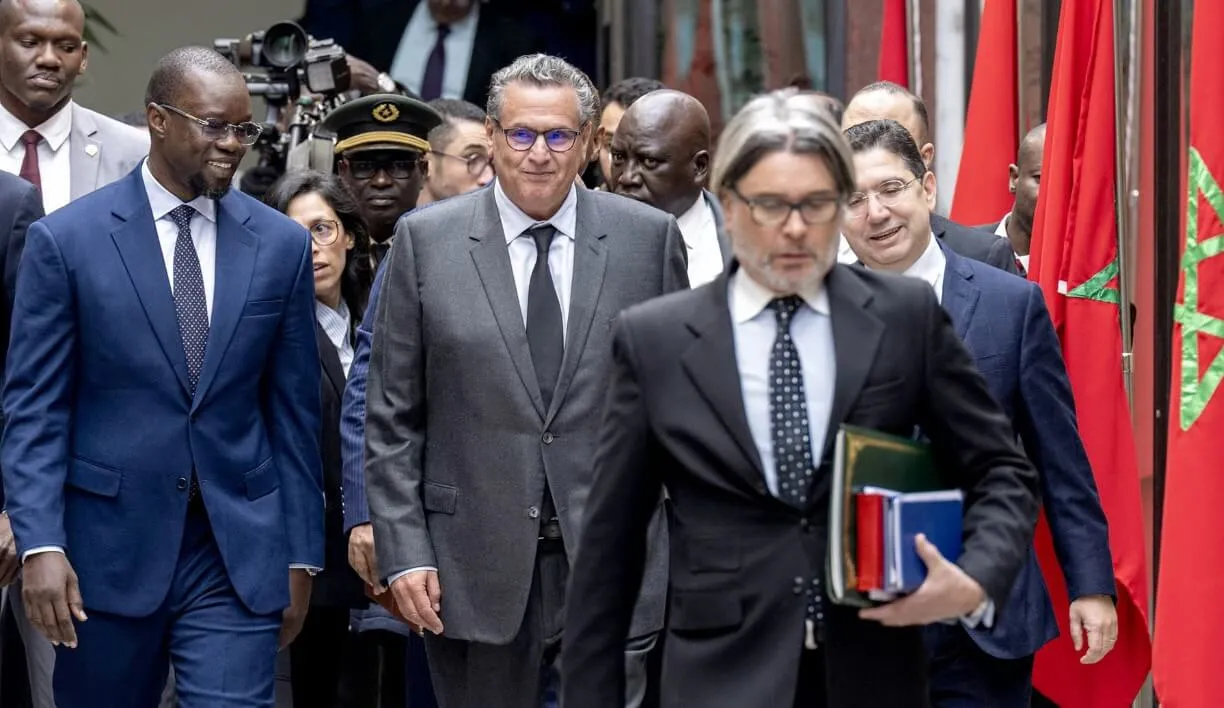
The initiative by the Moroccan monarch, coupled with the prompt response from the Senegalese president, signals a potential end to the tensions that had characterized their bilateral relations. The friction had been exacerbated by remarks from Prime Minister Ousmane Sonko, which seemed to escalate from a sports-related context to hinting at a shift in Senegal's historical stance on the Sahara issue. In January, Sonko had led members of the Senegalese government to Morocco shortly after the controversial final to participate in the high joint commission between the two countries, where they signed a joint declaration reaffirming Dakar's support for Morocco's territorial integrity. However, subsequent statements from Sonko undermined those commitments.
In February, during a parliamentary session, he threatened to challenge Moroccan judicial decisions and to address the lack of response from the royal institution regarding Senegal's requests for pardons, advocating for a prisoner exchange agreement between the two countries, despite the legal proceedings not having reached their conclusion. He asserted that the situation had 'exceeded the limits of sport.' The tension escalated further in April, when Sonko made comments at a Franco-Senegalese conference on sovereignty in Africa, referring to the existence of 55 countries on the continent, implicitly alluding to the so-called 'Saharan Republic,' despite Senegal having a consulate in the Sahara that acknowledges Morocco's sovereignty over the region.
Following months of visible discord, particularly between Dioumaï Faye and his party colleague Sonko, the Senegalese president decided to dismiss Sonko and dissolve his government, a decision announced via public television. This move was later complemented by King Mohammed VI's announcement regarding the resolution of the issue concerning Senegalese prisoners, which appeared to implicitly support the president's authority. The dismissal of Prime Minister Sonko marks a critical political turning point in the trajectory of diplomatic relations between Dakar and Rabat, as it reflects a bold step by President Faye to address deep-seated political disagreements that had emerged, notably the mismanagement of foreign policy and Sonko's uncalculated remarks towards Senegal's historical allies, particularly Morocco.
In recent months, Moroccan-Senegalese relations have faced significant challenges due to two primary issues: a sports-related crisis involving Senegalese fans who faced legal action in Morocco, and politically charged statements from the now-ousted Prime Minister Sonko. His controversial assertion that the African continent consists of '55 countries,' which implicitly included the separatist Polisario Front, was perceived by Rabat as a blatant departure from Senegal's historical foreign policy norms, particularly given Senegal's role as a staunch advocate for Morocco's territorial integrity and its active consulate in Dakhla since 2021.
The recent developments indicate that the Senegalese presidency under Bissau Dioumaï Faye was dissatisfied with this political drift that threatened to isolate Dakar from its African roots and its strategic relationship with Rabat. Consequently, the decision to dismiss Sonko was seen as a corrective measure to realign diplomatic ties and reaffirm Morocco's claim over the Sahara as a non-negotiable political point.
In a thoughtful political analysis, Morocco quickly seized the positive signal, and the royal pardon for Senegalese fans during Eid al-Adha was interpreted as a strong and direct message of support from King Mohammed VI to President Faye. This pardon, motivated by humanitarian considerations and historical brotherly ties, diffused public tensions and closed a chapter that Sonko had long exploited to leverage bilateral relations.
Historically, Senegal has been Morocco's closest partner in West Africa, regardless of the leadership in power, with both nations sharing significant political and economic interests. Additionally, the Senegalese community represents one of the largest foreign populations in Morocco, including students and residents.
As reported by assahifa.com.