
The Arab Defense website reports that Korean Aerospace Industries (KAI) is set to make its debut at the Marrakech International Air Show 2026, scheduled from October 7 to 10. This milestone signifies the growing interest of South Korea's defense industry in the Moroccan market. KAI's participation comes at a time when Morocco is increasingly looking towards South Korean military equipment, particularly in the realm of combat aviation. Recently, a high-level Moroccan delegation led by Minister Delegate for National Defense Administration Abdellatif Loudiyi engaged in discussions with KAI officials during the World Defense Exhibition in Riyadh last February. During this meeting, the FA-50 fighter jet was showcased as a potential option for modernizing the capabilities of the Royal Moroccan Air Force, with the possibility of replacing Alpha Jets in advanced training, support, and light combat missions.
Morocco's interest is not limited to aircraft, as recent reports indicate that the kingdom is evaluating several South Korean systems, including K2 Black Panther tanks and the Cheongung/KM-SAM air defense system. This interest extends to broader industrial and technological cooperation and the transfer of expertise. In return, South Korean companies are positioning themselves as long-term defense partners for Morocco rather than mere arms suppliers, aiming to leverage the kingdom as a gateway to the African market.
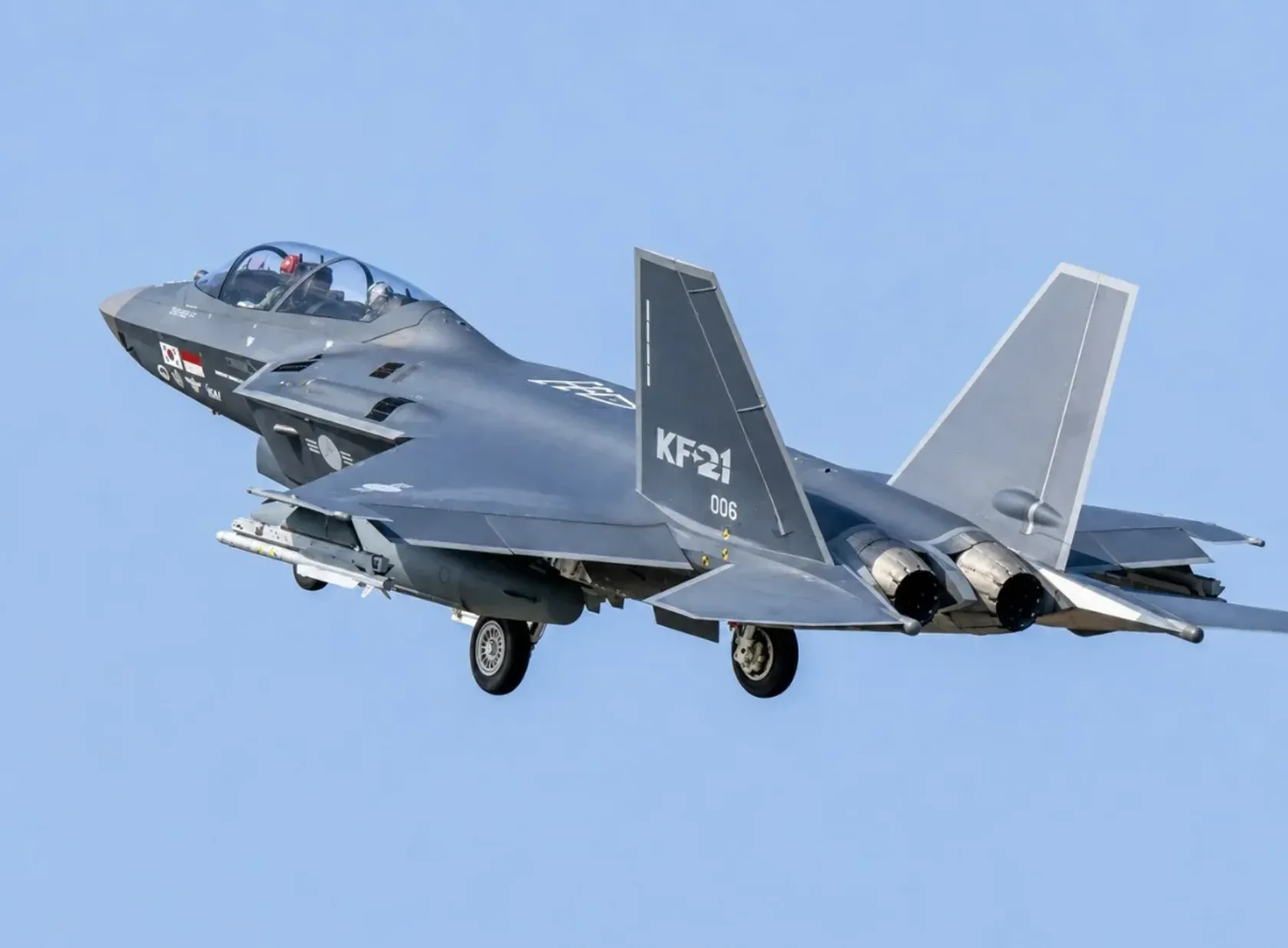
In the aviation sector, KAI appears to be one of the most active South Korean companies promoting its products in Morocco, seeking to present the FA-50 as a solution that combines advanced training and combat capabilities, taking advantage of its operational compatibility with the F-16 fighters that form the backbone of the Moroccan Air Force. KAI is also introducing the KF-21 Boramae program as part of its advanced portfolio, making the Marrakech Air Show an essential opportunity to showcase a broader range of solutions to Moroccan and African decision-makers and stakeholders.
This strategic engagement aligns with a broader trajectory to strengthen Moroccan-Korean defense cooperation, with negotiations between Rabat and Seoul ongoing since 2025 concerning a memorandum of understanding for collaboration in defense industries. Concurrently, South Korea is striving to enhance the presence of its companies in the defense and maritime sectors within Morocco.
Hence, KAI's participation in the Marrakech Air Show transcends mere commercial presence; it arrives at a time when South Korea aims to market its integrated defense systems to Morocco, while Rabat seeks new options to modernize its forces and diversify its sources of armament, increasingly focusing on partnerships that may include local manufacturing and technology transfer.
The South Korean KF-21 Boramae fighter jet represents a historic opportunity for Arab nations to transition from merely purchasing fighter jets to actively participating in the development and manufacturing of a new generation of combat aircraft. The KF-21 program has successfully transformed South Korea into a nation capable of designing, developing, and producing supersonic fighters domestically, supported by a robust industrial base comprising dozens of Korean companies.
The significance of this fighter jet is heightened for Arab countries as it approaches production and export phases, with KAI aiming to market the KF-21 in international markets, including interest from nations like Saudi Arabia, the UAE, the Philippines, Malaysia, and Indonesia. The importance of the program extends beyond the acquisition of the aircraft itself; it lies in the potential to leverage it as a gateway to deeper industrial partnerships that include manufacturing components, assembly, maintenance, and support, ultimately leading to higher levels of local production depending on the nature of each agreement.
Arab nations, particularly those with substantial defense budgets and industrial ambitions, have the opportunity to negotiate with South Korea on a model that transcends the traditional buyer-seller relationship. Early involvement in the KF-21 program could grant them a share in the industrial supply chain, local production of certain components, and the development of domestic capabilities in avionics, subsystems, and airframe structures, along with establishing advanced maintenance and repair facilities.
Indonesia stands out as a significant prior experience in this domain, having participated in the development of the KF-21 program and obtained rights related to technology transfer and production under the original agreement. However, disagreements over funding and the scope of technology transfer led to a restructuring of its participation, ultimately resulting in its withdrawal from joint local production plans in favor of purchasing aircraft directly from South Korea.
This situation presents an opportunity for Arab nations; any country with a substantial local market and adequate financial and industrial capabilities can pursue negotiations for a more ambitious framework, starting with the production of specific components and gradually evolving towards final assembly and joint production. However, acquiring the most sensitive technologies, particularly those related to engines, radar, and electronic warfare systems, will remain contingent on South Korea's decisions and restrictions on technology transfer.
From this perspective, the KF-21 is not merely a new fighter in the arms market but could serve as a platform for building industrial expertise in the field of combat aviation within Arab countries. Establishing an assembly line or manufacturing components for a modern fighter, training engineers and technicians, and creating a local network of companies capable of producing aircraft components could represent a crucial step towards acquiring the knowledge and infrastructure necessary for developing a future indigenous fighter or participating in more advanced programs.
As the KF-21 enters serial production and approaches international markets, the window of opportunity for Arab nations appears wide open. However, taking advantage of this opportunity will not involve simply purchasing the aircraft but rather negotiating from the outset for an industrial package that includes knowledge transfer and local production, making the deal a launchpad for building a capable Arab combat aviation industry capable of sustainable development in the long term.
A Moroccan delegation led by the Minister of Defense met with KAI officials during the 2026 World Defense Exhibition in Saudi Arabia, where a model of the FA-50 light fighter was presented to the Moroccan minister, with a backdrop image of the KF-21 fighter jet, indicating the company's interest in showcasing both aircraft to Morocco. The Moroccan-South Korean relationship is gradually shifting from traditional commercial cooperation to long-term strategic partnerships in vital sectors, paving the way for expanded cooperation to include defense and military industries, extending to the combat aviation sector.
In the railway sector, South Korean companies have made significant inroads into the Moroccan market; Hyundai Rotem won a contract in February 2025 valued at approximately 2.2 trillion won, or around 1.5 billion dollars, to supply electric trains to the National Office of Railways, marking the largest foreign railway deal in the company's history at that time. The partnership did not stop at train supply; in June 2026, Hyundai Rotem signed an additional contract valued at 748.2 billion won (about 487 million dollars) to maintain 440 vehicles for 20 years through a joint venture with the National Office of Railways. Additionally, KORAIL signed an agreement to oversee production and train Moroccan personnel, adding the element of expertise transfer and building local capabilities to the cooperation between both parties.
These developments gain further significance as they coincide with the expansion of defense cooperation. In 2026, indications emerged of Moroccan interest in KAI's FA-50 fighter, as a high-level Moroccan delegation led by Abdellatif Loudiyi engaged in discussions with the company's officials during the World Defense Exhibition in Riyadh, exploring military and technical cooperation, with the FA-50 presented as a potential option for modernizing Morocco's training and light combat fleet.
Thus, KAI's presence at the Marrakech International Air Show for the first time can be seen as more than just a marketing participation; the Korean company is entering a market where Korean companies have established a significant presence and initiated major projects, while simultaneously seeking to expand cooperation with Morocco in the defense and aviation sectors.
In this context, the KF-21 Boramae may not currently be a viable option for the Royal Moroccan Air Force, nor is there public information confirming ongoing negotiations regarding the purchase or manufacturing of the fighter. However, should the defense relationship between Rabat and Seoul evolve, the KF-21 program could potentially become a field for more ambitious industrial cooperation, especially as Morocco increasingly focuses on developing a local defense industry and attracting investments and technology transfer.
Rabat holds an important card represented by its local market and Morocco's position as a gateway to Africa, while South Korea seeks external markets for its fighter and partners capable of absorbing part of its production chain. Thus, cooperation could gradually evolve from purchasing Korean equipment to maintenance, assembly, and component manufacturing, ultimately – if political and industrial will is present – leading to greater participation in military aviation programs.
Consequently, the success of Hyundai Rotem and KORAIL in building long-term partnerships with Morocco may provide a model that KAI can leverage: rather than merely selling aircraft to Morocco, South Korea could aim to build an industrial cooperation system around it. If Rabat eventually gravitates towards the KF-21, its participation in the program may differ from the traditional buyer model, linking the deal to component manufacturing, maintenance capabilities development, engineer training, and possibly establishing an industrial base associated with the aircraft.
As reported by defense-arabic.com.