
Remembering Lalla Aicha: A Pioneer for Women's Rights in Morocco
Lalla Khadija, the youngest daughter of King Mohammed VI and sister to Crown Prince Moulay Hassan, currently shines as the 'jewel' of the Alaouite crown. However, long before her, there was another princess who shared her name and laid the groundwork for the women of the dynasty and a nation striving for independence while making its first strides towards modernity. This remarkable figure is Lalla Aicha, the daughter of Mohammed V and his second wife, Lalla Abla bint Tahar, and sister to Hassan II, the father of Mohammed VI. Lalla Aicha became a pivotal figure, advocating for education and the emancipation of women, ultimately changing the course of history in Morocco.
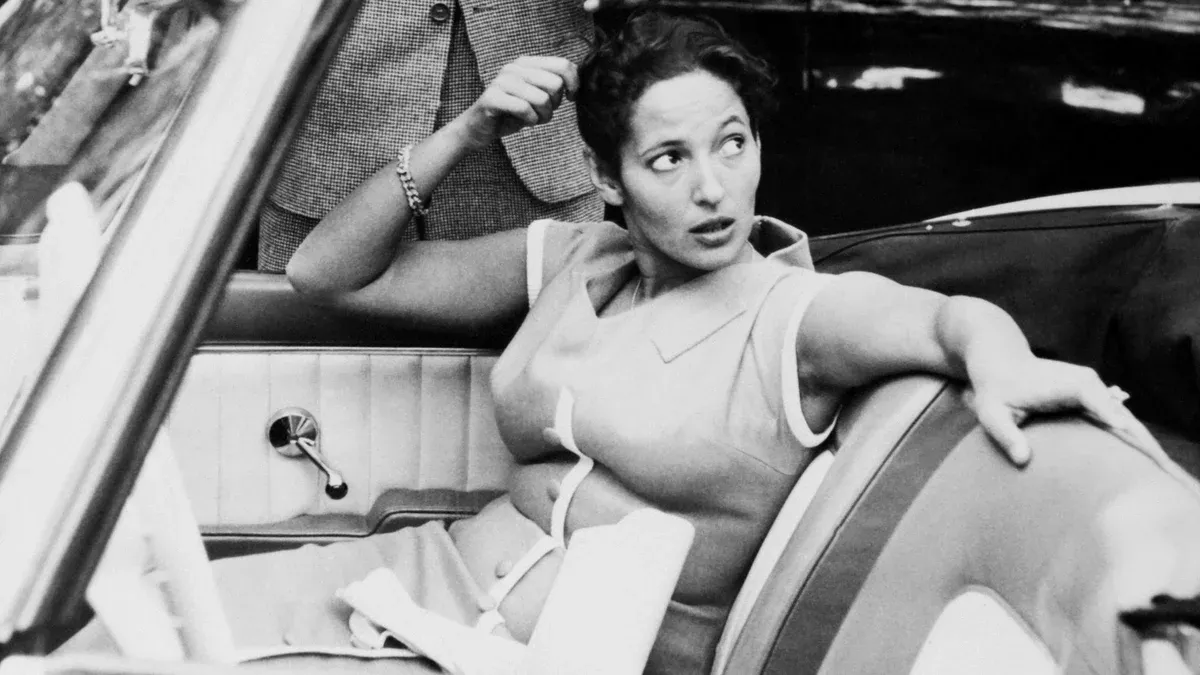
Born in 1930 in the Royal Palace of Rabat, Lalla Aicha was raised in a privileged environment, as was customary for members of the royal family. Yet, her arrival coincided with a tumultuous period in Moroccan history, as the country was under French and Spanish protectorates, and nationalism was gaining momentum. At that time, her father was not yet king; he was still a sultan, a title he would hold until his ascension to the throne in 1957. Lalla Aicha's life took a decisive turn in April 1947 when, at just 17 years old, she stepped into the public eye alongside her father and brother during a visit to Tangier. It was here that Mohammed V delivered a speech emphasizing Morocco's connection to the Arab world while subtly calling for independence from France. However, it was Lalla Aicha who captured the world's attention.
Dressed in a stunning turquoise silk gown, a stark departure from tradition, she boldly appeared in public without a veil—marking her as the first royal woman to do so. In a remarkable display of courage, she addressed the audience, highlighting the essential role of women in Moroccan society. "Our Sultan, may God bless him, expects all women to persevere in the pursuit of education... They are the proof of our renaissance and the driving force of our reform programs," she proclaimed. This speech not only broke traditional barriers but also positioned her as a modern princess who spoke multiple languages, was culturally aware, and encouraged other women to pursue education and defend their rights.
The impact of her speech reverberated around the globe, earning her the cover of Time magazine in November 1957, under the headline "The Emancipation of Muslim Women." In an interview, Lalla Aicha admitted that she was unaware of the profound effect her words had on the world stage, saying, "I was so nervous... I didn't fully grasp what I was talking about. I was asked to give the speech, and after doing so, I began to understand what was happening in Morocco at that time... I felt free, and I knew what was about to happen." Over the years, it became clear that this moment was not a mere coincidence; it had the approval of her father, who aimed to portray Morocco as a modern nation on the international stage.
What followed was a series of groundbreaking initiatives that established her as a champion for education. Lalla Aicha began accompanying her father to inaugurate public schools, many of which were named in her honor, and even traveled abroad, including to America. In 1953, the royal family went into exile in Corsica, a period during which she seized the opportunity to enhance her language skills. They returned to Morocco two years later, and in 1957, Lalla Aicha became the first president of the Entraide Nationale, a national program designed to assist the impoverished.
A Lasting Legacy
In 1961, her brother Hassan II ascended to the throne, and he appointed her as the country's ambassador—the first woman to hold such a position—across various European capitals. Her journey began in London, where from 1965 to 1969, she represented Morocco even before Queen Elizabeth II, forming a close friendship with Princess Margaret. After her time in London, she moved on to Athens and Rome. Rumor had it that Hassan II sent her abroad due to her growing popularity, and once she gained notoriety internationally, he called her back home. However, she never publicly opposed her brother; instead, she sought to support his reign.
Lalla Aicha married Moulay Hassan Al-Yaqubi in 1961, in a triple wedding ceremony alongside her sisters, Lalla Malika and Lalla Fatima Zohra, both of whom played significant roles in the Alaouite court and became strong supporters of the king. Together, they had two daughters, Lalla Zubaida and Lalla Nufissa, but in 1972, after eleven years of marriage, they divorced. Later that same year, she remarried Moulay Hassan Al Mahdi.
Beyond her royal duties, Lalla Aicha had a passion for golf, enjoyed taking long walks, and loved hosting gatherings, but above all, she had a deep affection for animals. She had a beloved Pekinese dog named Norbert and a pair of parrots that accompanied her on her travels. Although she ultimately chose to step back into the shadows, her work continued tirelessly. She served as honorary president of the National Union of Moroccan Women until 2011, the year she passed away in Rabat. She was laid to rest in the Mausoleum of Moulay El Hassan at the Royal Palace, leaving behind an enduring legacy that continues to inspire future generations.
As reported by hola.com.