
Controversial Judicial Rulings on Social Media Influencers in Morocco
The recent judicial rulings that impose restrictions on certain Moroccan influencers, barring them from publishing on social media for specified years, have sparked significant legal and ethical discussions within Morocco. This situation raises critical questions regarding the underlying motivations and justifications for such legal actions, as various stakeholders grapple with the implications of these decisions on freedom of expression and the broader societal landscape.
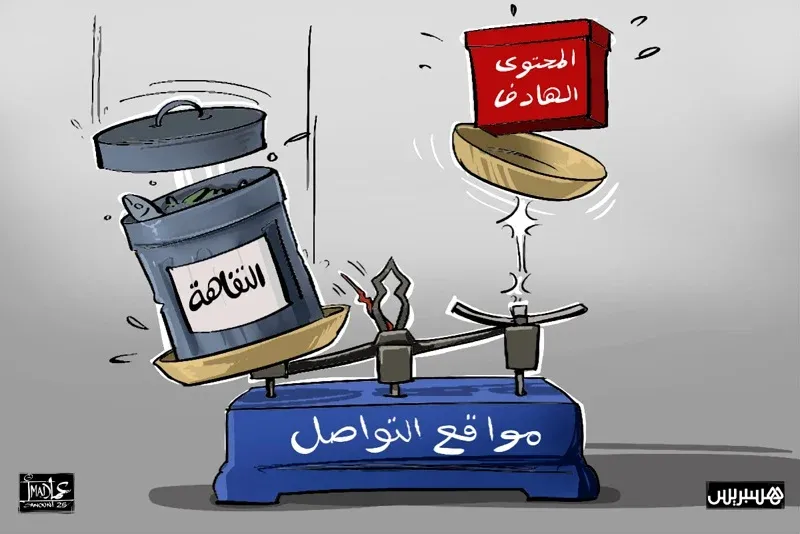
According to Youssef Farid, a member of the Moroccan Forum for Citizenship and Human Rights, social media platforms have evolved into vast spaces that connect diverse segments of society. Farid emphasizes that these platforms serve as essential venues for individuals seeking content and engaging with it. However, he also points out the concerning trend of non-constructive content often overshadowing valuable contributions. He asserts that while social media reflects a wide array of moral and cultural standards, it also mirrors the realities of society, including the emergence of inappropriate behaviors and content.
Farid argues that the real challenge lies not merely in the enforcement of punitive laws by the state against offenders but in fostering awareness among citizens about responsible content creation and consumption. He believes that instilling values of accountability and ethics among both content creators and their audiences is crucial to mitigating the proliferation of low-quality content and promoting informative and beneficial material.
He further advocates for a collaborative approach involving all relevant parties to enhance awareness campaigns directed at the public and content creators. Such initiatives could contribute to nurturing a balanced media and digital environment where ethical standards are respected, and opportunities are provided to showcase skills and services that serve the community and contribute to its development.
Legal expert Abdel Aziz Khalil elaborates that social media functions akin to public streets, where any activities conducted therein are subject to public laws and regulations. Consequently, the judiciary holds the authority to prohibit individuals engaged in legally punishable actions from participating in these digital spaces. Khalil clarifies that there is no exceptional legal campaign targeting social media platforms specifically; rather, the judiciary addresses criminal acts regardless of their location, treating the public digital space just like any other public arena.
The primary aim of these measures, particularly the prohibition from publishing on social media, is to regulate the digital environment and safeguard public order from potential abuses. The judiciary retains the power to restrict the activities of offenders online, and the rulings against certain content creators are framed as efforts to prevent acts that violate the law and uphold regulations governing expression in digital media.
Khalil further explains that penalties for crimes committed via social media can include imprisonment, along with bans on engaging in digital activities. These precautionary measures fall within the judiciary's discretionary authority to curb specific phenomena and enforce compliance with the legal framework governing digital services. He asserts that the legal concept of deterrence in these matters is predicated on recognizing digital media as a public space, thus subjecting it to the law, enabling the judiciary to act decisively to protect community interests and prevent misuse of these platforms in ways that infringe on rights or contravene established legal norms.
As reported by hespress.com.