
Transforming Morocco's Military Capabilities
The recent successful interoperability test of the Link-16 system, achieved through meticulous coordination between the United States Air Forces in Europe and Africa (USAFE-AFAFRICA) and Morocco's Royal Armed Forces (FAR), represents a significant strategic shift. Morocco is no longer merely a participant in military cooperation; it is now aligning itself with NATO's most sophisticated technological standards. This transformation is especially prominent as preparations intensify for the multinational exercise "African Lion 2026," scheduled from May 20 to 28, where the Link-16 system will play a critical role in enhancing operational capabilities.
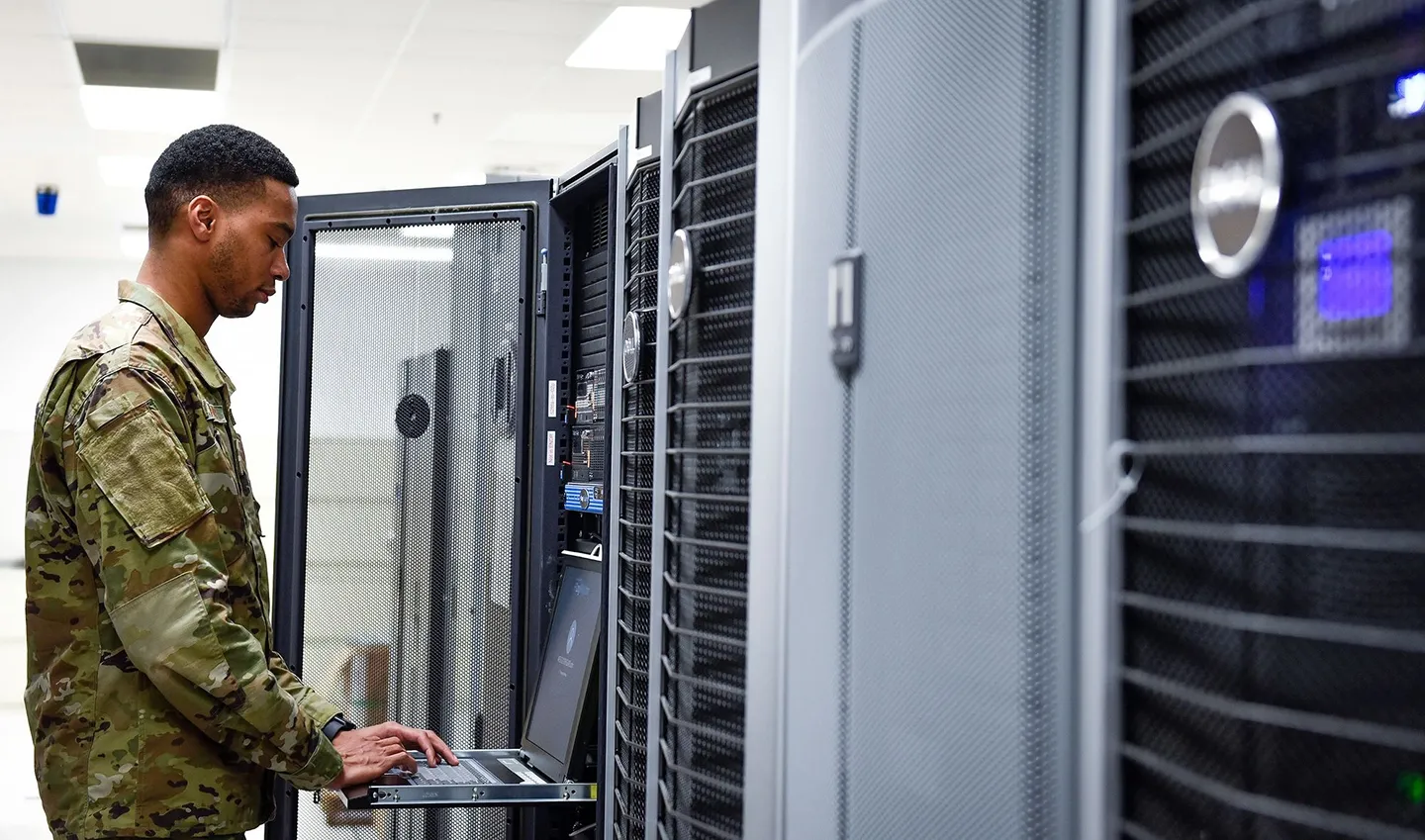
During the final planning event, a secure ultra-high frequency (UHF) voice connection was successfully established between Moroccan and American tactical terminals. This bi-directional flow of information enables ground, air, and naval forces to share a unified view of the battlefield, thereby eliminating critical transmission delays that can arise during high-intensity combat situations. The backbone of this interoperability relies on the Multifunctional Information Distribution System (MIDS), particularly the MIDS-LVT terminals, which are essential for integrating air platforms, ground defense units, and Royal Navy vessels into a cohesive operational framework.
Following a test conducted on February 3 in Agadir, Morocco became the first African partner nation to adopt this advanced encrypted communication standard in collaboration with the United States, marking a pivotal moment in the nation’s military evolution.
Unprecedented Inter-Service Synergy
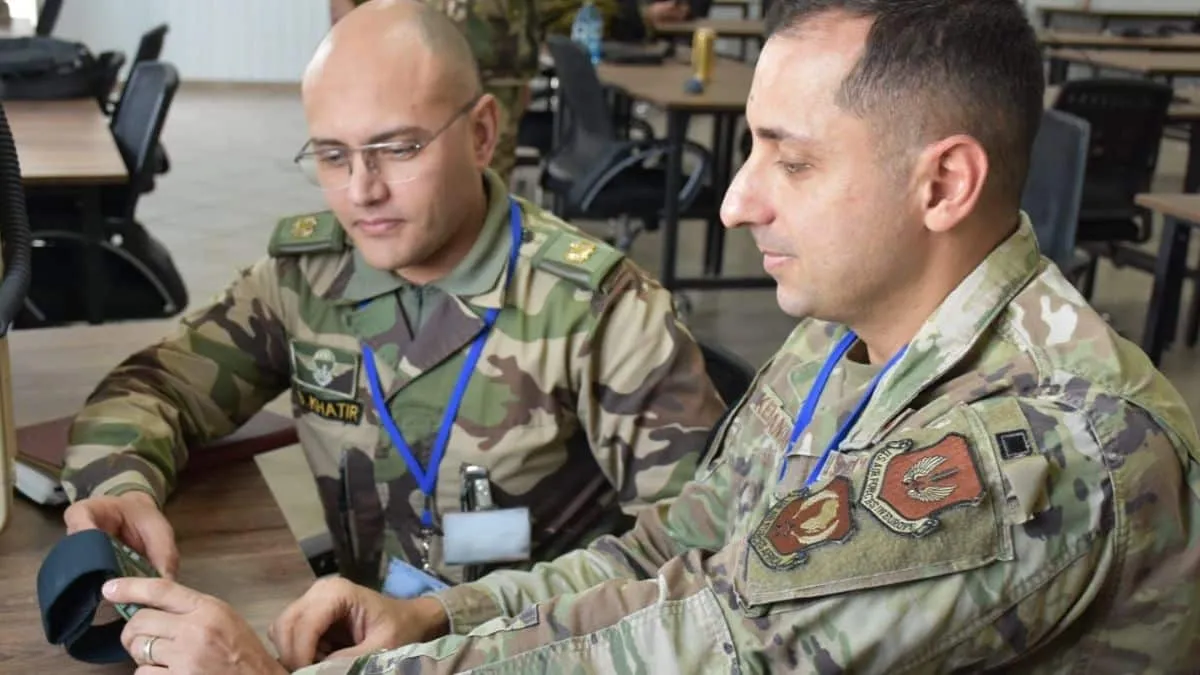
Under the guidance of USAFE-AFAFRICA and supported by U.S. Marines, this achievement reflects an extraordinary level of coordination. Major Kyle Repetti, a U.S. Marine Corps operations officer, emphasized the strategic importance of this integration, stating, "This effort tested Morocco's ability to integrate within a coalition force through a highly survivable and jam-resistant tactical data link. The real-time data sharing across air, land, and sea domains significantly enhances situational awareness for commanders and operators on the ground." Master Sergeant Babak Kermanshahi, a planner for USAFE-AFAFRICA, further articulated that this success provides a rapid transition from theory to operational firepower, reinforcing the exercise's aim to enhance interoperability through the implementation of tangible capabilities.
This technological advancement is the result of a collaborative effort involving the U.S. embassy, naval forces, Joint Interface Control Officers, and experts from the 165th Air Support Operations Squadron. Kermanshahi noted, "This is not a transient success. We are using the lessons learned as a foundation for African Lion 2027," emphasizing that this integration is crucial for more effective strategic, operational, and tactical planning with Morocco.
Military consultant Abdelhamid Harifi views this development as a "major evolution" that elevates Morocco to a superior operational dimension. With access to Link-16, Morocco joins an elite group of nations, being the only African country and one of the few Arab nations alongside Gulf states and Jordan to leverage this real-time data exchange technology that underpins NATO's power. Although this technology originated in the late 1970s, it remains "ultra-sophisticated and nearly impossible to jam," allowing for instantaneous Command and Control (C2) exchanges of images, videos, and tactical data among deployed units and strategic command centers.
The integration of Link-16 not only enhances communication but also fundamentally transforms the nature of Moroccan defense. It acts as a true "force multiplier," crucial for overcoming the absence of heavy relays like AWACS radar aircraft or reconnaissance planes. Anticipating this need, Morocco had previously acquired dedicated ground stations, enabling it to manage operations effectively across its borders with remarkable efficiency. This interconnectivity optimizes resource utilization, ensuring rapid and informed decision-making in dynamic operational environments.
The African Lion exercise, coordinated by the U.S. Africa Command (AFRICOM), remains the largest annual military exercise on the continent. By incorporating cutting-edge technologies like Link-16, the United States underscores its confidence in Morocco as a premier military partner. As conflict environments grow increasingly complex and technologically saturated, the ability of multinational forces to "speak the same digital language" becomes crucial for combat effectiveness.
As reported by medias24.com.