
On the morning of July 6, 2026, the sun had yet to rise over the coastal town of Aourir, located just north of Agadir. While the residents were still asleep, an impressive convoy of armored vehicles and elite units silently maneuvered through the streets of the town. The mission was clear, urgent, and of the highest priority: to neutralize a dangerous individual, a radicalized extremist who had pledged allegiance to the Islamic State (ISIS). Based on highly precise intelligence provided by the General Directorate of Territorial Surveillance (DGST), the Special Forces launched their assault. The door was breached, and within seconds, the suspect was subdued.
Upon arrival, the search conducted by officers from the Central Bureau of Judicial Investigations (BCIJ), a branch of the DGST, confirmed the necessity of the intervention. The individual was no longer engaging in ideological theories; he was already in possession of bladed weapons and tactical combat gear. As Aourir's residents awoke, they were met with a heavy security presence, oscillating between the shock of having been in proximity to a terrorist and the relief of seeing the threat neutralized just in time.
The Secret Laboratory
Further south, in the industrial zone of Inezgane, the operation took an even more dramatic turn. It was precisely in a warehouse in the Traast El Jorf district that the most terrifying secret of the cell was concealed. Upon entering this secret hangar, investigators uncovered a true logistical laboratory designed to manufacture death. At the center of the room sat an SUV, which inspection revealed had been clandestinely modified to run on butane gas. The purpose of this makeshift modification? To maximize thermal effect and shockwave during a suicide bombing or a ram-raid attack on vital infrastructures within the Kingdom.
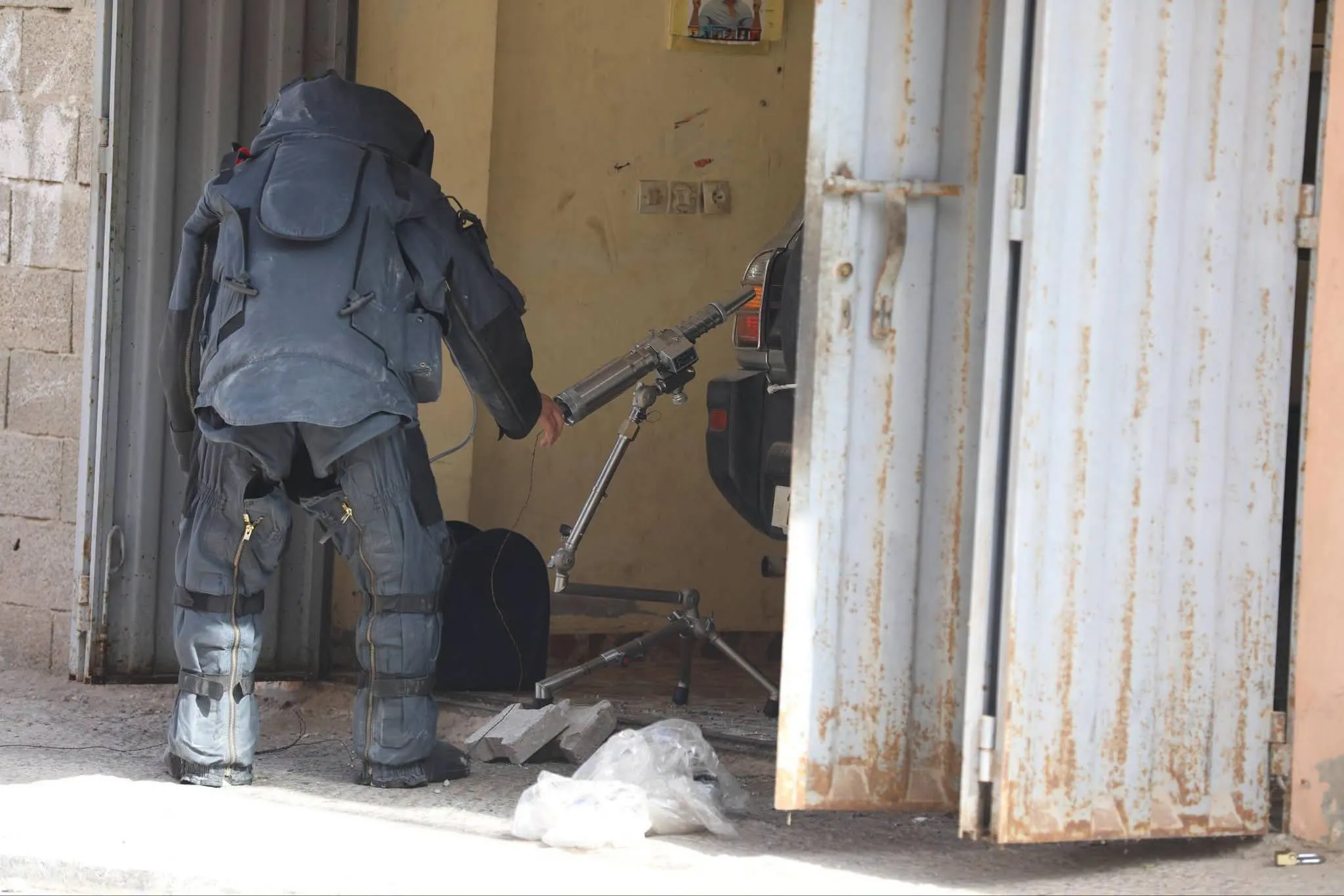
Faced with the imminent danger of an explosion, the BCIJ immediately activated an emergency protocol, evacuating all nearby residents and deploying a bomb disposal unit from the National Security (DGSN), utilizing remote-controlled robots and advanced sensors to inspect the vehicle's interior without risking human lives. Once the area was secured, the inventory of the warehouse was staggering: gas cylinders, pressure cookers ready to be rigged and filled with hundreds of nails (shrapnel), electric wires, detonators, a welding machine, and significant quantities of solid and liquid chemicals.
A Nationwide and Simultaneous Sweep
While the operational heart of the cell throbbed in the Souss region, its branches extended throughout the entire Kingdom. To prevent the arrest in Aourir from raising the alarm, the DGST’s Special Forces struck simultaneously in seven cities across Morocco: Agadir, Taroudant, Casablanca, El Hajeb, Tétouan, Fquih Ben Salah, and Safi. This extensive raid resulted in the apprehension of ten extremist individuals. Among them, the profiles of the suspects raised concerns among specialists. Notably, one was a 17-year-old minor, highlighting the cynical recruitment of the youngest, and another was a former inmate previously convicted under anti-terrorism laws, shedding light on the challenge of recidivism.
In the various homes of the suspects, supported by sniffer dog units, agents seized a shadowy arsenal of digital and material evidence. This included military uniforms, manuscripts containing detailed schematics for assembling homemade bombs, and digital media containing two videos. One featured a formal recording of their allegiance to the "Caliph" of ISIS, while the other contained explicit threats to carry out nationwide sabotage actions.
The preliminary investigation revealed the evolving nature of the terrorist threat in the region. The members of this cell were receiving direct orders and logistical support from leaders of the ISIS branch in the Sahel region. The directive sent from the Sahel was clear: do not join the insurgencies in Sub-Saharan Africa, but remain in Morocco to carry out terrorist actions from within, targeting the national territory.
The leader of the cell implemented a highly compartmentalized military structure to avoid leaks, with a reconnaissance team tasked with studying, monitoring, and validating sensitive targets for attack, a logistics team responsible for discreetly procuring chemical components, welding materials, and vehicles, and a technical team in Inezgane focused on mechanical modifications and explosive assembly. Thanks to the vigilance and responsiveness of the DGST and the BCIJ, the fuses of a genuine powder keg were cut before it was too late. The nine major suspects were placed in custody, while the minor was placed under specific supervision under the direct oversight of the prosecutor handling terrorism cases.
As calm returned to Aourir and Inezgane, BCIJ engineers and analysts began decrypting the seized mobile phones and hard drives. The goal was to map out the encrypted communication lines with the Sahel and ensure that no other dormant threats remained hidden in the shadows.
As reported by fr.le360.ma.