
Significant Enrollment and Infrastructure Expansion
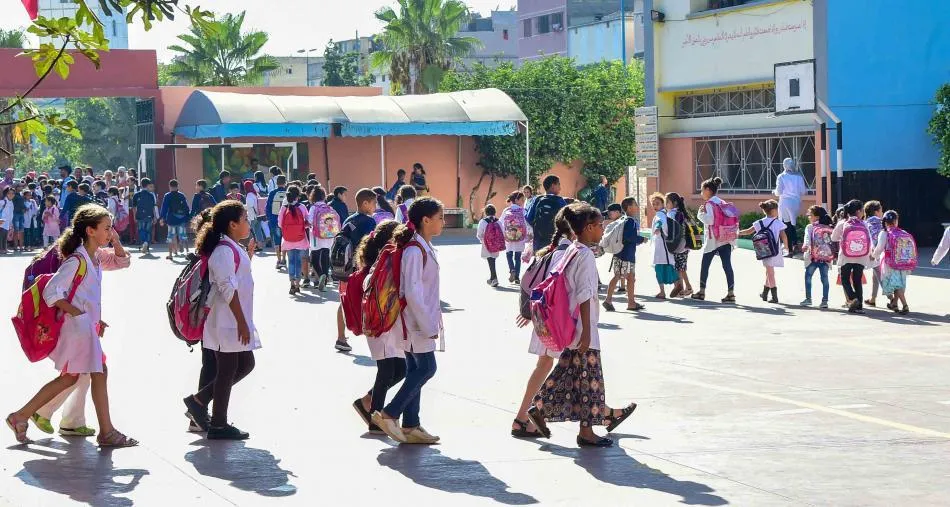
The 2026-2027 school year has seen an impressive mobilization of over 1.65 million students across the regions of Marrakech-Safi and Drâa-Tafilalet. In response to this surge in enrollment, educational authorities have taken significant steps to enhance infrastructure, expand the network of pioneering schools, and implement new initiatives aimed at combating school dropout rates. In Marrakech-Safi alone, a total of 1,160,310 students have returned to educational institutions, spanning all educational cycles. Notably, 1,020,855 of these students are enrolled in public education, while 139,455 are attending private schools.
This academic year is particularly noteworthy with the inauguration of 46 new educational establishments, bringing the total number of schools in the region to 1,204 primary schools, 305 middle schools, and 174 high schools. The region is also actively expanding the pioneering schools program, with 300 additional primary schools joining the initiative this year, raising the total to 822 schools, which represents 68% of the targeted establishments. In the secondary education sector, 60 new middle schools have joined the program, which now includes 158 colleges, accounting for 52% of the regional network.
Addressing Dropout Rates and Enhancing Infrastructure
Furthermore, addressing school dropout rates remains a top priority for educational authorities. The number of second chance centers has increased from 21 to 46, now serving nearly 4,000 beneficiaries. This year, the reopening of the Timenkar middle school in the Al Haouz province has been a significant milestone, welcoming 348 students, 54% of whom are girls. The school boasts well-equipped classrooms, a library, a multimedia space, and scientific laboratories, all part of the ongoing efforts to restore public services following the September 2023 earthquake, as directed by His Majesty King Mohammed VI. This reconstruction not only emphasizes restoring essential services but also incorporates local architectural techniques and standards designed to enhance seismic resilience and adaptability to natural risks.
In the Drâa-Tafilalet region, approximately 490,765 students have resumed their educational journey. The regional educational offerings have been bolstered by the addition of 9 new schools, including 7 located in rural areas, alongside the construction of 184 new classrooms. Concurrently, the renovation and maintenance of 588 pioneering educational institutions, which include 560 primary schools and 28 middle schools, continue to progress. For the 2026-2027 academic year, there are now 518 primary pioneering schools accommodating 214,239 students. The program has also expanded into secondary education with 125 institutions involved, marking an increase of 50 from the previous year.
On the human resources front, a total of 23,329 staff members are engaged in the region, including 1,447 newly appointed teachers. Social support mechanisms are also gaining momentum, benefitting 30,162 students, of which 15,676 are female. Additionally, the school transport fleet is expected to reach 1,104 vehicles, facilitating access for nearly 66,749 students. The educational landscape in Drâa-Tafilalet is further characterized by the ongoing expansion of preschool education, the development of inclusive education initiatives, the enhancement of second chance schools, and the strengthening of extracurricular activities. The teaching of the Amazigh language is now offered in 513 primary schools, achieving an impressive coverage rate of 82.5%, while English language instruction is projected to encompass 100% of the three levels of secondary education.
In summary, both regions are welcoming a total of 1,651,075 students this year, alongside the establishment of 55 new schools, illustrating the extensive investments being made in expanding educational offerings, modernizing infrastructure, and improving schooling conditions.
As reported by infomediaire.net.