
Transforming the Casablanca-Rabat Corridor
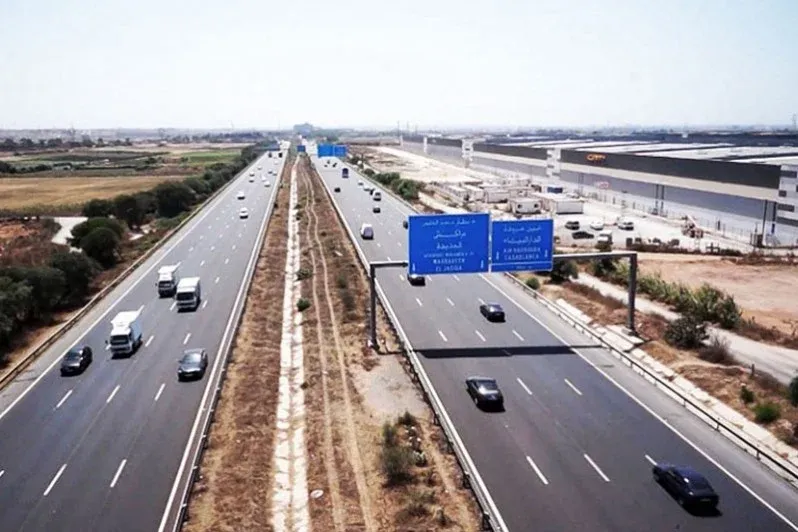
The National Highway Company of Morocco has embarked on an extensive investment program amounting to 10.25 billion dirhams, primarily focused on the bustling Casablanca-Rabat corridor, which is recognized as the most heavily trafficked route in the nation. Central to this ambitious initiative is the construction of the Rabat-Casablanca continental highway, spanning 59 kilometers and projected to cost 6.5 billion dirhams. This vital infrastructure project aims to alleviate congestion on the historical route linking these two major cities, while also enhancing access to the Grand Stadium in preparation for the anticipated World Cup in 2030. The completion of this highway is scheduled for 2028, marking a significant milestone in Morocco's transportation development.
Ongoing Projects and Economic Impact
In addition to the Rabat-Casablanca highway, several other key projects are underway, each surpassing the halfway mark in construction progress. Notably, the Aïn Harrouda section, which connects Mohammedia to Casablanca, is undergoing a complete reconfiguration with an investment of 750 million dirhams, currently at 40% completion. This segment handles approximately 120,000 vehicles daily, necessitating the physical separation of traffic flows through the construction of twelve infrastructure works to enhance safety and efficiency.
Another noteworthy project is the Sidi Maârouf interchange, which is currently 40% completed with a budget of 500 million dirhams. This unique three-level interchange combines cloverleaf and turbine designs, aiming to streamline connections between various bypass routes. Furthermore, the Tit Mellil-Berrechid link, a 30-kilometer stretch connecting the Casablanca bypass to the Casablanca-Marrakech highway, is progressing at 65% completion, incorporating four viaducts and twenty-four restoration structures, employing advanced techniques such as slope nailing and hydraulic soil treatment.
It is important to highlight that 75% of the contracts awarded for these projects have been given to Moroccan firms, signifying a strong commitment to enhancing local industry capacity. This initiative not only boosts the economy but also plays a crucial role in developing the skills of local public works companies, contributing to the broader objectives of industrial preference policies in Morocco.
However, the timeline remains a critical concern, as these projects are taking place on an already congested axis, temporarily worsening traffic conditions during construction. All projects are expected to be completed before the sporting event in 2030, aligning with several other infrastructure programs that are being implemented simultaneously.
As reported by lnt.ma.