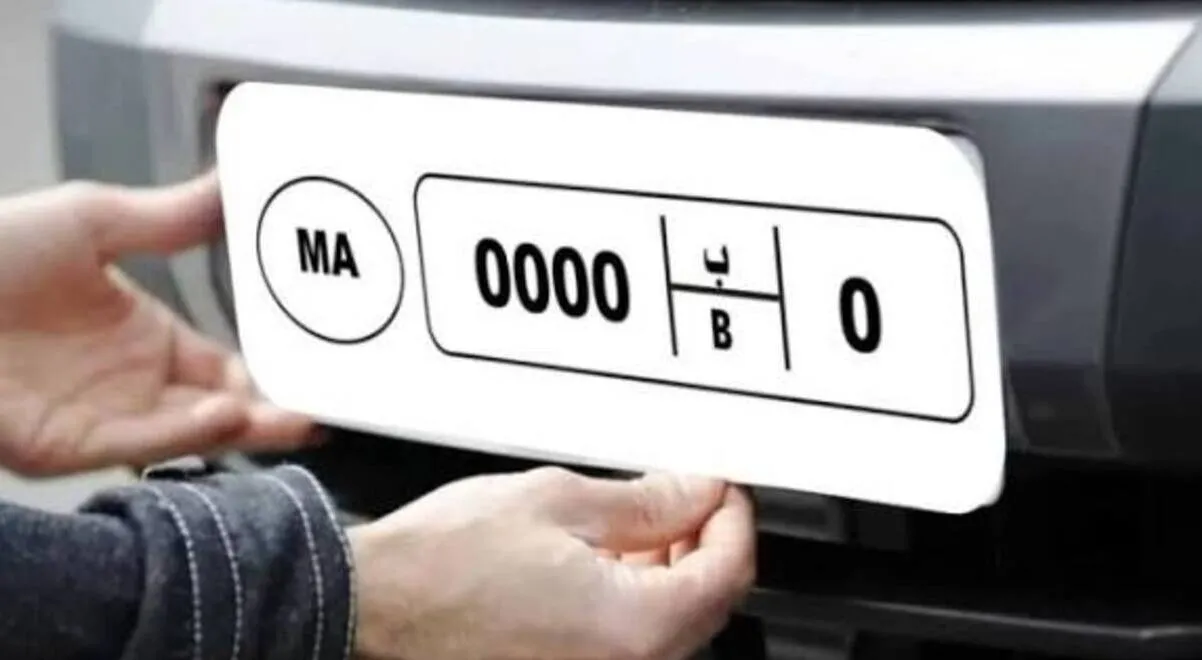

Published in the official Bulletin, the decree No. 640.26 from the Ministry of Transport and Logistics introduces a significant transformation in the vehicle registration system in Morocco. This comprehensive reform includes the elimination of the dual license plate system, the systematic integration of Latin characters, regulation of two-wheeled vehicles, and administrative digitization, all of which will come into full effect on January 1, 2027.
The regulatory framework governing Morocco's automotive fleet is undergoing a profound shift. The text, signed by Minister of Transport and Logistics, Abdessamad Kayouh, revises the existing system established in 2010 to simplify controls, facilitate international circulation, and modernize the administrative processes of the National Road Safety Agency (NARSA).
This reform abolishes the coexistence of the traditional national plate and the so-called international plate. From now on, a single model will be adopted for all vehicles, regardless of whether they operate within Morocco or abroad. This new format combines the Arabic letter of the series alongside its equivalent in the Latin alphabet, the order number, the prefecture identifier, and the international code “MA” on a single plate.
The authorities have strictly defined the alphabetical equivalents, ensuring a standardized reading internationally. The standard dimensions are set at 520 mm x 110 mm for single-line plates, promoting uniformity and enhancing readability during inspections.
A Gradual Transition
The implementation of this new system will occur gradually. Vehicles currently in circulation in Morocco will not be required to immediately replace their plates. The changes will take effect during ownership transfers, particularly in cases of sale or transfer.
However, for vehicles intended to operate abroad, a firm deadline has been established: the old international plates will no longer be recognized after January 1, 2027. This measure addresses the challenges faced by Moroccan drivers during summer 2025 road checks in Europe, where the lack of a unified format led to misunderstandings.
The reform also introduces specific standardization for mopeds, tricycles, and light quadricycles. Their new plates, measuring 180 mm x 200 mm, will use a three-component numbering system: the province, a series ranging from 1 to 99, and an order number that can reach up to 99,999. This provision will take effect on January 1, 2027, with a grace period for new vehicles until the end of the same year.
Furthermore, the decree clarifies the required documentation for registration processes. Residency-related documents are now standardized according to the Electronic National Identity Card (CNIE), with provisions adapted for Moroccans residing abroad and foreign residents. For imported vehicles, sales contracts must be signed by the holder of the foreign registration certificate, and customs clearance certificates must be issued in the name of the new owner. Finally, the reform paves the way for the dematerialization of property titles and registration cards, enabling electronic issuance and enhancing the modernization of administrative services.
As reported by h24info.ma.