
Fraudulent Activities Uncovered in Casablanca
Authorities in Casablanca apprehended an individual on Tuesday, implicated in a series of fraudulent activities, including forgery and the use of counterfeit documents. This arrest has raised significant public interest, as the suspect allegedly posed as a judge, a role that is strictly regulated by law. According to sources familiar with the investigation, this individual presented himself as a member of the judiciary, which has led to serious allegations against him.
The case is currently under thorough investigation, with law enforcement agencies striving to unveil the complete circumstances surrounding the alleged offenses. As part of the inquiry, officials are also looking into whether additional individuals may be associated with this fraudulent scheme. Preliminary reports indicate that at least three individuals have come forward, claiming to be potential victims of fraud involving the suspect. Investigators are actively working to validate their accounts and ascertain the total number of victims affected by these deceptive practices.
Details of the Allegations and Investigation
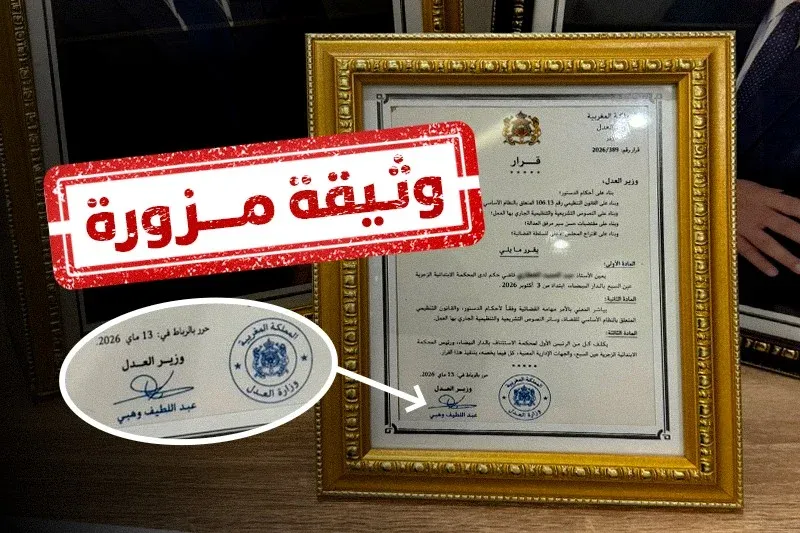
In a significant development, Hespress has obtained a copy of a forged document that the suspect reportedly utilized. This document is purportedly a judicial decree issued by Justice Minister Abdellatif Ouahbi, dated May 13, 2026, and numbered 389/2026. It misleadingly appoints the suspect as a trial judge at the Ain Sebaa Criminal Court in Casablanca, effective October 3, 2026. The document, which features a signature attributed to the justice minister and a stamp from the Ministry of Justice, is under scrutiny.
Furthermore, it has been reported that the suspect used photographs of himself dressed in attire typically associated with judiciary members, in conjunction with the forged appointment document. Investigators are delving into the origins of these materials, their intended use, and the broader implications of such fraudulent actions. A critical point of contention is the document's fundamental misalignment with Morocco’s legal framework regarding judicial appointments, as the minister does not hold the authority to appoint judges. Instead, judges are appointed by King Mohammed VI through a royal decree, following recommendations from the Supreme Council of the Judicial Power.
This ongoing investigation is focused on the suspected forgery, the use of counterfeit documentation, fraud, and impersonation of an official position. The final legal classification of these alleged actions will hinge on the investigation's outcomes and the decisions made by the relevant public prosecutor.
As reported by en.hespress.com.