
Industrial Advancements at the Marrakech Air Show
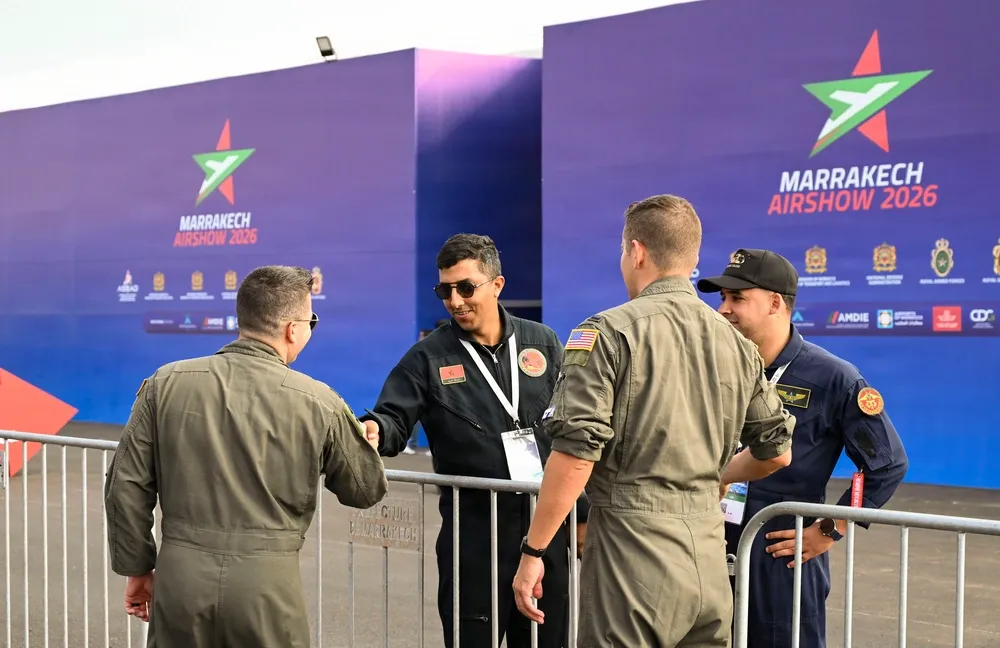
The Marrakech Air Show has evolved from a spectacular showcase to a pivotal platform for industrial growth, particularly on its second day. As the event unfolds until October 10 at the airbase in the city known for its vibrant ocre hue, the focus has shifted from exhibition displays to significant production capabilities, strategic investments, and procurement strategies. The rapid expansion of Royal Air Maroc has emerged as a crucial catalyst for the national aerospace ecosystem, sending strong signals to industries looking to position themselves within the future value chains of aeronautics. This insight was prominently featured in the Friday edition of L’Economiste.
Strategic Partnerships and Investments in Aerospace
The pragmatic orientation of the event has resulted in a series of significant agreements. A memorandum of understanding was signed between the Ministry of Industry and Trade, Amdie, and Mecapole Aerospace & Defence, aimed at developing machining capabilities for aircraft and helicopter components. This project represents a substantial investment of €10 million and is expected to create 80 direct jobs. Concurrently, Gimas, Amdie, and Korea Aerospace Industries have formalized an agreement to explore new industrial collaborations, which include developing suppliers and future investments in Morocco.
Moreover, Matis Aerospace has announced an investment program of approximately $16.5 million to enhance its production of aeronautical wiring, with an anticipated generation of 750 direct jobs. APS Coating Solutions is also preparing to establish an integrated site in Casablanca for surface treatment activities.
At the heart of this industrial landscape, Royal Air Maroc occupies a strategically unique position. The national airline has signed a convention with the Ministry of Industry and Trade focused on local sourcing, aiming to translate its growing needs into tangible opportunities for businesses located within the Kingdom. This ambition is underpinned by an extensive expansion plan: after surpassing 70 aircraft by the end of September and welcoming its 71st aircraft at the beginning of October, the airline aims for a fleet of 74 planes by the end of 2026, increasing to 88 in 2027, ultimately targeting 200 aircraft by 2037.
This expansion trajectory creates considerable needs for maintenance, spare parts, cabin equipment, engineering, and training. The agreements reached aim to structure this synergy, with the Ministry committed to supporting local suppliers to meet the stringent requirements of quality, cost, timelines, and safety standards in civil aviation, in exchange for increased visibility regarding the scheduling and nature of RAM's orders.
This commitment to modernization was notably highlighted on the second day of the show, with the signing of an agreement between the airline and Boeing regarding the complete refurbishment of the cabins of seven Boeing 787-8 aircraft. This project aims to standardize passenger experience according to current company standards while modernizing the fleet. With the Moroccan aeronautics ecosystem already hosting over 150 companies, this long-term dynamic reaffirms the country's determination to leverage its achievements to attract new investments, strengthen its supply chains, and promote the Made in Morocco label on the international stage.
As reported by fr.le360.ma.