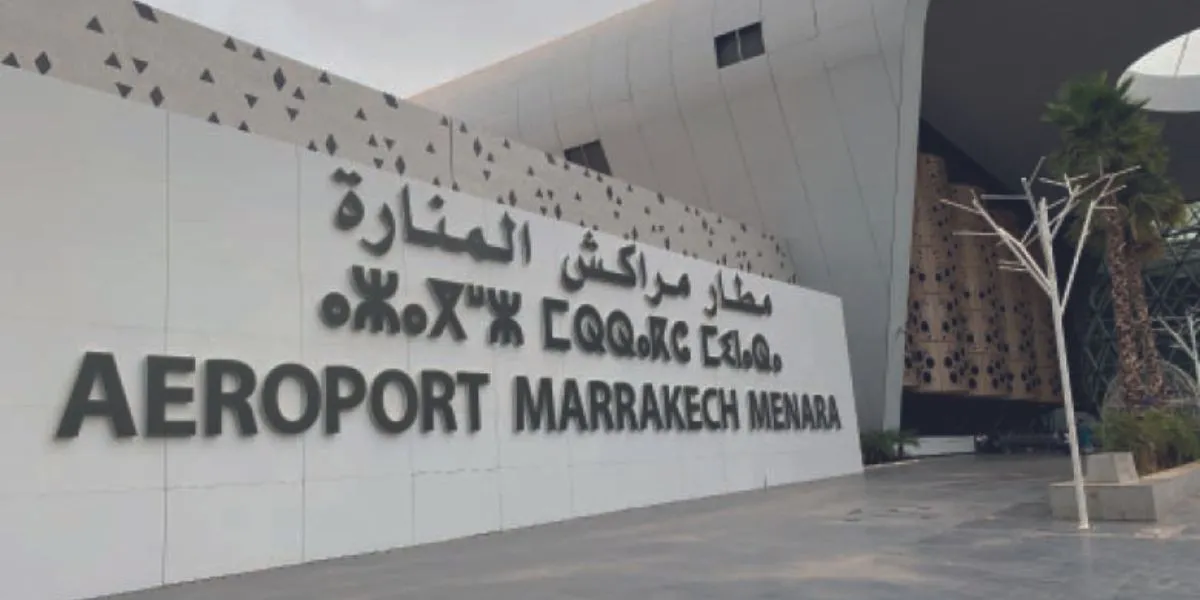

Marrakech Airport Reports an Impressive Growth in Passenger Traffic
The Marrakech-Menara International Airport has recorded a remarkable increase in passenger traffic, showing an impressive rise of 11.68% by the end of March 2026 compared to the same period in 2025, according to data released by the National Airports Office (ONDA). In total, the airport welcomed 2,786,781 travelers during the first three months of the current year, up from 2,495,383 passengers in March 2025. This surge in numbers highlights the airport's growing role as a key hub in the Moroccan aviation sector.
Breaking down the statistics further, the airport facilitated travel for 2,682,672 passengers on international flights, marking a 10.99% increase, and 104,109 on domestic flights, which saw a significant jump of 36.47%. March alone proved to be a busy month, as the airport served 1,014,459 passengers, demonstrating a robust growth of 13.70% from the 892,190 travelers recorded in March 2025. Such figures illustrate the airport's recovery and expanding appeal as a major destination for both international and domestic travelers.
Top International Routes and Overall Growth in Moroccan Airports
In terms of international connectivity, the statistics revealed that the Marrakech-Menara to Paris-Orly route ranked second among the top five international routes in March, serving 70,466 passengers and capturing a 2.60% market share. This was closely followed by the Mohammed V-Jeddah route, which recorded 73,215 passengers (2.71% share), and other notable routes included Marrakech to London-Gatwick and various connections to Paris. This performance not only reflects the airport's strategic importance for international tourism but also underscores its competitiveness in the global aviation market.
Overall, Moroccan airports collectively recorded a commercial traffic volume of 8,913,041 passengers by the end of March 2026, marking a commendable growth of 11.15% compared to the same timeframe last year. These figures suggest a positive trend in air travel within the region, driven largely by increased tourist activity and the revival of global travel patterns post-pandemic.
As reported by leseco.ma.