
Marrakech Declaration: A Response to Rising Extremism
Abdullah Bouzouf, an academic researcher and the Secretary-General of the Council of the Moroccan Community Abroad, emphasized the significance of the "Marrakech Declaration on the Rights of Religious Minorities in the Islamic World." He pointed out that this declaration emerged during a particularly tense period marked by severe conflicts within the Arab and Islamic worlds, as well as the international community, due to a surge in clashes, extremism, and terrorism—a wave ignited by the events of September 11 in the United States.
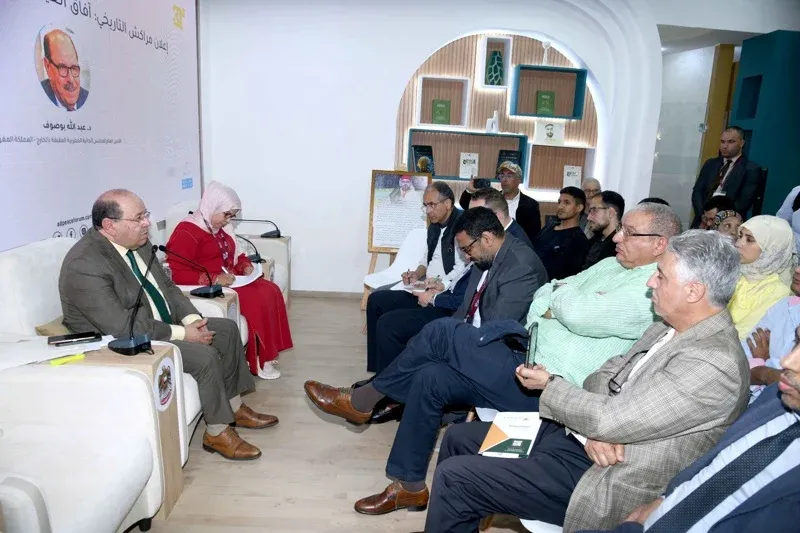
During a lecture at the official program of the Abu Dhabi Peace Forum, held at the International Book and Publishing Fair in Rabat, Bouzouf highlighted the expansion of organizations such as Al-Qaeda and ISIS in Iraq and Syria, which culminated in terrorist attacks that affected France, Spain, Belgium, Morocco, Egypt, and various African nations plagued by extremist groups like Boko Haram in Nigeria and Mali. In a symposium discussing the topic "The Historic Marrakech Declaration: Prospects for Coexistence in a Changing World," the Moroccan academic stressed that the declaration was conceived in an environment dominated by hate speech, where Islamic beliefs were scrutinized under a microscope. He noted that the fundamental question posed after every terrorist tragedy was: "What is the stance of Muslims and Islam regarding these events?"
Challenging Stereotypes and Promoting Coexistence
Bouzouf elaborated on how every Muslim, especially in Western countries, became a suspected terrorist due to the systematic conflation of religion with extremism in media narratives, political discourse, and even within certain academic circles. He warned that Muslims lacked adequate responses to these accusations, primarily due to the absence of literature and scholarly interpretations that differentiate between terrorism as an act and Islam as a faith, or that clarify the Islamic stance towards others, whether religious or secular. He highlighted that much of the existing discourse was linked to the jurisprudence of dhimmis, which did not adequately equip Muslims—particularly in the West—to address these pressing questions. In many contexts, a dhimmi was viewed as a second-class citizen, undermining the concept of full citizenship.
Bouzouf articulated that when Islam is said to allow the practice of religious rituals, it is often accompanied by numerous conditions, which diminishes the overall perception of rights. He underscored the need to revisit Islamic history, referencing scholars like Ibn Hazm in Al-Andalus and his work "The Separation of Religions and Sects," or Al-Shahrastani's "Religions and Sects," while acknowledging that these figures were distant from contemporary realities. He criticized reliance on works such as Abu Yusuf's "Book of Taxation" or writings by Ibn Qudamah al-Dimashqi, which approached the issue of dhimmis from a taxation-for-protection perspective—a viewpoint that fails to convince others of Muslims' stance on citizenship.
Thus, according to Bouzouf, the Marrakech Declaration serves to unveil a collective scholarly effort, a fundamental characteristic of this document. He noted that it is symbolically endorsed by over 300 scholars representing major Islamic institutions, such as Al-Azhar and the Muslim World League, and was issued under the high patronage of a religious leader, King Mohammed VI, the Commander of the Faithful. This title extends beyond Morocco, representing a symbolic figure for all who adhere to the Moroccan model characterized by tolerance, moderation, and acknowledgment of others.
Bouzouf argued that this royal endorsement adds significant value to the declaration, as it does not stem from a limited body or a single scholar but rather from a collective of 300 scholars representing religious institutions across the Islamic world, under the auspices of a symbolic religious leadership. He also highlighted the importance of the initiative's founder, Sheikh Abdullah bin Bayyah, regarded as one of the great scholars of our time due to his vast knowledge of both religious and cultural contexts, particularly regarding Western history and philosophy.
Bouzouf noted that what sets the Marrakech Declaration apart is its reliance on collective jurisprudential reasoning, rather than being merely a political opinion or intellectual proposal, which grants it a foundation in Islamic thought that may yield future benefits. He remarked that the choice of Marrakech as the venue for the meeting was not arbitrary; the city has historically been a capital of Moroccan empires, hosting Jews and Christians during various periods, notably under the Almoravids, Almohads, Saadians, and the Alaouite dynasty.
Despite the narrative of strictness during specific periods under the Almohad state, Bouzouf highlighted that there were also phases of openness. For instance, after the time of Al-Mahdi Ibn Tumart, the Almohad state saw instances where the caliph Al-Murtada wrote to Pope Innocent, requesting the dispatch of a priest to oversee the affairs of Christians in Marrakech and Morocco, demonstrating a respect for cultural exchange. He recalled how Al-Murtada elevated the church in Marrakech to episcopal status, reflecting periods of tolerance, particularly towards Christianity, and mentioned that under the Almoravids, Christians participated in the military, with historians noting that Ali Ibn Yusuf's army included around 4,000 Christians who were allowed to perform rain prayers alongside Muslims.
Marrakech has also been home to prominent scholars such as Al-Qadi Ayyad, Ibn Rushd, Ibn Arabi, and Ibn Tufail, the latter of whom engaged in philosophical discussions with the Almohad caliph. The Jewish community, known for its commercial ties and proximity to power, played a vital role, alongside influential women like Zaynab Al-Nafzawiyyah, an advisor to Yusuf Ibn Tashfin, the city's founder. Ultimately, Bouzouf concludes that this "city of palms" stands out as one of the few in the Islamic world that embodies the spirit of Ash'ari theology, Maliki jurisprudence, and Sunni Sufism, and has historically welcomed figures like Ibn Arabi, who garnered widespread acceptance among both Sunni and Shia Muslims, as well as non-Muslims. This rich historical tapestry and diversity position Marrakech as a fitting launchpad for a declaration advocating coexistence and recognition of the other in a tumultuous world.
As reported by hespress.com.