
Marrakech Hosts the Fourth PAM Economic Forum
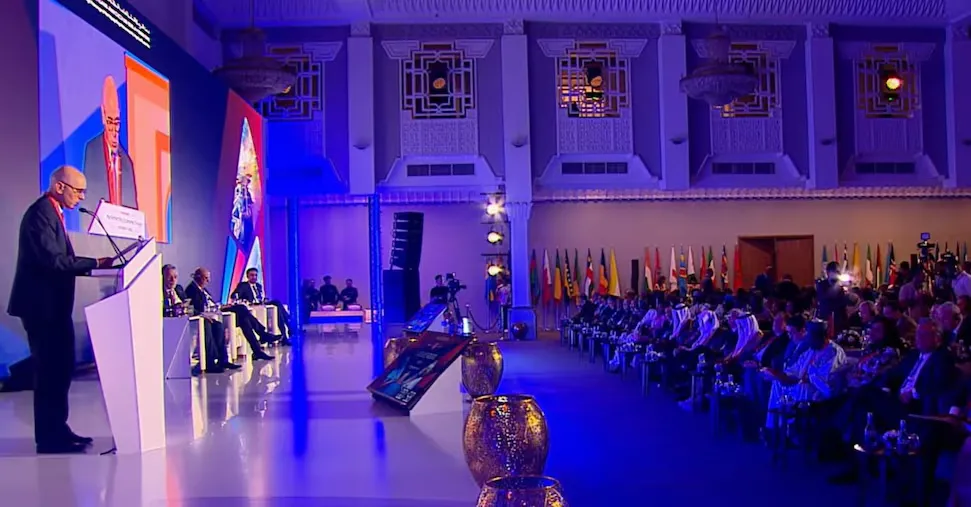
The recent PAM Economic Forum, held in Marrakech on June 19 and 20, marked a significant gathering of over 400 participants, including parliamentarians, government officials, and representatives from international financial institutions and the private sector. This event was organized by the Parliamentary Assembly of the Mediterranean (PAM) in collaboration with Morocco's House of Councillors and, for the first time, in partnership with the Parliamentary Network of the World Bank and the International Monetary Fund. The forum aimed to foster a common agenda among the Mediterranean, Gulf, and African regions, addressing pressing economic challenges that transcend national borders. The discussions focused on critical issues ranging from trade route security to public debt management, the energy transition, and the integration of artificial intelligence into economic frameworks.
Addressing Global Economic Challenges
Giulio Centemero, President of PAM, underscored the complexity and interconnectedness of today's global economic landscape, noting that challenges such as the recent crisis in the Strait of Hormuz illustrate the vulnerabilities inherent in our interconnected system. He emphasized that a disruption in a localized area can trigger widespread impacts on energy markets, trade logistics, and food supply chains, highlighting the necessity for a collaborative approach to tackle these issues. The forum encapsulated its mission with the slogan: "Different Shores. Common Purpose. One Shared Future," encouraging participants to transcend geopolitical divisions and foster a unified vision for cooperation between Europe, the Mediterranean, the Gulf, and Africa. Centemero reiterated that while these regions may possess diverse political and economic systems, shared ambitions should guide their collaborative efforts.
The discussions at the forum revolved around four pivotal priorities: enhancing international trade and economic integration, ensuring financial sustainability and managing public debt, promoting technological innovation and the strategic application of artificial intelligence, as well as addressing climate adaptation and food security. A notable emphasis was placed on the concept of technological sovereignty and the region's competitive edge in high-value sectors. Centemero articulated the forum's commitment to ensuring that artificial intelligence serves as a catalyst for shared growth rather than a source of division among nations.
Moreover, a dedicated session highlighted the significance of the African Continental Free Trade Area (AFCFTA) and the potential benefits of integrating Euro-African value chains. This initiative aims to foster investment, enhance economic connectivity, and bolster regional resilience. The forum also witnessed the signing of several strategic agreements, including a Memorandum of Understanding between PAM and the Association of African Senates, aimed at reinforcing parliamentary cooperation between Africa and the Euro-Mediterranean region. This collaborative spirit aims to strengthen dialogue between legislative bodies and the private sector, thereby supporting regional economic integration.
Overall, the Marrakech forum emerged as a beacon of political vision for regional integration, advocating for enhanced cooperation amidst a backdrop of economic fragmentation and geopolitical uncertainty. Centemero concluded with a powerful message: "The answer cannot be to retreat. It must be greater cooperation, accompanied by greater ambition." This reflects a clear commitment to establishing robust forms of collaboration that unite Europe, Africa, and the Gulf around shared interests, ultimately paving the way for a more integrated and resilient economic future.
As reported by en.ilsole24ore.com.