
Exploring the Updates in Civil Procedure Law
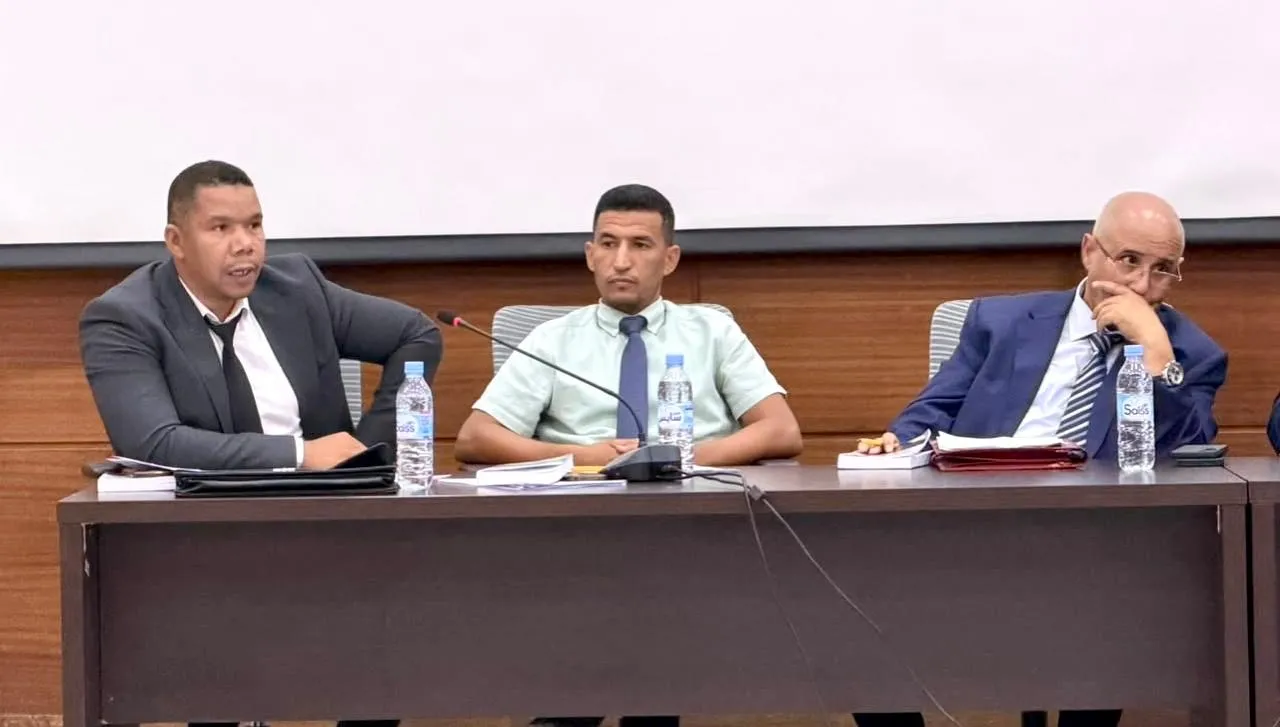
Marrakech has recently become a focal point for discussions surrounding the new amendments to the Civil Procedure Law, particularly after hosting an educational day dedicated to the topic. On September 15, 2026, the Marrakech Court of First Instance convened a significant meeting aimed at delving into the intricacies of legal notification and the processes of litigation under the new Civil Procedure Law No. 58.25. This event not only highlighted the legal framework but also served as a platform for legal professionals to engage in meaningful dialogue about the practical implications of these changes.
The meeting was attended by notable figures such as Mr. Mohammed Dahan, President of the Court of First Instance in Marrakech, and Mr. Khaled Rkeik, the Public Prosecutor, along with other judges and officials from the court. Their presence underscored the importance of continuous education within the judiciary, particularly in light of the numerous updates affecting judicial procedures. The discussions centered around the transformations introduced by the new law, especially regarding the stages and processes involved in legal proceedings, and the necessity for ongoing training and exchange of expertise to ensure effective implementation of the new regulations.
During the event, Judge Ismail Akram provided a detailed presentation on the recent updates in legal notification as per Law No. 58.25. He emphasized the new rules and mechanisms of notification while addressing potential practical challenges that might arise during their execution. Legal notification was not merely viewed as a procedural step; it was recognized as a crucial element in ensuring that judicial information reaches the parties involved, thereby safeguarding their rights to a fair defense. This led to a vital discussion on the effectiveness of notification processes, especially considering the direct consequences that may stem from delays in notification on the timelines for resolving cases and the continuity of legal procedures.
In a related vein, Judge Hicham Marjani focused his contributions on the processes of litigation under the new law, exploring the innovations introduced and the mechanisms designed to assist the court in clarifying dispute elements and forming its convictions, all while ensuring effective case management and upholding the rights of litigants. Following these presentations, the meeting transitioned into an open discussion characterized by a scholarly and professional tone. Participants raised a variety of questions related to the practical application of the new provisions and deliberated on challenges that may emerge during real-world implementation.
This type of gathering holds particular significance, as the success of any legislative reform is not solely dependent on the text itself but also on the clarity of its provisions and the ability of all stakeholders to comprehend them. Additionally, it emphasizes the necessity for a unified approach to practice that guarantees coherence, effectiveness, and ultimately serves the interests of litigants. By the end of the educational day, attendees agreed to continue this dynamic by organizing future meetings and educational sessions focused on further updates to the Civil Procedure Law, with particular attention to the practical challenges that may arise from its application, thus fostering further discussion and exchange of experiences.
In essence, the Marrakech Court of First Instance is actively engaged in adapting to the new legislative changes, not only through the application of the law but also by fostering dialogue, training, and guidance, all of which are essential tools for enhancing the procedural system and improving judicial performance and efficiency.
As reported by akherkhabar.ma.