
The Marrakech Short Film Festival has successfully concluded its sixth edition, showcasing a remarkable collection of over 400 films from more than 90 countries. With the introduction of AMANAR, new collaborations with FESPACO and ZINEBI, and an invigorated ambition, the festival is poised to redefine Marrakech as a central hub for short films.
Reflecting on its achievements, the festival's organizers are already looking ahead to the next decade. On September 30, the final awards were presented, and five projects supported by AMANAR completed a crucial phase of development. This edition signifies a significant evolution for the festival.
According to Ramia Beladel, the director of the Marrakech Short Film Festival, the time has come to outline a second roadmap for the upcoming ten editions, emphasizing the festival's established position within the cultural landscape of Marrakech. After dedicating six years to firmly embedding the festival, the aim now is to enhance its presence within the professional circuits of cinema, both locally and internationally.
AMANAR: From Concept to Reality
Central to this ambition is AMANAR, a new initiative that consolidates the professional actions developed by the festival in recent years. During the Industry Days, twelve professionals from renowned film festivals such as Cannes, FESPACO, and Clermont-Ferrand participated in discussions focusing on development, co-production, distribution, and festival selection. Five Moroccan projects then entered the Development Lab for two days of intensive workshops with five mentors, marking an essential step in their evolution.
During the 'Pitch Your Short' session, three projects were recognized for their excellence. Zahra Berrada's _Fragments of an Ordinary Day_ received the ZINEBI Industry Award, Maria Dobli Bennani's _Unsettled_ was honored with the Atlantis Studios Marrakech Post-Production Prize, and Saad Benidir's _Avant Première_ secured the AMANAR Best Pitch Award. This support extends beyond the festival; the five directors will receive mentorship for twelve months, culminating in a new phase in Cairo in 2027.
Beladel's vision is ambitious: "Our goal is to create a true industry hub around short films and to make Marrakech a crossroads where short film professionals can come together to collaborate." This initiative also aims to make major international circuits more accessible to emerging filmmakers. "We need to demystify these large platforms for our young directors and tell them that anything is possible," she adds.
Bridging Cultures: FESPACO and Beyond
This commitment to fostering connections extends to the festival's programming. Among the new offerings, the _Bridges of Reality_ program featured a selection of African documentaries curated in collaboration with FESPACO, the Pan-African Film and Television Festival held in Ouagadougou. Burkinabe producer Moustapha Sawadogo, who has been leading FESPACO's Yennenga Workshops since 2021, emphasized the importance of such collaborations in showcasing African narratives and facilitating their circulation.
According to Sawadogo, the Marrakech Short Film Festival addresses a significant gap in the distribution of short films, providing a much-needed platform for this genre. He views it as a valuable opportunity for young filmmakers to break into the professional realm.
The festival's intent is to expand these connections further, linking with FESPACO, ZINEBI, El Gouna, and other European professionals involved in AMANAR. "The objective is to ensure the circulation of works between African and European filmmakers," Beladel explains, reinforcing the festival's commitment to fostering international collaboration.
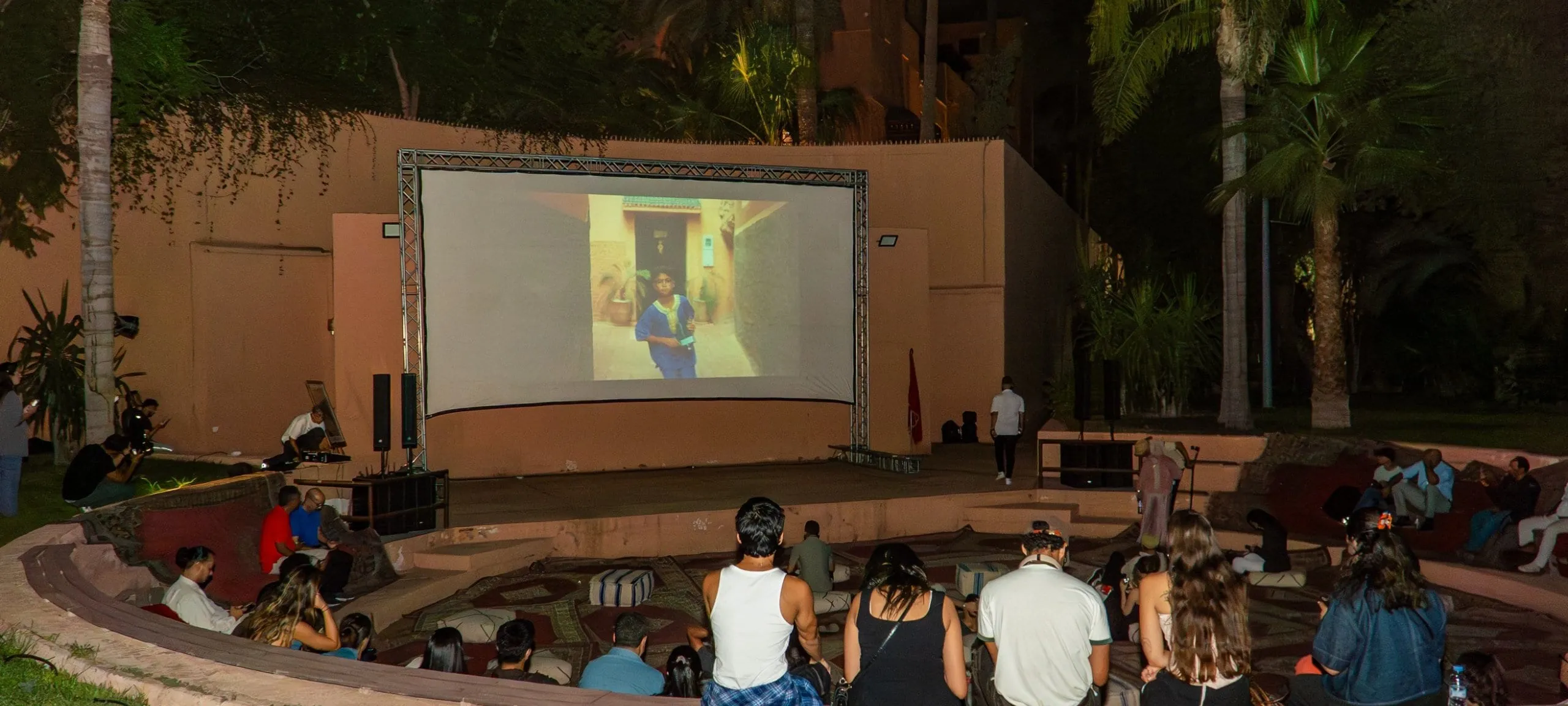
However, while aiming for internationalization, the festival remains deeply rooted in the local context. Since its inception, the Marrakech Short Film Festival has occupied various venues throughout the city, proudly asserting its identity intertwined with Marrakech. This year, screenings and meetings took place at notable locations such as the Palais Badii, the Cyber Park, and the French Institute, among others.
Beladel insists on the importance of respecting the cultural context when creating cultural activities: "When creating cultural initiatives, we must respect the context and strive to create something that highlights Marrakech and reflects the city's identity." For her, maintaining this connection is vital for the festival's growth as it seeks to expand its international reach while staying connected to its origins.
The closing ceremony also celebrated the films awarded by various juries. Internationally, the Belarj Prize for Best Director went to Giacomo Bendotti for _The Bridge_, while the Nakhil Prize for Best Film was awarded to _My Brother My Brother_ by Abderrahmane and Saad Dnewar. _The Experiment_ by Maxim Akbarov received a special mention, and _What If They Bomb Us Tonight_ by Samir Syriani won the Jury's Favorite Award.
On the Moroccan front, Sanaa El Alaoui took home the Belarj Prize for Best Director for her film _Aicha_. Sandia Tajeddine was awarded the Behja Prize for Best Actor or Actress for her role in _Les Liens invisibles_ by Aymen Ben Slimane. The Nakhil Prize for Best Film went to Yassine Iguenfer's _Two Ways_, while Hamza Atifi's _Phone Breaker_ received the Jury's Favorite award in the national category. Finally, _Villa 187_ by Eiman Mirghani was recognized with the Menara Prize for Best Documentary, and _Trading Cards_ by Radheya Jang won the Festival's Favorite.
With six editions now firmly establishing the festival in the city, the next step for its organizers is to foster an environment where films can be created in Marrakech, find partnerships, and circulate globally.
As reported by latribunedemarrakech.com.