
Marrakech's Infrastructure Development in Sports: A Missed Opportunity?
As several Moroccan cities, including Casablanca, Fes, and Agadir, embark on a new approach to enhance their sports infrastructure through the construction of modern mid-sized stadiums, questions arise among sports enthusiasts in Marrakech regarding the city's apparent reluctance to follow suit. This hesitation is particularly concerning given the pressing need for such projects, especially in a city recognized for its rich sporting culture.
In recent years, Morocco has launched significant initiatives aimed at upgrading its stadiums in preparation for prestigious continental and international events, notably the Africa Cup of Nations 2025 and the World Cup 2030. Noteworthy upgrades are underway at major stadiums in cities like Fes and Agadir, where comprehensive renovation projects aim to increase capacity and meet international standards. However, this trend toward larger stadiums, primarily linked to international competitions, has also seen some cities initiate the development of new, modern mid-sized stadiums within urban areas. These venues are designed to accommodate local club matches more effectively, providing sports spaces that are more accessible to fans and better suited for weekly games.
Recently, progress has been evident in the construction and refurbishment of mid-sized stadiums across various cities. In contrast, Marrakech appears to be lagging in this regard. For instance, the Hassan II Stadium in Fes is undergoing demolition and renovation to align with contemporary standards, aiming to accommodate approximately 15,000 spectators. Similarly, in Agadir, the construction of the new Hussein Moadin Stadium is underway, with a projected capacity of 15,000 spectators as well.
In Marrakech, however, the situation seems stagnant, raising urgent discussions about the future of sports facilities in the city. The prestigious club, Kawkab Marrakech, finds itself in a precarious position as the Grand Stadium of Marrakech, inaugurated in 2011 and boasting a capacity of over 40,000, is slated for major renovations to prepare for significant international events. This scenario implies that Kawkab Marrakech may be deprived of utilizing their home ground for several years, similar to past preparations for tournaments, and echoes the challenges faced by other cities during renovation processes. This situation reignites concerns about where the team will hold its matches, especially considering that the current alternative, the Harathi Stadium, falls short of meeting the expectations of Kawkab fans. The Harathi Stadium is one of Morocco's oldest facilities, and its limited capacity does not reflect the club's substantial fan base nor the sporting stature of a city like Marrakech.
Call for Action: The Need for a New Mid-Sized Stadium
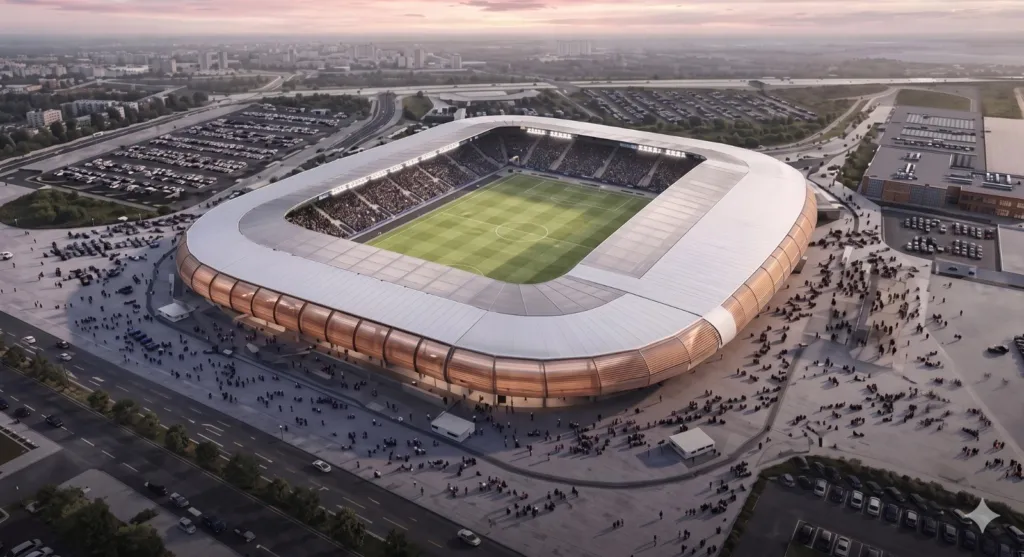
Given these circumstances, stakeholders are left questioning why the Marrakech municipality has yet to consider launching a project for a modern mid-sized stadium, with a capacity ranging between 15,000 and 25,000 seats, that would be conveniently located near the city and serve as a true stronghold for Kawkab Marrakech. This initiative would align with the efforts currently being made by the municipalities of Fes, Casablanca, and Agadir. Such a project would not only have significant sporting implications but would also carry economic and tourism benefits, particularly in a city recognized as one of Morocco's top tourist destinations. Moreover, it would help alleviate the pressures on the Grand Stadium, which was primarily designed for large-scale events rather than regular local league matches.
The question remains: will the Marrakech municipality heed this call and consider developing a modern stadium that honors the legacy of Kawkab Marrakech? Or will the team and its passionate supporters continue to find themselves caught between a large stadium designated for international events and an aging facility that no longer meets the aspirations of the present? It is crucial to recognize that Morocco's recent policy of enhancing sports infrastructure has made modern stadiums integral to the nation's sporting and developmental image. There is hope that this dynamic will also ensure equitable access to new projects, particularly in historical cities like Marrakech that boast a rich football heritage and an enthusiastic fan base.
As reported by kech24.com.