
Unprecedented Migrant Surge into Ceuta
A recent report by The New York Times has highlighted a significant incident involving a mass influx of migrants into Ceuta, a Spanish enclave located on the northern coast of Africa. According to testimonies from the migrants, Moroccan police allegedly encouraged them to cross into Spanish territory, instructing them to “enter Spain.” Within a span of just 24 hours, estimates suggest that approximately 60,000 individuals crossed into Ceuta, a staggering number that represents nearly 70% of the enclave's total population. The Spanish government, however, has provided a slightly lower estimate, citing around 50,000 migrants.
Ceuta, along with Melilla, represents the only land borders between the European Union and Africa, making it a highly coveted entry point for migrants from Morocco and sub-Saharan Africa seeking to reach Europe without risking dangerous Mediterranean crossings. The border between Ceuta and Morocco stretches for about eight kilometers and is fortified with fences, surveillance cameras, and watchtowers. Despite these security measures, large-scale breaches have occurred in the past, with the most notable being in May 2021, when over 8,000 migrants entered Ceuta in just two days. However, the recent crossing on Thursday surpassed any previous breaches, evoking memories of the 2015 migration crisis in Europe.
Chaos and Political Fallout Following the Influx
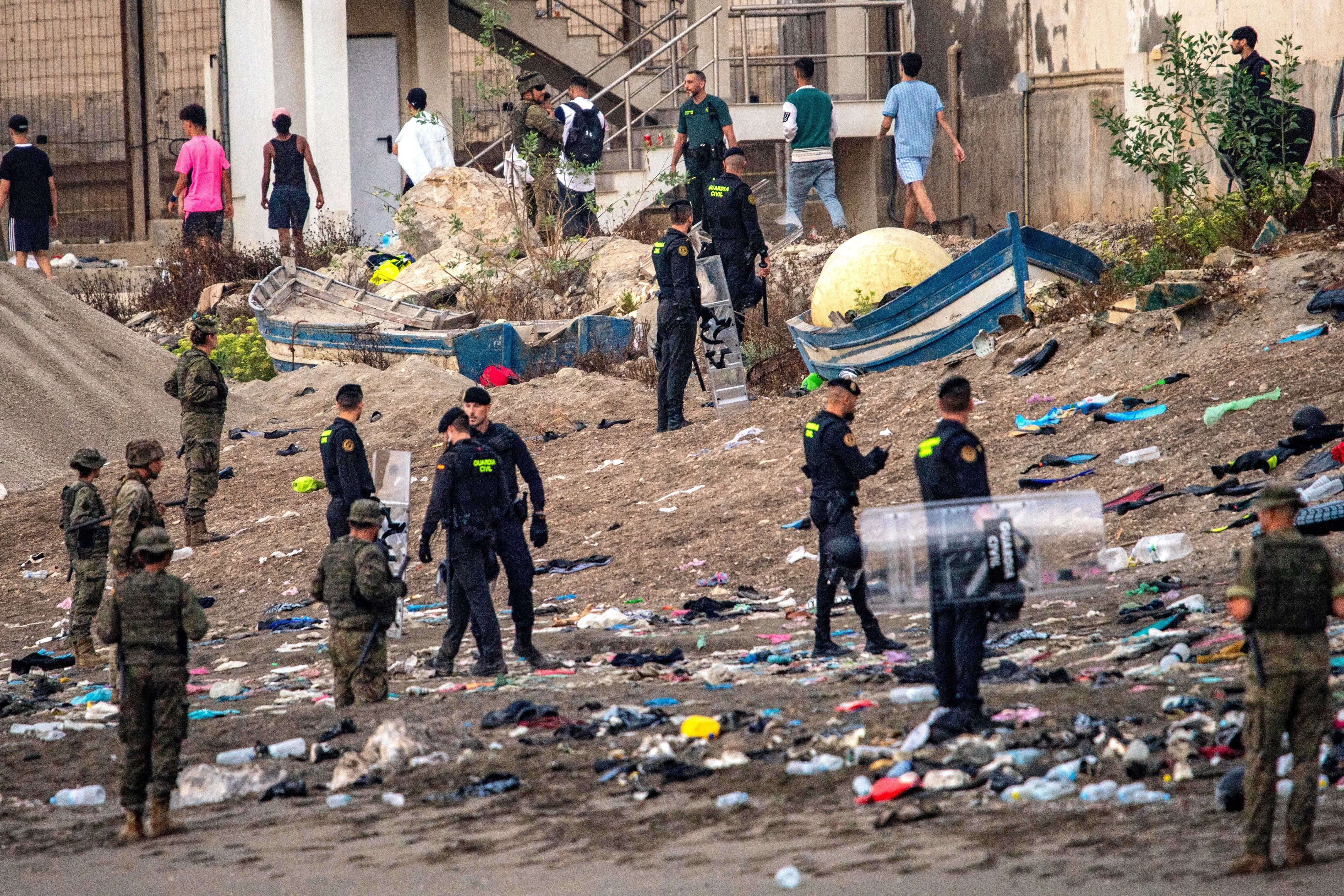
Footage from Tarajal Beach, the epicenter of the latest crossing, depicted large crowds—predominantly Moroccan—making their way towards Ceuta. While some migrants utilized inner tubes and makeshift flotation devices, others managed to break through a gate in the border fence. The situation quickly escalated, prompting Spanish authorities to label it a complete collapse of border control. In response, Madrid deployed military forces to support local security, with armored vehicles patrolling the streets. By Friday evening, it was reported that around 48,300 migrants had already returned to Morocco, and conditions were said to have returned to “almost completely” normal by Saturday morning.
Despite the immediate crisis subsiding, a pressing question remained: how could such a vast number of migrants cross the border so rapidly? Accounts from the migrants indicated that Moroccan authorities may have played a role in facilitating the surge rather than preventing it. One migrant, Mohammed Ahmido, recounted how he was lured to the border after hearing on social media that it was open and unguarded. He, along with tens of thousands, claimed that Moroccan police were actively encouraging them to cross. Tragically, reports indicated that the chaos resulted in at least 67 fatalities, with many succumbing to drowning or trampling during the rush.
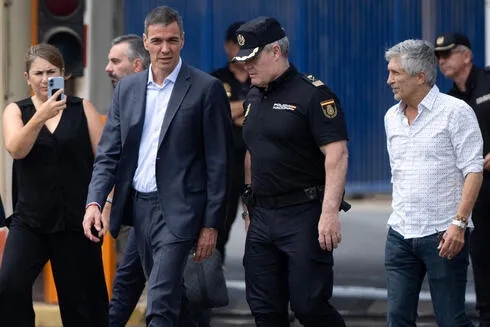
As the influx of migrants overwhelmed the enclave, residents expressed fear and frustration, with many retreating to their homes and closing businesses. Streets filled with groups of young migrants left local citizens feeling abandoned by the government in Madrid. Prime Minister Pedro Sánchez made a hasty visit to Ceuta amid rising criticism of his administration, attributing the situation to human smuggling networks exploiting a recent Spanish Supreme Court ruling. This ruling clarified that migrants arriving by sea could not be expelled in the same manner as those who crossed land borders, prompting Sánchez's government to propose the establishment of a physical barrier in the water.
While Morocco's government has denied any involvement in the mass crossing, the situation has undeniably strained relations between Madrid and Rabat. The Moroccan ambassador to Spain stated that the events transpired against Rabat’s wishes, emphasizing the importance of legal and orderly migration. Historically, Morocco has been accused of loosening border controls during diplomatic tensions with Spain, which raises questions about the motives behind the recent surge.
In the wake of the incident, European leaders have reacted strongly, with Italian Prime Minister Giorgia Meloni labeling the scenes as “shocking” and warning of the dangers of uncontrolled immigration. Critics of Sánchez's immigration policies view this incident as a testament to the failures of his administration, particularly in light of plans to regularize the status of numerous undocumented migrants in Spain. The images from Ceuta have not only shocked Europe but have also intensified political debates surrounding immigration policy and border security.
As reported by ynetnews.com.