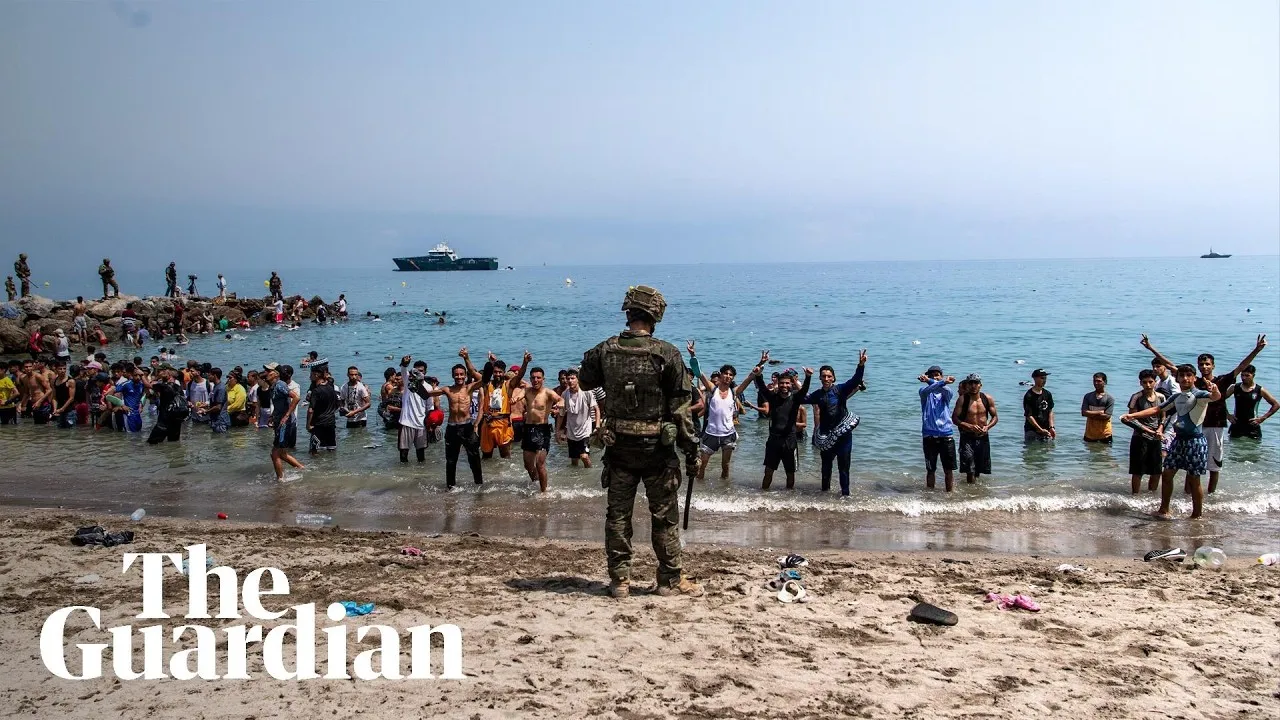

Mass Influx of Migrants into Spanish Enclave
In a significant and alarming development, over 60,000 migrants have crossed into the Spanish enclave of Ceuta from Morocco, triggering a humanitarian and political crisis. This unprecedented surge has been attributed to the actions of human trafficking organizations that have exploited a recent ruling by Spain’s Supreme Court. The court's decision determined that individuals intercepted at sea while attempting to enter Ceuta or Melilla, another Spanish enclave in North Africa, could not be immediately returned to their country of origin. Spanish Prime Minister Pedro Sánchez has pointed fingers at these trafficking mafias, suggesting that they have orchestrated this massive movement of people in response to legal loopholes.
The situation has escalated to a point where it is being described as an invasion by many commentators, raising concerns about the implications for Spain and the broader European region. The influx of young men, in particular, has sparked debates about the motivations behind this mass migration, with some asserting that it may be politically motivated, possibly linked to tensions between Morocco and Spain, especially following Prime Minister Sánchez's diplomatic engagements with Algeria. This influx has not only placed immense strain on local resources in Ceuta but has also ignited discussions across Europe about immigration policies and border security.
As European nations grapple with the complexities of migration, Ceuta stands at the forefront of this crisis, reflecting the urgent need for an effective and humane response to the challenges presented by such dramatic demographic shifts. The unfolding situation serves as a reminder of the ongoing geopolitical tensions in the region and the human stories behind the statistics, prompting a call for collaborative solutions to address the root causes of migration while ensuring the safety and dignity of all individuals involved.
As reported by youtube.com.