
Protests Erupt in Ceuta Amidst Immigration Crisis
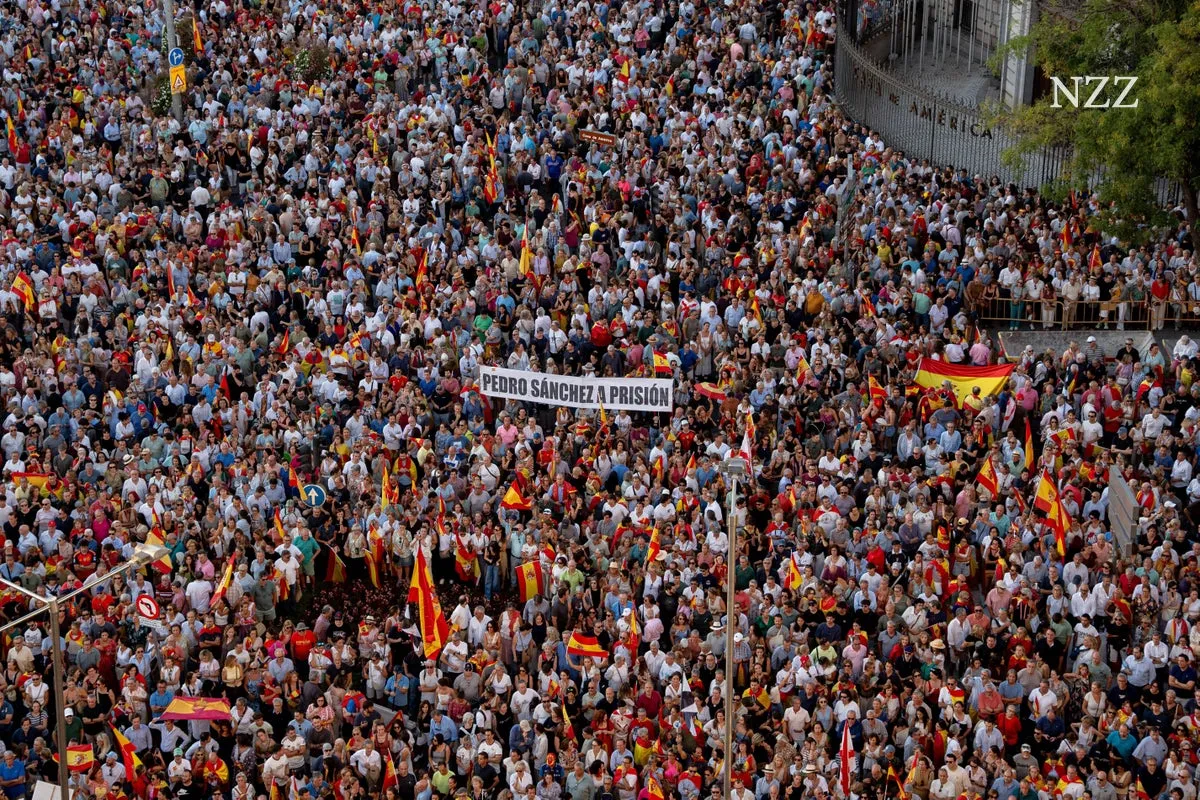
On Wednesday, a significant wave of protests swept across Spain, with tens of thousands of citizens rallying against Prime Minister Pedro Sánchez's immigration policies. Demonstrators voiced their grievances regarding the perceived lack of support for Ceuta, a Spanish exclave in North Africa, and accused the central government of adopting a complacent approach towards Morocco. Despite Morocco's long-standing claims over Ceuta, the country is currently not exerting substantial pressure on this issue.
According to reports from 'El País', the National Police employed tear gas and rubber bullets to disperse extremist groups that had gathered near the Parliament building in Madrid. As a result of the clashes, four protesters, including two minors, were arrested for disturbing the peace and resisting law enforcement, while four police officers sustained injuries during the altercations.
Opposition Leaders Call for Action
Alberto Núñez Feijóo, the leader of Spain's conservative People's Party, characterized the influx of migrants as an 'invasion' orchestrated by Morocco. He accused Sánchez and his administration of misleading the public by claiming there had been no forewarning regarding the immigration crisis and denying that Morocco had incited the situation. Both assertions were deemed false by Feijóo.
During the protests in Ceuta, thousands waved Spanish flags and demanded a return to normalcy while reinforcing their desire for the exclave to remain part of Spain. Banners proclaimed, "Ceuta does not sell itself, Ceuta does not surrender." Government reports indicated that at least 72,000 migrants had flooded into Ceuta on July 30 and 31, with approximately 5,000 still residing in the exclave a month later. Many have resorted to camping on streets and beaches, placing an immense strain on the local population of 83,000. The situation has sparked ongoing protests, some of which have escalated into violent confrontations against migrants and private aid organizations.
Due to legal constraints, Spain cannot conduct collective expulsions of migrants and must evaluate each asylum application on a case-by-case basis, a process that could take weeks or even months. Furthermore, the central government is reluctant to transport migrants to the mainland, as this could prompt other Schengen member states to impose border controls similar to those already enforced by Italy. Notably, Ceuta is not part of the Schengen zone.
The protests on September 2, coinciding with Ceuta's regional holiday, were organized by the Spanish municipalities' federation FEMP, led by the conservative opposition People's Party (PP). The far-right party Vox also participated in these demonstrations. According to the central government's representation, around 50,000 individuals attended the rally in Madrid. PP General Secretary Miguel Tellado reported that approximately 2,000 demonstrations took place across Spain, reiterating calls for the government to resign and for new elections. In cities like Barcelona and Bilbao, counter-demonstrations emerged, with participants advocating against racism, bearing signs that read, "No one is illegal."
In the North African exclave of Spain, both refugees and residents are suffering under the current circumstances. The upcoming city holiday on Wednesday presents the opposition with an opportunity to mobilize nationwide protests against the government. As thousands of migrants continue to wait in the Spanish exclave, local residents find themselves at their breaking point amid the escalating crisis.
As reported by nzz.ch.