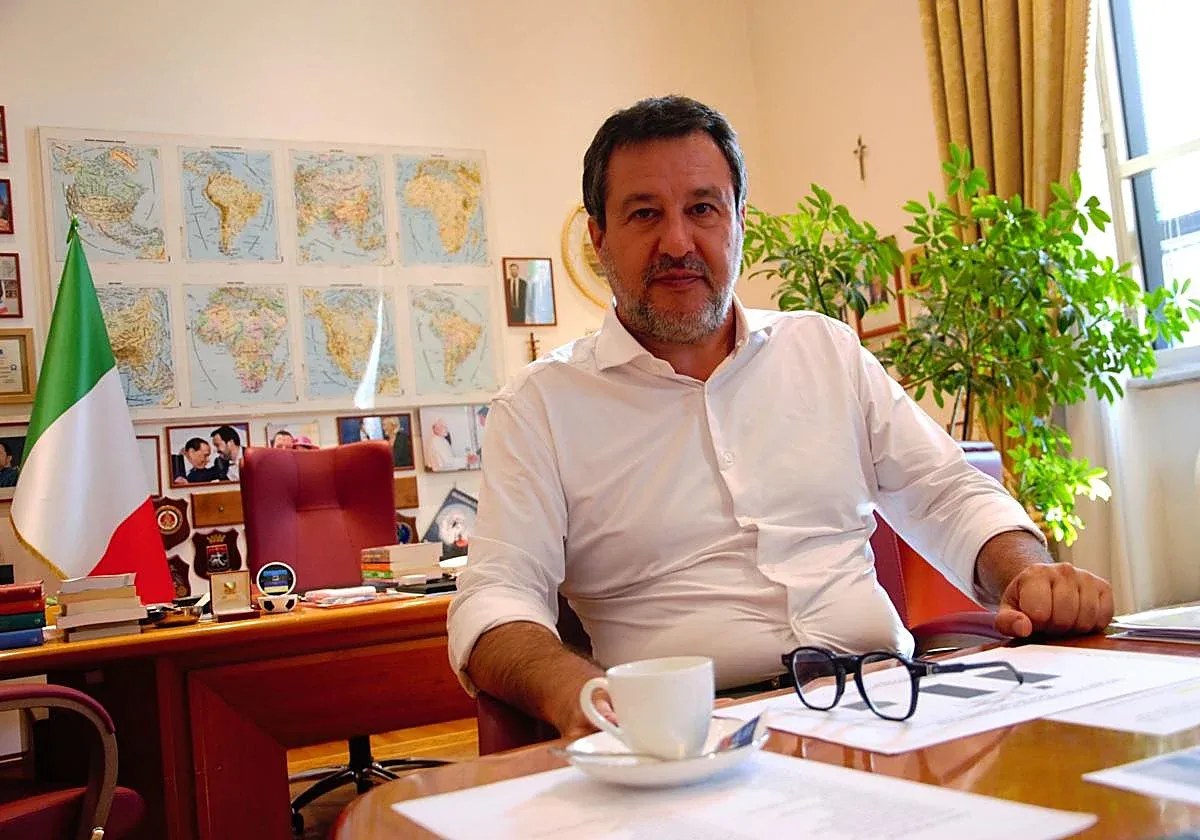

The balcony of Matteo Salvini's office overlooks Porta Pia, one of the historic gateways to Rome, which was designed by Michelangelo and is famed for the battle that occurred on September 20, 1870. On that day, Italian infantry, known as the Bersaglieri, entered the city under the command of General Raffaele Cadorna, marking the end of the Papal temporal power and affirming Italy's unification. The spirit of Garibaldi, symbolizing the defense of a homeland and the unification of a nation, resonates even today. Salvini, who has been serving as the Minister of Infrastructure and Transport since 2022 under Giorgia Meloni's government, is not only the Deputy Prime Minister but also the leader of the Northern League. His spacious and well-lit office reflects a blend of personal and political significance, adorned with a small crucifix, numerous photographs with notable figures like Elon Musk and Silvio Berlusconi, and a Milan jersey peeking through the decor. When asked about his preferred form of address, he modestly states, "You can call me Matteo, no problem," emphasizing his informal approach despite his formal titles.
Addressing the Situation in Ceuta
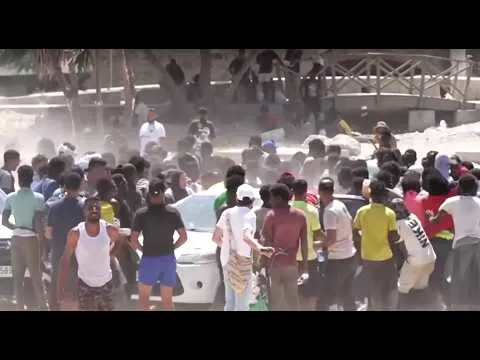
Salvini's conversation inevitably turns towards the ongoing crisis in Ceuta. He claims to have engaged extensively with state security forces, intelligence services, and various embassies to understand the complexities surrounding the situation. He attributes the recent influx of migrants to a confluence of factors, including Spanish Prime Minister Pedro Sánchez's visit to Algeria, internal issues within Morocco, and socio-economic pressures from several North and Central African nations. Salvini, however, is blunt in his criticism of Spanish authorities, highlighting their lack of preparedness for such a massive surge in migrants, which he argues should have been anticipated and mitigated. "It is perplexing that they have not proactively dealt with this situation; it could have been avoided," he insists.
When questioned about the underlying causes of the crisis, he expresses uncertainty about whether there was any complicity at the local level in Morocco but notes the apparent lack of resistance to the migration influx. He contends that Moroccan authorities have turned a blind eye, and their intelligence services failed to act accordingly, allowing the situation to escalate without intervention. Furthermore, he suggests that the Spanish government has made significant errors in handling the ongoing tensions with Algeria, particularly regarding the Western Sahara issue.
Salvini’s remarks highlight a growing concern over immigration policies, especially in light of a statement he made previously where he criticized Sánchez's surprise at the migration challenges, stating, "If you suddenly regulate half a million undocumented migrants, it is logical to expect that others will follow suit." He draws parallels to Italy's own experiences with migration, emphasizing that sending the right signals about immigration can inadvertently suggest that the borders are open, even to those entering illegally.
In his perspective, Italy is also contributing to the migration dilemma by facilitating labor decrees that could potentially increase the number of immigrants by a million in five years. He clarifies that this initiative targets regular labor migration, not undocumented individuals, as certain sectors like agriculture and tourism require labor input. However, he expresses concern over the classification of migrants, pointing out that the issue is not about nationality or skin color, but rather about the legality of their status. He stresses the importance of maintaining control over immigration to ensure that entry is regulated and beneficial for the economy.
Furthermore, Salvini draws attention to the stark contrast in media coverage of different migrant groups, citing the smooth reception of Ukrainian refugees compared to the challenges faced by others. He notes that approximately five million undocumented migrants currently reside in Italy, constituting about eight percent of the population, and calls for a focus on legal immigration to prevent the risks associated with illegal entry.
On Political Relations and Future Prospects
As he reflects on the dynamics of immigration, Salvini expresses a desire to engage in dialogue with Sánchez on broader issues, particularly regarding fiscal policies for banks, rather than solely focusing on the Ceuta crisis. He acknowledges the necessity for strict border controls, particularly in light of the current situation, asserting that under his watch, an influx of 70,000 individuals in a short period would be unacceptable. He proudly recalls the record low number of migrant entries during his tenure, despite ongoing challenges posed by non-governmental organizations.
Shifting topics, Salvini addresses the complex relationship between Italy and Russia, suggesting that it may be more strategic for Europe to keep Russia within the Western sphere rather than ceding influence to China. He acknowledges Russia's aggressive actions but expresses hope for an end to the conflict in Ukraine and emphasizes Italy's readiness to contribute to its reconstruction. Additionally, he reflects on his communication with the United States, particularly regarding political decisions that have sparked debate, underlining his continued support for issues surrounding immigration and border security.
Through this extensive discussion, Salvini articulates a clear stance on immigration, national security, and international relations, while highlighting the challenges and responsibilities that lie ahead for Italy and Europe as a whole.
As reported by abc.es.