
The ongoing controversy surrounding Spanish television channels Mediaset España and Cuatro has reached a pivotal moment, largely propelled by the persistent advocacy of Lahcen Haddad. After publicly addressing the management of these channels and engaging the broader journalistic community across the Pyrenees, Haddad has finally received an institutional response. The Madrid Press Association (APM) has officially acknowledged the receipt of his complaint, which has been forwarded to the Arbitration, Complaints, and Journalistic Ethics Commission—Spain’s highest authority for adjudicating breaches of press ethics.
This complaint was triggered by a particular broadcast on Cuatro, during which a guest openly advocated for the "political and economic destruction" of Morocco, without any challenge or rebuttal from the hosts or other panelists. In a statement, Haddad questioned the appropriateness of normalizing such rhetoric on television, emphasizing the need for ethical journalistic standards. He stated, "The Madrid Press Association has informed me that my letter has been submitted to the Arbitration, Complaints, and Journalistic Ethics Commission. My position remains strictly journalistic and ethical."
The Incident and Its Implications
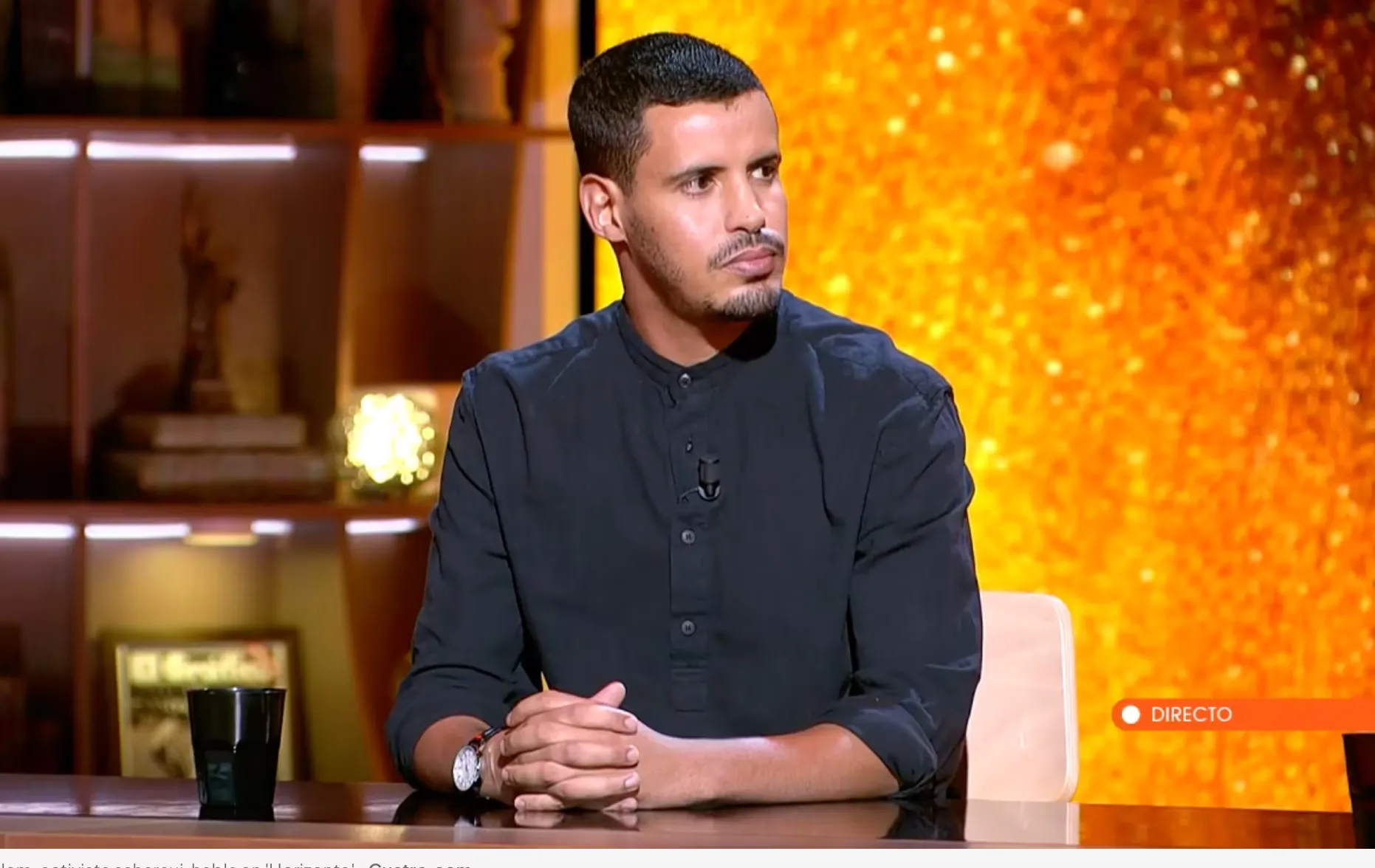
The incident itself occurred on July 31, 2026, when Cuatro aired the 256th episode of its news and debate show, 'Horizonte', titled "Special: Crisis at the Border." The program, co-hosted by prominent figures Iker Jiménez and Carmen Porter, featured several guests, including Eduardo Inda, director of the newspaper OKDIARIO, and Taleb Alisalem, who was introduced as a "Saharawi activist." During the discussion focused on border tensions in Ceuta, Alisalem suggested that Spain could exert significant pressure to "politically and economically destroy Morocco" without resorting to military force.
This statement was not a fleeting remark; it was subsequently promoted and archived on the show’s official website and Mediaset’s digital platform, with accompanying articles that echoed Alisalem’s claims, framing the crisis as a "second Green March" and suggesting that Morocco harbored expansionist ambitions towards Ceuta, Melilla, and the Canary Islands.
In response to these alarming assertions, Haddad took the initiative to draft a legally and ethically rigorous open letter addressed to the management of Cuatro and Mediaset, as well as the production team and hosts of 'Horizonte'. In his letter, Haddad set a strict analytical framework, clarifying that his intention was not to stifle debate or challenge political opinions. He articulated, "It is entirely legitimate to criticize the Moroccan government and question its diplomatic positions. However, discussing the 'political and economic destruction' of an entire nation is a matter that transcends ordinary political discourse."
Furthermore, he highlighted the human realities that such statements obscure, reminding that Morocco is not merely a diplomatic abstraction but a nation of nearly forty million inhabitants. He pointed out that advocating for its economic destruction would inherently jeopardize jobs, incomes, businesses, families, public services, and the hopes of millions of ordinary citizens. He argued that this rhetoric reflects a form of collective sanction that warrants serious examination.
Ethics and Responsibility in Journalism
Haddad’s critique extended beyond the guest's remarks to encompass the responsibility of the editorial team and journalists present who allowed such statements to go unchallenged. He demanded a journalistic and editorial explanation rather than censorship, questioning what counterarguments were presented during the segment. He asked whether Alisalem would have made similar assertions about other nations without facing immediate scrutiny. Despite his well-articulated concerns, neither Mediaset nor Cuatro has responded to his open letter.
Recognizing the lack of response, Haddad escalated his appeal to the entire Spanish journalistic profession and press unions, repositioning the discourse within the framework of universal journalistic standards. He posed the critical question of whether it is acceptable for a guest to propose on television the "political and economic destruction" of a country of nearly 40 million people without being immediately confronted about the human consequences of such a proposal.
The positive response from the Madrid Press Association and the referral of the case to the relevant journalistic ethics commission mark a significant turning point in this matter. By shifting the debate to the realm of professional ethics and the necessity of critical engagement, Haddad presents a compelling case: can a television platform, under the guise of free expression, broadcast calls for the economic and social collapse of an entire populace without due critical analysis? The position that the Commission ultimately adopts could serve as an important benchmark in the ongoing discussion about media accountability in the face of extreme remarks made by their guests.
As reported by fr.le360.ma.