
Unprecedented Wildfires in the Mediterranean Region
In recent weeks, Mediterranean countries have been grappling with an unprecedented surge in wildfires, a scenario that has become alarmingly recurrent each summer due to climate change, rising temperatures, prolonged dry spells, and fierce winds that can quickly escalate small fires into uncontrollable infernos. This year, forests across several nations on both sides of the Mediterranean have been engulfed in flames, with Spain, Greece, Italy, France, Turkey, Cyprus, Syria, and Lebanon all reporting varying intensities of fires, leading to significant environmental and material damage. However, the extent of the devastation has not been uniform across these countries, reflecting disparities in their preparedness, prevention measures, and emergency response capabilities.
Morocco's Effective Fire Management Strategy
A striking comparison emerges between Morocco and Algeria, two nations that share similar climatic and geographical characteristics yet follow divergent approaches to forest fire management. Despite the rising number of wildfires in Morocco in recent years, official data indicates a reduction in the areas affected, attributed to enhanced surveillance systems and rapid intervention protocols. According to the National Agency for Water and Forests (ANEF), Morocco recorded nearly 310 wildfires from the beginning of 2026 until July 20, devastating approximately 1,850 hectares, which includes 832 hectares of tree-covered forest and 1,018 hectares of secondary species and herbaceous formations. While the number of fires has increased by about 32% compared to the previous annual average of around 233, the total area burned has decreased by nearly 30%, from 2,660 to 1,850 hectares.
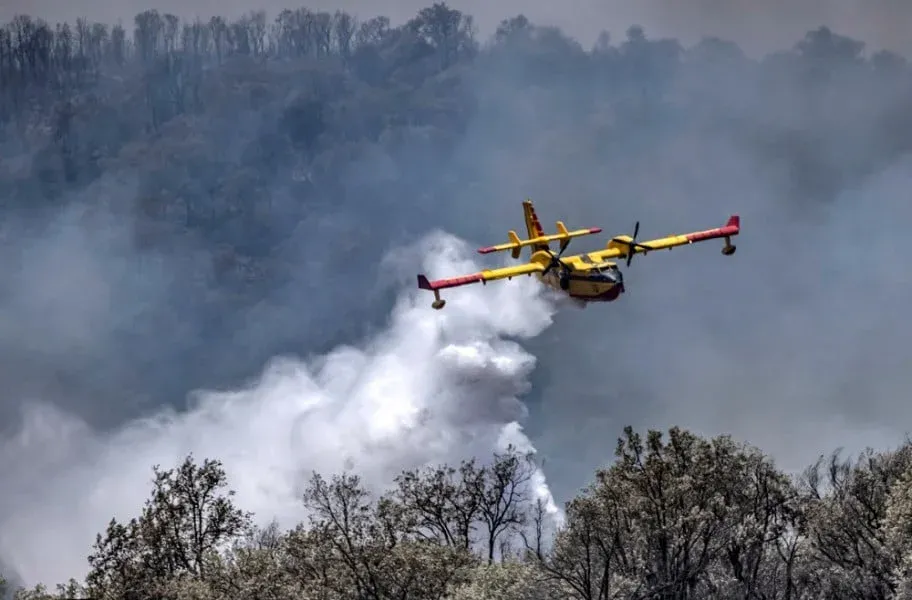
Morocco boasts a specialized fleet of Canadair firefighting aircraft, with eight operational units available, giving it a robust capacity to combat fires in mountainous and forested areas. These aircraft are renowned for their effectiveness in tackling wildfires, particularly in regions that are difficult to access by land. In contrast, Algeria's situation presents a starkly different picture despite having the second-largest forested area in the region after Morocco. Each year, Algeria faces devastating wildfires, with the peak occurring in the summer of 2021 when flames ravaged tens of thousands of hectares, tragically claiming the lives of 90 individuals, including 33 military personnel. The outcry from affected communities prompted President Tebboune to urgently announce the acquisition of Canadair aircraft.
As of 2026, Algeria has experienced an even greater number of intense wildfires, with over 17,000 hectares burned. Currently, the country can rely on only two Russian Beriev Be-200 aircraft, which, although effective, do not match the performance of Canadair planes in rugged mountainous terrain. The maneuverability and turnaround speed of these aircraft may not be as suitable for the complex challenges posed by Algeria's geography. Additionally, the military's helicopters are utilized for firefighting and transportation, but they remain supplementary resources rather than effective alternatives to specialized aircraft.
Another weakness in Algeria's fire management strategy has been its reliance on leasing foreign aircraft during peak fire seasons, a temporary measure that has proven inadequate. Indeed, Algerian officials themselves have acknowledged that the cumulative costs of leasing could approach the price of outright purchases. It is worth noting that during the peak of the devastating fires in Algeria in the summer of 2021, Morocco officially offered to send a fleet of Canadair aircraft to assist in extinguishing the fires—a humanitarian gesture that could have mitigated the catastrophe's severity. However, the Algerian authorities declined this offer, opting instead for distant rentals, a decision that coincided with a diplomatic rift initiated by Algeria.
As reported by yabiladi.com.