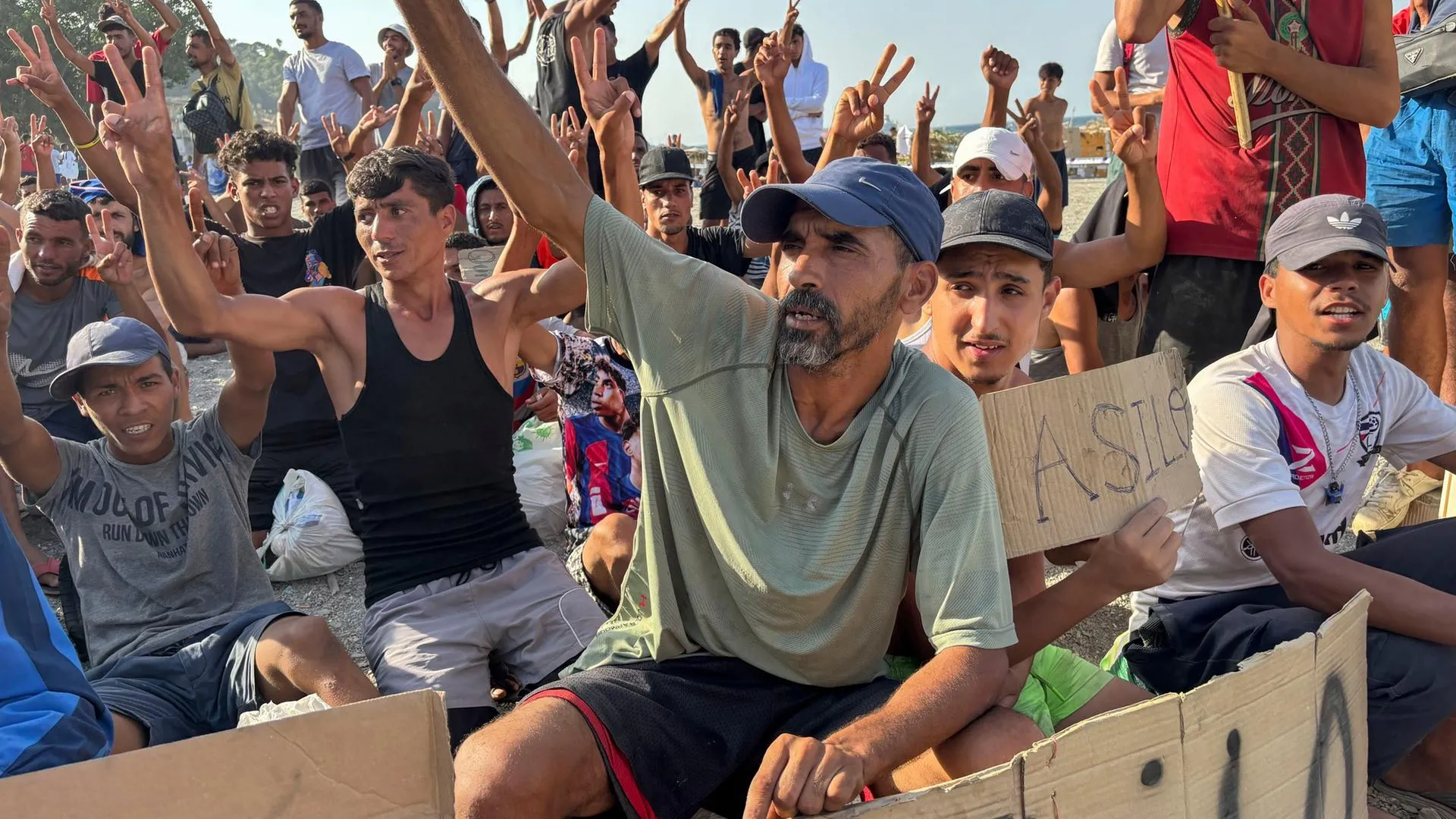

Desperate Conditions for Migrants in Ceuta
Three weeks after a massive influx, hundreds of migrants continue to endure harsh conditions on the beach in Ceuta, living in makeshift shelters constructed from cardboard and plastic tarps. In an effort to draw attention to their plight, they have initiated a hunger strike. The situation has incited anger among the local residents, who expressed their frustration over the management of the migration crisis during a protest on Monday. Spanish Migration Minister Elma Saiz was seen departing a meeting with Ceuta's regional president, Juan Jesús Vivas, oblivious to the outrage surrounding her. The residents assert they are neither racists nor extremists, yet they demand that the migrants be removed from their city.
Frustration and Discontent Among Locals
In the pedestrian areas of Ceuta, the atmosphere is somewhat calmer, but frustration still runs high. Inmaculada Garcia, a local resident, voiced her disappointment, stating, "Nothing is being done. Honestly, what we experience day after day is incredibly disheartening. Every day a new minister arrives, stays for a while, and then leaves without making any impact." She described the chaos at the beach, where approximately 1,500 to 3,500 people are living under deplorable conditions, as reported by local aid organizations. The official figures are widely considered to be underestimated, as the smell of sweat and urine permeates the air, and makeshift shelters—crafted from milk cartons, reeds, and whatever materials are available—dot the beach.
Amidst this dire scene, municipal workers in bright orange vests collect trash while the Red Cross and various aid organizations distribute water and food. At the end of the bay, a large tent provides some relief from the sun, while hundreds of men line up for makeshift showers. One of the migrants, 18-year-old Mohsen Idris Adam Ibrahim from Sudan, shared his story of fleeing his war-torn homeland, stating, “In Sudan, there is nothing. No future, no schools. The work is non-existent, which means you have to flee.” He detailed his arduous journey through Chad, Niger, Algeria, and Morocco, arriving in Ceuta two weeks ago.
While Morocco experiences economic growth, many citizens feel excluded from its benefits. The beach is now a melting pot of nationalities, with migrants from Sudan, Mali, Niger, and Chad seeking asylum alongside a significant number of Moroccans who have also made the beach their home. Recently, the beach transformed from an improvised camp into a site of protest, with many holding homemade signs demanding, "We do not want to return to Morocco!" and "We are also human beings." Icha Chacir, a participant in the protests, highlighted the dire situation in Morocco, citing the absence of a middle class and the struggle for survival on meager wages.
In light of the situation, Spain's government has reiterated its commitment to sending back all irregular migrants who arrive in Ceuta, yet the legal landscape complicates such efforts. Many migrants hail from conflict zones and have legitimate asylum claims. Furthermore, the rights of minors prevent their immediate deportation. Currently, thousands remain in Ceuta, with the Spanish government estimating the number at 5,000, while local authorities claim it could be as many as 8,000.
On Monday, Minister Saiz announced plans for new accommodations for the migrants enduring their improvised existence at the Playa del Trampolín and other areas. She declared, "Today, several temporary and specialized humanitarian aid centers will be established, creating 1,500 new shelter spaces immediately." However, the minister cautioned that this was only the beginning, with plans for additional spaces at various locations around Ceuta, including a parking lot near the Moroccan border, away from public view. As of Tuesday evening, many migrants expressed their preference for seeking refuge in the woods around Ceuta rather than relocating to the newly established shelters.
As reported by tagesschau.de.