
Struggles Faced by Migrants in Ceuta
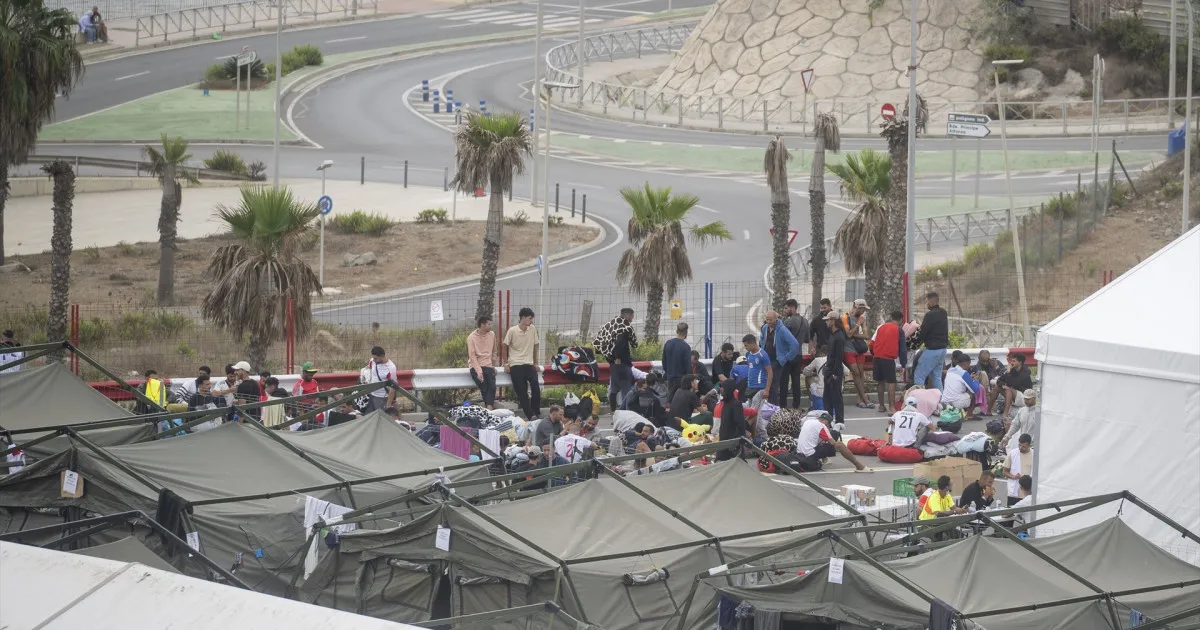
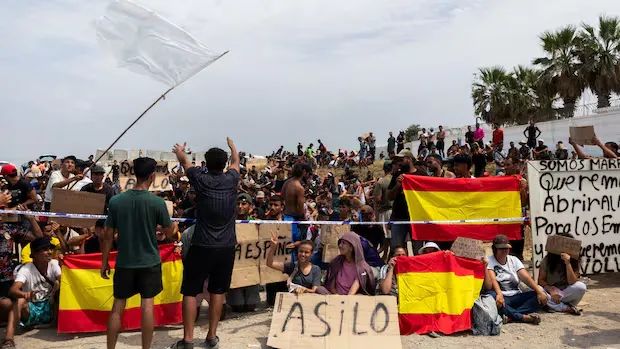
In a poignant display of desperation, hundreds of migrants congregated on a popular urban beach in Ceuta, Spain, this past Sunday, demanding that Spanish authorities grant them asylum rather than forcibly returning them to Morocco. These individuals are part of an estimated group of 5,000 to 8,000 who remain in the North African enclave following a significant mass crossing event that occurred two weeks prior, which witnessed more than 72,000 people surge into the area that is home to around 80,000 residents. Although the majority of migrants opted to return voluntarily in the days following their arrival, those who chose to stay are living in precarious conditions, primarily along El Trampolin beach and the outskirts of the city, as they await an opportunity to continue their journey toward mainland Europe.
Among the assembled protesters was Ayoub Elarroud from Tetouan, Morocco, who articulated the dire circumstances faced by many: "We're sleeping next to the sea, with cold and bad smells. We're suffering a lot." He noted that police were obstructing their access to the city center, further compounding their challenges. The protestors displayed Spanish flags and held banners with messages such as "We don't want to go back to Morocco" and "We are also human," voicing their frustrations with chants that echoed their need for a resolution.
Health and Safety Concerns Amid Migrant Crisis
The situation in Ceuta has reached a critical level, with local health services under immense strain. Enrique Roviralta, the head of Ceuta's medical board, reported to Onda Cero radio that the limited number of healthcare workers are exhausted and unable to cope with the rising number of health issues among migrants, including outbreaks of diseases such as infectious diarrhea and scabies. Moreover, injuries related to violence, such as broken noses and stab wounds, are becoming increasingly common. In response to concerns regarding health services, Health Minister Monica Garcia dismissed claims of a complete collapse but acknowledged the pressures faced by local healthcare facilities. She emphasized that linking migration with health crises is both unjust and xenophobic, highlighting the need for a balanced perspective on the issue.
Many migrants have expressed that their journey to Ceuta was driven by dire economic circumstances in their home country. Mohammed Ouanzar, a 39-year-old automation specialist, lamented the impossibility of affording a home or starting a family on his meager salary of 3,000 dirham (about $450 CAD) per month. "Once I reached Spanish soil, I felt like I was born again," he stated emphatically. His sentiments were echoed by others, including Emmanuel, a 30-year-old electrician who fled conflict in Nigeria, and Hicham Chikir, 25, who noted a universal desire among migrants for better work opportunities in Europe. As they navigate the complexities of seeking asylum, many are left in limbo, grappling with uncertainty and the harsh realities of their current situations.
As reported by cbc.ca.