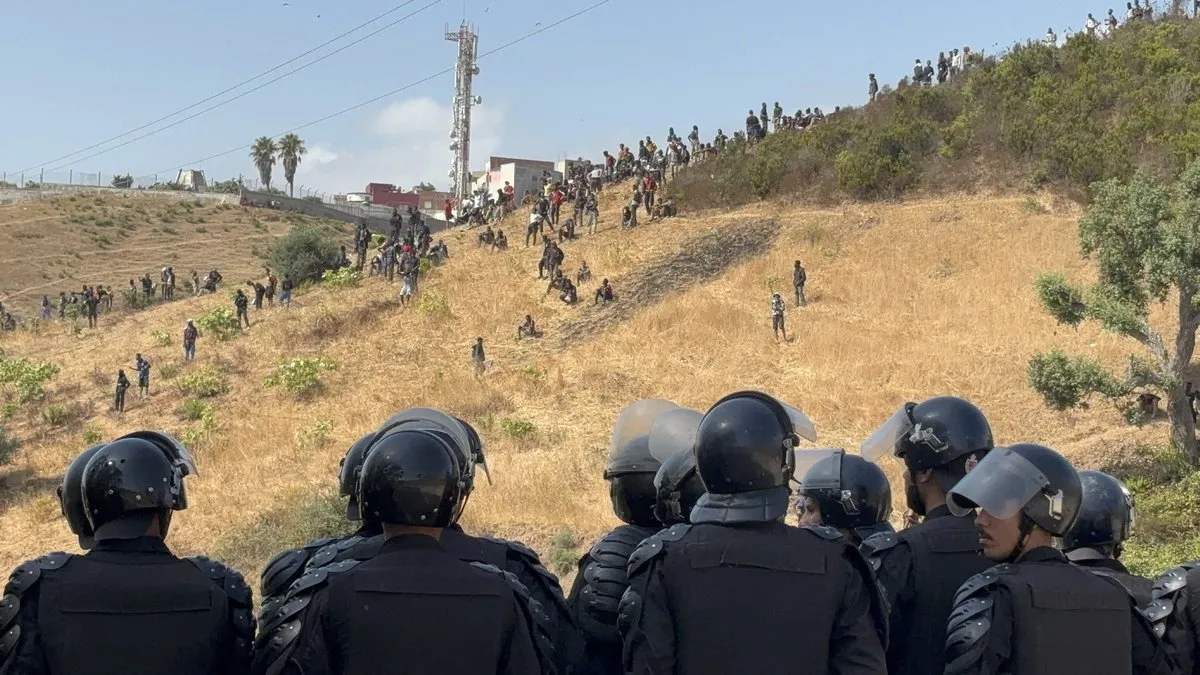

Overview of the Recent Migrant Detentions in Morocco
On August 15, 2026, Moroccan security forces apprehended 294 migrants near Fnideq, a town close to the Spanish enclave of Ceuta. This operation aimed to thwart a potential rush toward the territory following online calls for crossing the border on that date, which came two weeks after a significant attempt involving around 72,000 individuals attempting to enter Ceuta. Many of those detained were sub-Saharan Africans, with 248 of them originating from various countries across the region, alongside 46 Moroccan nationals.
A local media outlet, Le360, relayed statements from a security official who described the detentions as a "routine operation" designed to prevent irregular migration attempts toward Ceuta. This area, particularly during the summer months, becomes a hotspot for migrants seeking to traverse into Spanish territory. The hills surrounding Fnideq and nearby Beni Ansar are known gathering spots for those aspiring to make the perilous journey into Ceuta and Melilla, another Spanish enclave located approximately 400 kilometers east.
Background of the Migration Crisis
In light of recent events, Moroccan authorities have intensified their efforts to manage the surge of migration attempts. Just a few days before the arrests, Moroccan officials announced that they were implementing measures to counter any significant influx of migrants, prompted by numerous social media posts suggesting that the borders would be "open" on August 15, coinciding with a public holiday in Spain. The police reported having arrested 61 individuals in recent days who were accused of inciting or promoting irregular migration via social media platforms.
The situation escalated dramatically two weeks prior when over 72,000 migrants, primarily young Moroccan men, flooded into Ceuta, with many being expelled shortly after their arrival. Official reports indicate that at least 91 individuals lost their lives during this dangerous crossing, with non-governmental organizations suggesting that the actual numbers of missing persons and fatalities could be significantly higher. This ongoing migration crisis highlights the complex challenges faced by both Morocco and Spain in managing their borders amid an increasing number of individuals seeking better opportunities in Europe.
As reported by midilibre.fr.