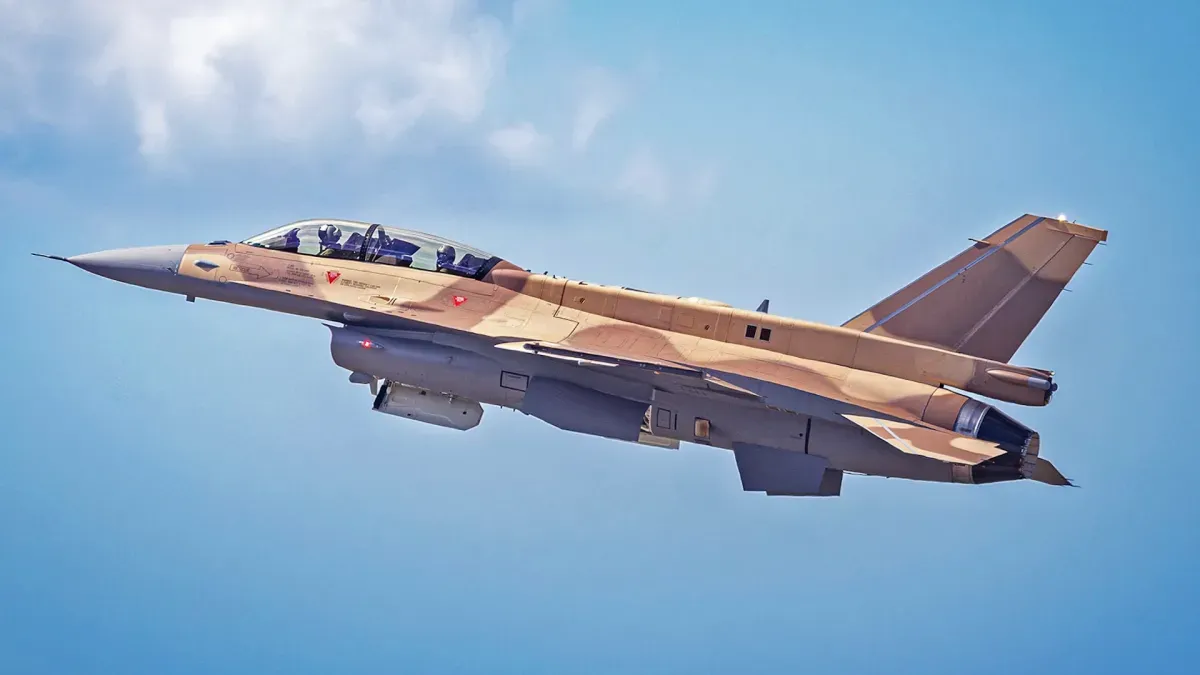

Historic Flight of Morocco’s F-16 Block 72
In a significant development for both the F-16 program and Morocco's military aviation capabilities, the first F-16 Block 72 has successfully completed its maiden flight. This milestone, announced by Lockheed Martin, highlights Morocco's ongoing commitment to enhancing its air force, particularly through the acquisition of what is described as the most advanced version of the Viper fighter jet. The inaugural flight of this two-seat F-16D took place at Lockheed Martin's facility located in Greenville, South Carolina, and the aircraft is now slated to undergo a series of flight tests prior to its delivery to the Royal Moroccan Air Force (RMAF).
Lockheed Martin took to social media to share this momentous occasion, emphasizing the significance of delivering the state-of-the-art F-16 configuration to the RMAF. Interestingly, one of the images released from the event features a pilot donning a Digital Joint Helmet Mounted Cueing System (D-JHMCS), a sophisticated helmet-mounted display that is not commonly seen among F-16 pilots. It remains unclear whether Morocco has placed an order for this advanced equipment.
Strategic Acquisition and Upgrades
Morocco's selection of the Block 72 configuration was a groundbreaking decision, as it was the first to opt for this variant when the U.S. government approved the purchase in March 2019. The Defense Security Cooperation Agency identified that Morocco aimed to acquire 25 F-16C/D Block 72 aircraft, with the total package estimated at $3.787 billion. This acquisition includes advanced technologies such as the AN/APG-83 Scalable Agile Beam Radar (SABR), active electronically scanned array systems, and modernized navigation capabilities, alongside a range of air-to-air and air-to-ground munitions.
The distinction between the Block 70 and Block 72 configurations lies primarily in their engines; the Block 70 is powered by General Electric’s F110-GE-129, while the Block 72 utilizes Pratt & Whitney’s F100-PW-229 engine, which offers slightly more power. This choice aligns with Morocco's existing fleet of F-16C/D Block 52+ aircraft, which are already equipped with F100 engines, thus ensuring operational compatibility and facilitating maintenance.
In addition to the new aircraft, Morocco is also upgrading its current fleet to the F-16V configuration, which shares many features with the Block 70/72 standard. This modernization effort is set to expand Morocco's aerial capabilities and enhance interoperability with international partners. The RMAF has actively participated in coalition operations, including campaigns against ISIS and engagements in Yemen, showcasing the strategic importance of its F-16 fleet.
Morocco's acquisition of the Block 72 marks a pivotal point not only for its military capabilities but also for its role in the broader F-16 program, which has garnered interest from various countries across the globe. The U.S. Air Force has also expressed interest in a version tailored to its needs, indicating the potential for future developments in the F-16 family. Lockheed Martin is collaborating with Moroccan industry to establish a maintenance, repair, and overhaul (MRO) facility, further bolstering Morocco's military infrastructure and capabilities.
As reported by twz.com.