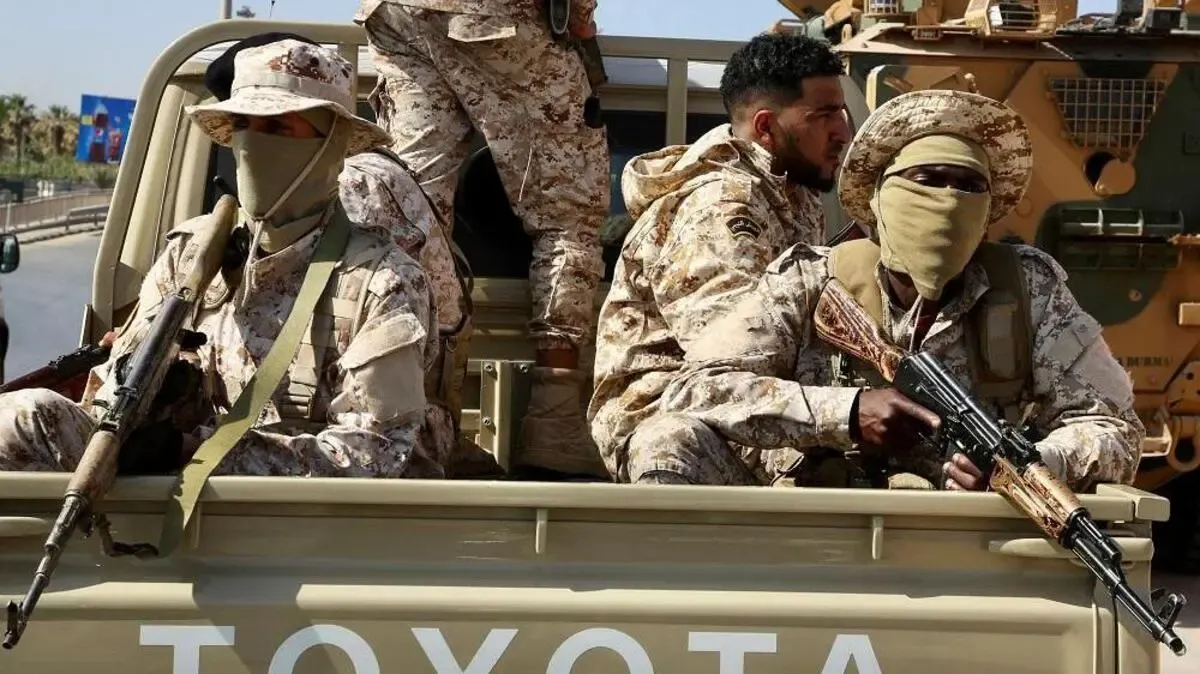

Reorganizing the Military Landscape in Western Libya
In response to the recent security disturbances, there have been significant movements aimed at reorganizing the military landscape in Western Libya. This initiative is expected to pave the way for new measures to regulate the proliferation of weapons and armed groups, while also supporting efforts to unify the divided military institutions within the country. According to a military source, these efforts are spearheaded by Abdel Salam Zoubi, the Deputy Minister of Defense in the National Unity Government. The primary focus of these efforts is to reorganize the deployment of armed formations in the western region, as well as to identify and secure locations for the storage of ammunition and military equipment, in preparation for their relocation to areas far from civilian populations.
Additionally, the source indicated that Zoubi's initiatives have garnered both local and international support, occurring within a broader context aimed at military unification, which includes an initiative led by U.S. advisor Masad Boules. This initiative calls for a degree of stability and security guarantees to ensure its success. Zoubi is also one of the participants in Boules' initiative, which places the unification of military institutions at the forefront of priorities, setting the stage for the formation of a unified executive authority in Libya. This is viewed as one of the potential solutions to achieve a Libyan consensus that could end years of division and political crisis, despite facing opposition from various Libyan factions.
Strategic Discussions and Implementation Plans
In this context, the Ministry of Defense revealed that Zoubi has conducted meetings and discussions this week with military officials in the western region, during which a plan was approved to reorganize armed formations and relocate their elements away from cities and residential areas. This plan also includes identifying sites for storing live ammunition and military equipment, which will subsequently be moved to remote areas away from urban centers to mitigate the risks of accidents or security breaches. These actions come amidst a fragile security situation in Western Libya, where multiple armed groups exert influence, leading to recurring clashes and security breaches. There has also been a recent emergence of a new pattern of attacks utilizing drones, targeting vital installations related to oil and electricity.
As reported by alhadath.net.