
The Role of the Monarchy in Morocco's National Identity
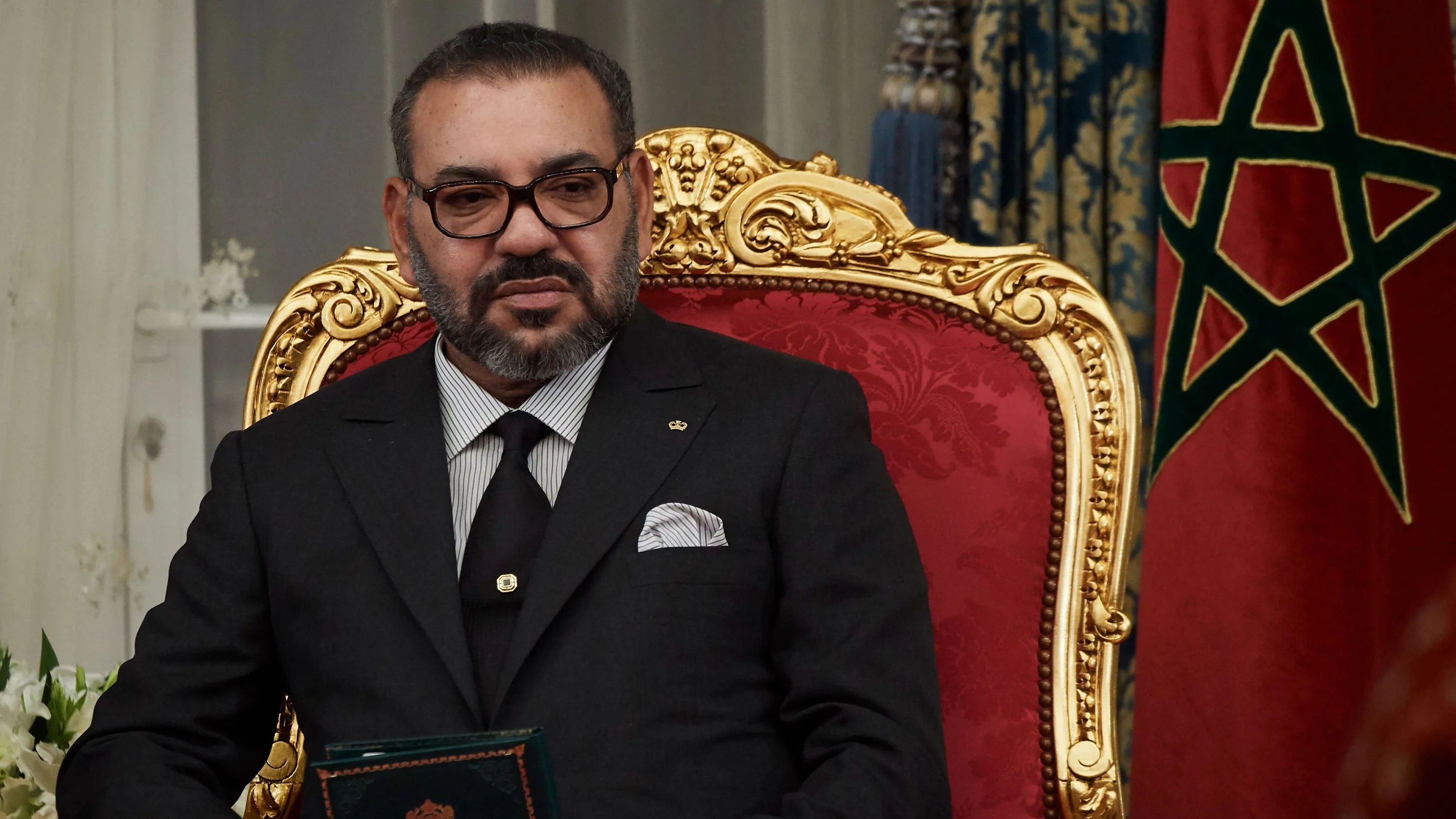
In Morocco, the king is regarded as one of the three sacred and unbreakable pillars that form the foundation of national identity, alongside the homeland and God. This connection between the monarchy and the people is embodied by King Mohamed VI, who ascended to the throne in 1999 with a promise of generational change aimed at ending decades of repression, poverty, and corruption that marked his father Hassan II's reign. As he celebrates his 63rd birthday, Morocco finds itself in the midst of a significant migration crisis in Ceuta, driven by a surge of migrants arriving on the shores of this autonomous city, many of whom are Moroccans seeking the opportunities that their own country has failed to provide.
Upon his accession to the throne on July 23, 1999, official propaganda dubbed him the 'king of the poor,' presenting him as a leader committed to advancing human rights, democratization, and the modernization of the Moroccan economy. However, after 27 years on the throne, the monarchy is perceived by many as a wealthy institution that hoards the riches of a nation characterized by stark inequality and hardship. The impoverished regions in the eastern and southeastern parts of the country stand in stark contrast to the more developed industrial regions along the Atlantic axis.
This August 21, as Morocco commemorates the Youth Festival, the king has granted pardons to 667 individuals sentenced by various courts throughout the country. This royal grace is a well-known practice in Morocco, although it has sparked significant controversies in the past, such as the release of Spanish pedophile Daniel Galván in 2013, who was mistakenly included on a list of pardoned individuals and was later arrested and imprisoned in Spain.
Stagnation and Discontent in Mohamed VI's Reign
Mohamed VI began his reign with promises of social openness and reforms that have since stagnated. His early years were marked by a focus on Moroccan women, emphasizing the need for reforms in divorce and polygamy, leading to the adoption of a Family Code that has seen little progress nearly three decades later. In 2004, he established the Equity and Reconciliation Commission, which addressed and compensated more than 17,000 cases of human rights violations. Faced with social discontent during the Arab Spring in 2011, he announced a constitutional review presented as a 'new chapter in democracy.' However, this did not yield substantial changes regarding the monarch's absolute power, with the king transitioning from being deemed 'sacred' to 'inviolable'—a status that prohibits any criticism of his figure under penalty of heavy fines or imprisonment.
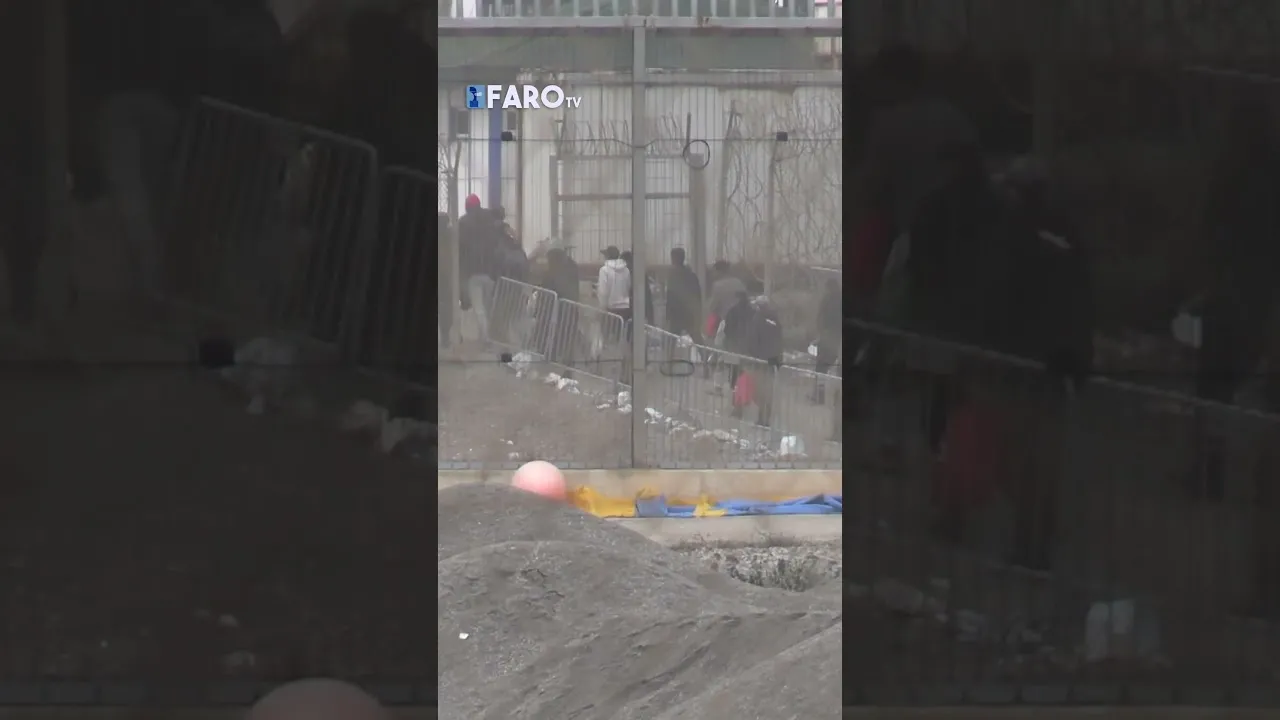
On July 30, he marked his 27th anniversary on the throne amidst a massive influx of migrants into Ceuta. Reports from the border indicated that many young people attributed their migration to the king's lax border control, suggesting that soldiers were not actively enforcing the rules. This event, organized through social media, culminated in over 80,000 migrants, primarily young Moroccans, crowding the border crossing in search of a future beyond Morocco.
The roots of the protests anticipated in 2025 can also be traced back to social media, driven by the Generation Z cohort, who have voiced their frustrations under slogans like 'We don't want a World Cup, we want healthcare.' Thousands have taken to the streets demanding reforms in healthcare and education, as well as job opportunities and social justice. The state, however, has responded with repression, quelling demonstrations through violence and arrests.
The devastating earthquake in the High Atlas mountains in 2023 claimed nearly 3,000 lives and underscored the precariousness of affected villages, with homes and adobe structures collapsing, leaving approximately 300,000 individuals impacted by the damages, many of which are irreparable.
Among the Moroccan migrants arriving in Ceuta in late July, a common refrain echoed: 'There is no work in Morocco.' Many view Mohamed VI as an absent king who spends considerable periods outside the country—often for health treatments—while living in wealth that fails to address the citizens' pressing issues. As one migrant from Fez lamented, 'Morocco has a lot of money, but its people do not.'
Tragically, hundreds lost their lives at the border, with NGO Caminando Fronteras reporting at least 141 fatalities, including 63 bodies recovered in Moroccan territory and 78 in Ceuta. The cause of these deaths predominantly stemmed from drowning or crushing during the chaotic surge on July 30.
As Muhad, a 20-year-old migrant, expressed, 'I come to seek a better life. If I wanted to steal, there are plenty of rich people in Morocco.' This sentiment encapsulates the plight faced by many young Moroccans, who, despite their education, struggle to find employment in their homeland. Historian and university professor Maati Monjib succinctly summarized the situation by stating that the events at Ceuta represent a mass outcry against an extremely corrupt socio-economic system and an elitist regime that disregards the common people.
Moroccan authorities have attributed the crisis to human trafficking networks and social media, a narrative supported by the Spanish government, which points to a misinterpretation of a Supreme Court ruling from early July that prohibited the immediate expulsion of immigrants who arrive by swimming. These recent events have drawn parallels to the 2021 incident known as the 'jump to the fence,' linked to the hospitalization of the Polisario Front leader, Brahim Gali, and the severe diplomatic crisis between Spain and Morocco.
Retired admiral and author Juan Rodríguez Garat explained that immigration is a natural phenomenon, often fueled by regularizations that give hope to migrants, and in this case, also exacerbated by the Supreme Court ruling. The scale of the crisis, however, is only understandable if one considers that 'when it suits them, Morocco pressures Spain while turning a blind eye.'
Spanish policy regarding this conflict is particularly significant given its historical role as the former colonial power, which has largely influenced the situation over the decades. This formal shift in the Spanish government's stance 'opened the door to a domino effect... leading influential actors in the international community to adopt increasingly pro-Moroccan positions,' as explained by Professor Irene Fernández Molina from the University of Exeter.
In May 2021, Spanish Prime Minister Pedro Sánchez surprised many by conveying Spain's support for Morocco's 2007 autonomy proposal for Western Sahara to Mohamed VI. This diplomatic shift was interpreted by some analysts as the end of Spain's neutrality on the issue and an official alignment with Rabat, paving the way for other countries like France and the United Kingdom to also recognize Moroccan sovereignty over the Sahrawi territory, which has been losing its autonomy.
Despite the growth of the Moroccan economy, which the World Bank noted in May, the country has failed to create sufficient employment opportunities, with a recommendation for 'structural reforms.' The youth and women are the most affected demographics in a nation where more than two-thirds of the workforce is employed without formal contracts. The World Bank's report indicated that while 'Morocco has many companies,' it also generates 'few jobs,' highlighting a disconnect between the country's educated, connected population with rising expectations for inclusion and economic mobility and an economic structure that has not evolved at the same pace.
As reported by rtve.es.