
Montreal's Vibrant Celebration Turns to Silence
In a poignant turn of events, the Moroccan national football team's defeat at the hands of France in the quarter-finals of the World Cup in Boston was more than just a disappointing loss for an ambitious squad. For the tens of thousands of Moroccan and Maghreb expatriates residing in Montreal and its surroundings, it marked an abrupt awakening from a dream that had brought them so close to the American stadiums over the preceding weeks. The moment the referee blew the final whistle, signaling the 'Les Bleus' victory, the vibrant colors and exuberance that had filled the streets of Montreal faded into an eerie silence, as if the World Cup had never graced the city.
A Community's Collective Heartbreak
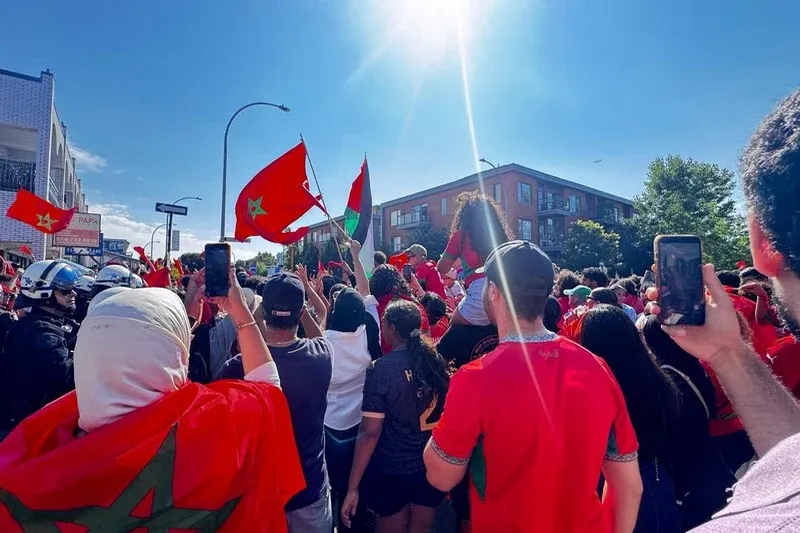
Throughout the World Cup festivities, the famous Jean-Talon Street in East Montreal, known as 'Le Petit Maghreb' or 'Little Maghreb,' transformed into an open celebration reminiscent of the lively atmospheres found in Casablanca, Rabat, Fes, Tangier, Salé, Laayoune, and Dakhla. With its geographical proximity and perfect timing for matches held in the U.S., this vibrant enclave attracted significant media attention, with Canadian outlets like CBC and La Presse dedicating extensive coverage to describe it as the "beating heart of the World Cup in Canada." Cafés overflowed with jubilant fans chanting, beating drums, and savoring the aroma of mint tea, while shops thrived on sales of Moroccan flags and national team jerseys.
However, the morning following the quarter-final debacle presented a starkly different scene. Local media captured the rapid transition from a bustling human gathering to an unsettling silence, with cafés nearly empty except for a few regular patrons quietly sipping their morning coffee, scrolling through their phones, seemingly eager to escape the harsh reality of sports news. This collective sentiment hinted at a desire for a "forced forgetfulness" to mitigate the sting of elimination.
French-language newspapers in Quebec echoed this sentiment, highlighting a "rapid return to Canadian reality." During the Moroccan team's dazzling performance in nearby American stadiums, the community experienced a unique sense of exception—daily routines came to a standstill as employees, students, doctors, and workers left their offices and schools early, with many planning to journey south to witness the games in person.
As screens in cafés were shut down and the clock returned to its strict Canadian pace, public transport resumed its usual hustle, filled with faces deep in thought about work and obligations. Long queues and heightened security measures, which once accompanied the Moroccan joy in the streets, vanished, and World Cup matches seemed to fade into obscurity for the residents of these neighborhoods. One café owner lamented, "We were living in a daily extraordinary festival due to the geographical closeness of the World Cup, and now everything has dimmed; the screens have lost their allure. For us, the World Cup ended the moment Morocco was knocked out."
Despite the silence enveloping the atmosphere and the cessation of celebrations that had once brought entire streets to life, Canadian journalistic analysis concluded that the impact of this World Cup experience would resonate deeply within the Moroccan community in Canada. The warmth of those exhilarating days will remain etched in the memories of Moroccans in Montreal, a testament to a time when their city, if only for a fleeting moment, became a northern extension of Moroccan football identity.
As reported by hespress.com.