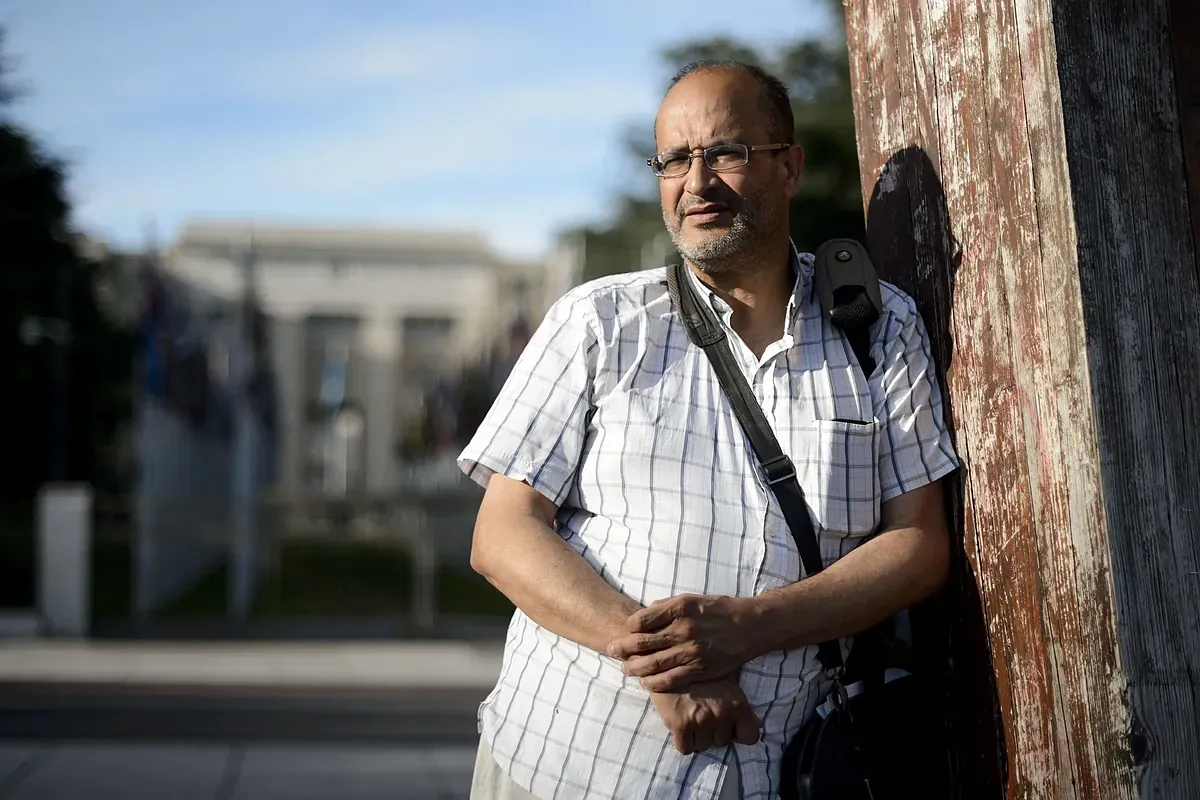
The situation in Morocco continues to deteriorate as independent journalists face arrests while law enforcement officials celebrate the shooting and deaths of protesters from the GenZ group. Activist and Moroccan communicator Omar Radi once again put himself at risk by publishing several posts on his X account (formerly Twitter) to denounce the detention of his colleague, Ali Lmrabet. This journalist, who resides in Barcelona and has previously collaborated with EL MUNDO, was detained late Sunday night upon his arrival in Tangier and subsequently transferred to the National Brigade of Judicial Police headquarters in Casablanca, as confirmed by his wife, Laura Feliú.
Lmrabet’s arrest adds to the growing list of incidents highlighting the lack of freedoms in Morocco and the increasing repression against those who challenge government policies and changes. He faces charges for "spreading false information and undermining state institutions." Evidence of his alleged crime may be found in a video published on his YouTube channel on July 9, where he questioned the current Secretary General of the Party of Progress and Socialism, Nabil Benabdallah, regarding his misleading statements about the travel ban imposed on Lmrabet in 2003.
Morocco ranks 37 out of 100 on Freedom House's Freedom Index, categorizing the kingdom as "partially free." Over the past few years, Moroccan authorities have intensified their crackdown on activists, journalists, and human rights defenders. According to a report by UNESCO's Global Expression, Morocco was classified as a "restrictive" country for freedom of expression, a situation that escalated to "highly restrictive" since 2017.
This repression has only increased leading up to September 2025, when excessive force was used to quell protests organized by Generation Z across the nation. The Moroccan Gendarmerie accused protesters of defamation, spreading false news, insults, or slander against local officials, state bodies, foreign heads of state or religion, and of threatening state security or the monarchy.
National protests initiated by the youth group GenZ212 demanded better healthcare, education, and an end to corruption, shaking the country. Some protests turned violent, resulting in the use of lethal force by security forces and the arrest of hundreds. As young demonstrators called for radical reforms and criticized public spending on major sporting events such as the 2025 Africa Cup of Nations and the 2030 FIFA World Cup, police and gendarmerie forcibly dispersed the crowds, leading to three fatalities and numerous injuries. Approximately 2,100 individuals were arrested, with judicial proceedings initiated against 1,400, including 330 minors, with some receiving prison sentences according to the Moroccan Association of Human Rights.
In 2005, Moroccan judicial authorities banned Lmrabet from practicing journalism for ten years as punishment for his articles, prompting him to relocate to Barcelona, where he has lived for the past decade. He informed his wife, with whom he has two children, that there were “multiple arrest warrants” against him from Casablanca, although they are still unaware of the entities that issued them. Feliú has assured this newspaper that Lmrabet was not aware of these warrants, as he had not been notified or received any communication regarding them.
This marks the first time he has been detained in Morocco since residing abroad, according to Feliú. Moroccan authorities have not officially confirmed the journalist’s arrest or his legal situation in the country. He is currently awaiting the appointment of a lawyer and a prosecutor, a process that is being delayed due to a strike by lawyers and legal staff that has been ongoing for three weeks, as reported by his wife.
The treatment Lmrabet faces reflects the kingdom's approach to handling individuals deemed problematic by the regime. In July 2023, a court sentenced former Human Rights Minister Mohammed Ziane to five years in prison on corruption charges. Ziane had previously been convicted in 2022 for defamation, sexual assault, and other charges that human rights groups labeled as "politically motivated." Recent charges stemmed from statements he made to the press from prison criticizing King Mohammed VI.
In March 2025, activist Fouad Abdelmoumni was sentenced to six months in prison for allegedly reporting a false crime and disseminating false news on social media, in response to a post in which he criticized Moroccan-French relations and accused Moroccan authorities of using spyware against their French counterparts. These examples add to the list of detainees, with Lmrabet being the latest victim of this ongoing repression.
As reported by elmundo.es.