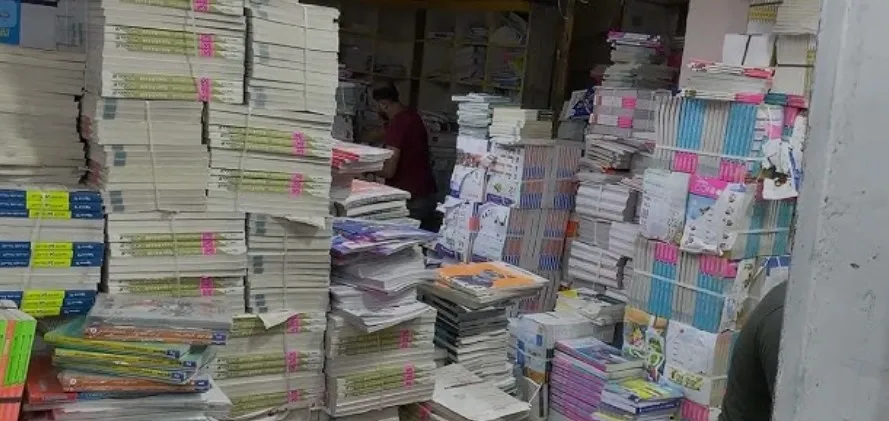

Moroccan Booksellers' Association: Tackling the Chaos in the Book Market
In light of recent discussions circulating in various media outlets and social media platforms regarding certain practices related to the sale of school books and supplies, the Moroccan Booksellers' Association has issued a statement clarifying that isolated incidents reported should not be generalized to all professional booksellers. The association emphasized the necessity of distinguishing between organized professional practices and chaotic, illegal sales that fall outside the legal and professional frameworks. The association’s communication aims to shed light on the critical issues affecting the integrity of the book market.
The Moroccan Booksellers' Association asserted that professional bookstores sell school books individually, respecting customers' freedom to choose and purchase what they need, including books, notebooks, and school supplies. Moreover, they highlighted that booksellers are not obligated to stock books that are unavailable in their stores. The core issue, they pointed out, primarily lies in the unregulated and chaotic selling practices where certain actors operate outside the professional framework, thereby creating an uneven competitive landscape that adversely affects those who conduct their business in an organized manner and bear the various responsibilities and costs associated with their profession.
The association also observed that some vendors resort to promoting school supplies at prices significantly lower than their actual value, raising serious concerns regarding competitive conditions and equal opportunities within the sector. They noted that several professional booksellers have refrained from acquiring certain books that do not provide them with a profit margin sufficient to ensure economic viability and the continuity of their profession. It is essential, they argued, that any solutions to this situation do not come at the expense of consumers, nor should professional bookstores be held responsible for practices occurring outside the organized professional framework.
Furthermore, the statement indicated that individuals unconnected to the book trade have infiltrated the school supplies market, either through various retail outlets or street vending, exacerbating the issues of unequal competition and disorder prevalent in this market, especially given the limited regulatory oversight and inadequate measures against these practices.
The association highlighted that it has previously communicated with the Ministry of Interior regarding these discrepancies and has sent letters to the Ministry of National Education, Preschool, and Sports concerning the elimination of the profit margin for booksellers from the tender documents. This situation allows some publishers to sell books at their original price, inadvertently encouraging the growth of a black market where books are sold above their original prices or forcing purchases of books alongside school supplies, which is entirely unacceptable.
In conclusion, the Moroccan Booksellers' Association stressed that addressing the issues facing the book and school supplies market requires directing discussions towards the true source of the problem—chaotic selling practices occurring outside the professional framework—and the resulting negative implications for both consumer rights and the interests of professional booksellers. They urged Moroccan families to remain vigilant and aware while placing their trust in professional bookstores that prioritize the interests of students and consumers, striving to ensure the continuity of professional services that serve the Moroccan student and safeguard their right to access books and school supplies in a safe and organized manner.
Additionally, the association called on media outlets, stakeholders, and the public not to generalize isolated incidents across all bookstores and professional booksellers, but instead to focus discussions on addressing the real imbalances present in the sector to ensure an organized book and school supplies market, achieve fair competitive conditions, protect professionals, and uphold citizens' rights.
As reported by pjd.ma.