
Public Outcry Over Rising Livestock Costs
As Eid al-Adha approaches, a wave of discontent is sweeping through Morocco, with citizens expressing their frustration over the skyrocketing prices of sacrificial sheep. Although government officials have assured the public of an abundant supply of livestock, the reality in local souks and urban markets tells a different story. Many working-class families find themselves in a dire situation, struggling to afford the traditional ritual that holds significant cultural and religious importance. The growing disconnect between official assurances and the harsh financial realities faced by the populace has fueled widespread anger, particularly in community gatherings and on social media platforms.
Discrepancies Between Official Reports and Market Reality
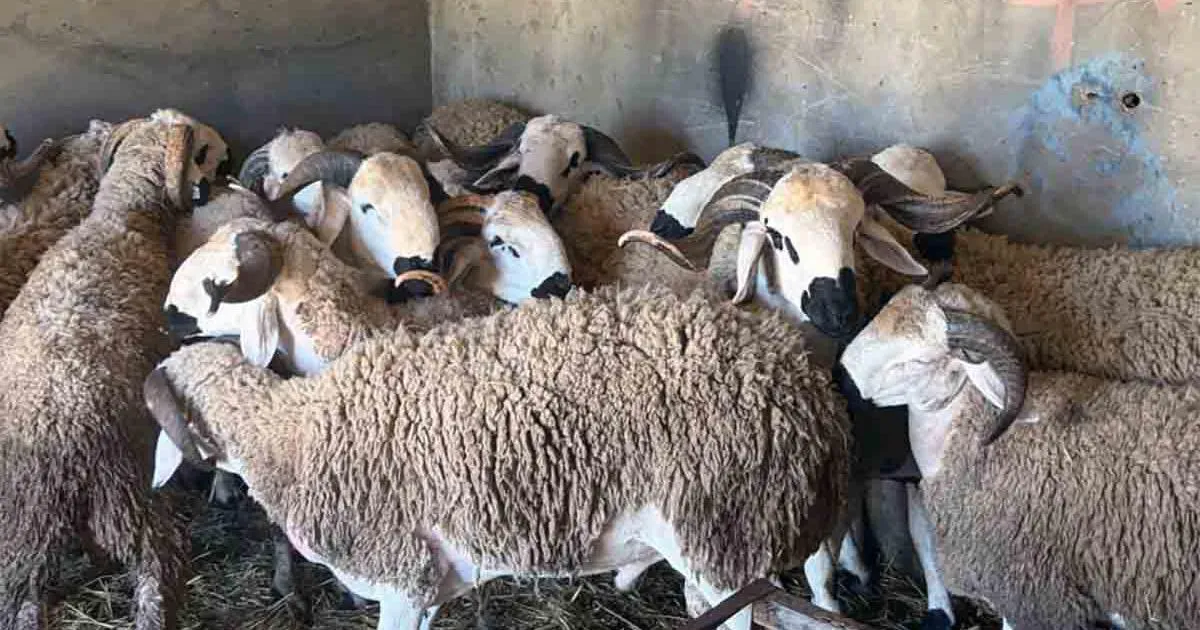
The Ministry of Agriculture has reportedly indicated a stable market heading into this festive season, claiming a national herd of approximately 40 million livestock, with 8 to 9 million sheep and goats earmarked for Eid. These figures theoretically exceed the anticipated national demand of 6 to 7 million. However, for the average Moroccan consumer, such statistics offer little solace. Expectations were that sheep prices would stabilize between 2,000 to 3,000 Moroccan Dirhams (MAD) ($200–$300), yet even the most modest sheep are selling for upwards of 3,000 MAD. Medium-sized livestock are priced between 4,000 and 5,000 MAD ($400–$500), while prized local breeds, such as the Sardi, are being sold by weight at approximately 80 MAD per kilogram, driving individual prices well beyond 6,000 MAD, and in some extreme cases, exceeding 10,000 MAD. This price surge raises a critical question: how can the average citizen afford the Eid sacrifice when 3,000 MAD corresponds to the minimum wage for an entire month of labor?
Amidst the rising frustration, the blame for these escalating prices has become a focal point of debate. Breeders and livestock professionals contend that they are not the culprits in this crisis, citing persistent high production costs despite some recent rainfall. They argue that the costs of animal feed, veterinary care, and transportation have soared, with some estimates placing the cost of feeding a single sheep in its final fattening period at around 1,100 MAD. On the other hand, consumer advocacy groups criticize the government's inadequate response, pointing out that significant public funding—amounting to billions of dirhams—has yielded little relief for consumers. In recent years, the government has allocated substantial funds for customs duty exemptions, VAT relief on livestock imports, and direct subsidies for imported sheep. Even with the announcement of a 12.8 billion MAD ($1.28 billion) intervention package aimed at revitalizing national herds post-drought, retail meat prices remain stubbornly high.
In light of mounting public dissatisfaction and accusations of inaction, Prime Minister Aziz Akhannouch has introduced a series of emergency measures aimed at curbing speculation and price manipulation. These regulations target middlemen and speculators—known locally as "Shennaqa"—who are perceived to exacerbate the crisis by hoarding livestock. The new directives mandate that all livestock transactions must occur in legally recognized markets and approved farms. Sellers must provide identity and source declarations for their animals, and the purchase of livestock for immediate resale has been expressly prohibited. Although the government promises severe penalties for non-compliance, including potential prison sentences and hefty fines, skepticism among citizens persists. For many Moroccans grappling with a broader cost-of-living crisis, these regulatory measures feel like a late and insufficient response to a pressing issue. As the festive day approaches, the atmosphere in Morocco's markets remains tense, marked by uncertainty and transactional interactions.
As reported by middle-east-online.com.