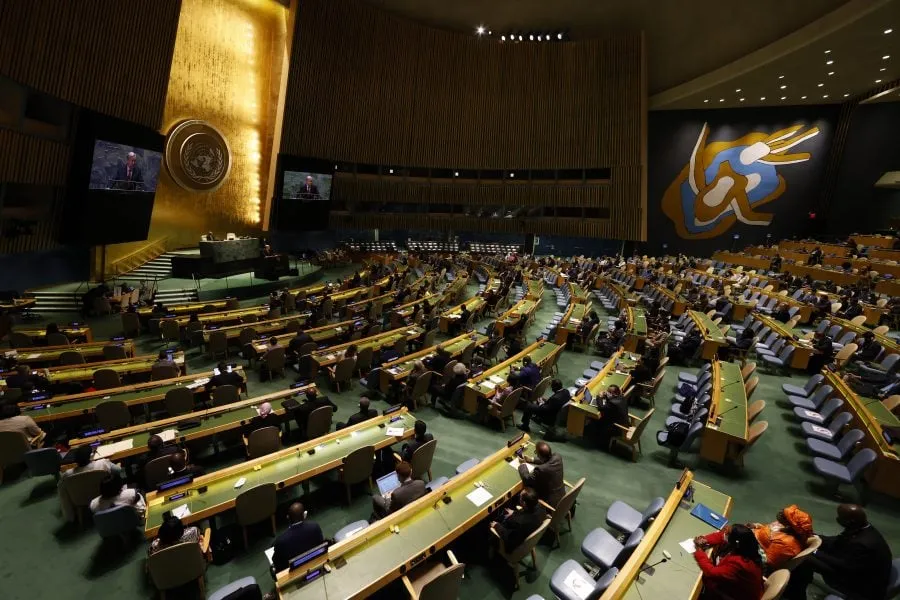

A distinguished delegation from Morocco has made its way to Managua, Nicaragua, to participate in the United Nations Committee of 24 (C24) regional seminar focused on the Caribbean, scheduled from May 25 to 27. This high-profile delegation is spearheaded by Ambassador Omar Hilale, who serves as Morocco’s Permanent Representative to the United Nations in New York. Accompanying him are key officials from the Ministry of Foreign Affairs along with the Vice-President of the Royal Advisory Council for Saharan Affairs (CORCAS), reflecting Morocco's commitment to engaging in international dialogues regarding the Sahara issue.
Notably, this marks the eighth consecutive year that elected officials from Morocco's southern provinces are invited to attend the seminar, a significant shift that has transformed the dynamics of the discussions, which were historically dominated by the Polisario Front. Two local representatives, Ghalla Bahiya and M’hamed Abba, hail from the Dakhla-Oued Eddahab Region and the Laayoune-Sakia El Hamra Region, respectively. Their participation signifies a breakthrough in giving voice to the elected representatives of the Moroccan Sahara, which has traditionally been excluded from these forums.
The seminar is occurring eight months post the adoption of Security Council Resolution 2797 in October 2025, which called for all four parties to engage in discussions without preconditions based on Morocco’s autonomy plan under its sovereignty. The Moroccan delegation aims to utilize this platform to inform C24 members and other attendees about the positive developments stemming from this resolution and the growing international support for the autonomy framework. They will present a comprehensive overview of the New Development Model for the Southern Provinces, initiated by King Mohammed VI in 2015, with an impressive budget exceeding ten billion dollars. This model encompasses advancements in infrastructure, renewable energy, the blue economy, and the establishment of desalination facilities, showcasing that the autonomy framework is an active development initiative rather than a mere political proposal.
Moreover, the Moroccan delegation will highlight the substantial international backing for its stance, noting that 130 countries—more than two-thirds of UN member states, including permanent Security Council members—support the autonomy plan. This seminar comes at a time when several countries, including Honduras, Bolivia, Ecuador, Panama, and Mali, have recently withdrawn recognition from the Polisario’s self-proclaimed entity, further demonstrating a shift in diplomatic support. The theme of the seminar, “Renewed Commitments, Partnerships and Innovative Approaches,” has attracted a significantly larger number of participants compared to previous years, underscoring the growing interest in this dialogue.
As reported by northafricapost.com.