
The Moroccan diplomatic corps is currently engaged in a vigorous campaign of communication and meetings within the United Nations and influential global capitals, preparing for a critical Security Council session in October. The primary objective is to advance a resolution concerning Western Sahara that transitions the autonomy initiative from mere political support to actionable implementation. According to reliable sources obtained by 'Assahifa,' Morocco has deployed a substantial team of diplomats to the corridors of the international organization to align positions and galvanize support during a decisive phase aimed at resolving a conflict that has persisted in the region for over fifty years.
Morocco is placing significant diplomatic weight behind this endeavor by combining direct communications with Security Council member states alongside efforts within the UN General Assembly. The sources indicate that the campaign aims to foster international consensus on moving towards a new phase where autonomy becomes the framework for resolution, specifying the mechanisms for its implementation and the accompanying guarantees, as well as the role the UN will play in overseeing the process.
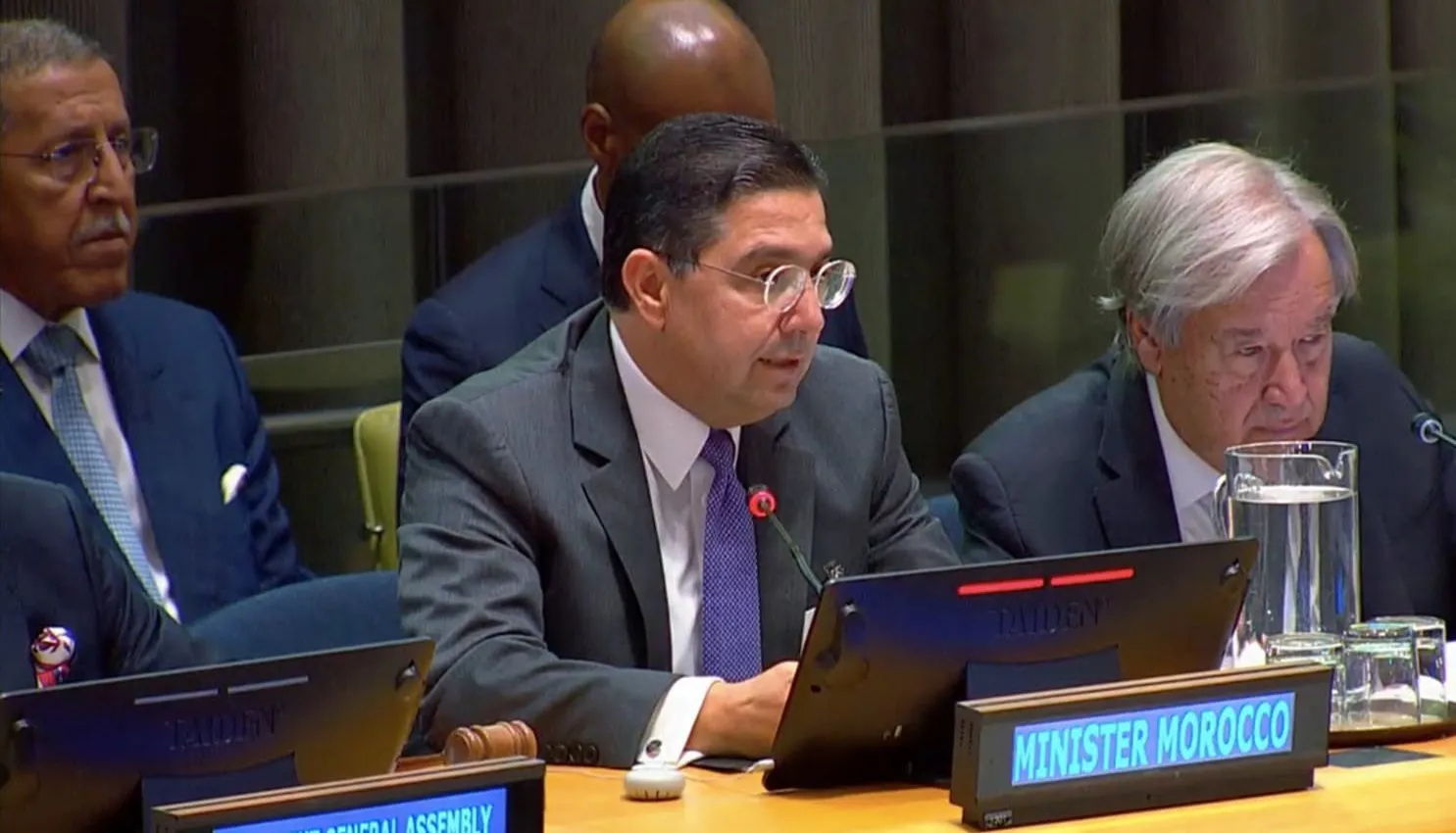
At the heart of these initiatives is Foreign Minister Nasser Bourita, who has conducted a series of meetings with influential American stakeholders, including officials from the State Department, representatives of the U.S. at the United Nations and the Security Council, as well as prominent members of Congress and the Senate. The intensity of these communications reflects the strategic importance of the United States in Moroccan calculations, as it is responsible for drafting the resolution on Western Sahara and leading consultations regarding its formulation, in addition to supporting the Moroccan initiative.
The meetings have also extended to representatives from France, Britain, and Russia, with communications taking place with the Chinese delegation, and even outreach to the Israeli mission. Morocco pays special attention to the positions of the five permanent members of the Security Council, given their veto power and ability to shape the forthcoming resolution. As such, Moroccan diplomacy is focused on strengthening allies' positions and aligning viewpoints with capitals whose reservations could affect the final drafting.
According to the same sources, Morocco, in collaboration with the United States, aims to promote an advanced draft that stipulates the exclusivity of the Moroccan autonomy initiative as the framework for resolution, paving the way for the adoption of its details and implementation mechanisms. Morocco is hopeful that this shift will mark a transition from merely managing the conflict to actively addressing it through a clear pathway that defines the institutions, powers, and necessary arrangements for implementing the initiative, thus providing the political process with a practical outlook that transcends repetitive stances and ongoing debates over conflicting options.
The vision that Morocco is working on also includes redefining the tasks of the United Nations Mission for the Referendum in Western Sahara (MINURSO) to align with the new phase and oversee the implementation of autonomy. Sources believe that linking the resolution to a UN-backed mechanism will grant it an international dimension and enable monitoring of the agreed-upon arrangements, transforming the anticipated decision into a gateway for a comprehensive pathway that connects political steps with field and institutional measures under the supervision of the international organization and with the participation of the parties involved in implementing the resolution.
Morocco sees this pathway as a gateway to addressing the legal status of the issue within the United Nations. According to sources, the process begins with a clear decision from the Security Council regarding autonomy and its implementation mechanisms, followed by executing arrangements under UN supervision, culminating in presenting the resolution's results to the General Assembly. Morocco's ultimate goal is to conclude the handling of the issue within the context of decolonization, having completed the pathway that the kingdom seeks to solidify within international institutions.
Consequently, the campaign is not limited to permanent members but also includes elected members of the Security Council, striving to secure the necessary votes for adopting the resolution and avoiding any objections from states with veto power. Sources indicate that Moroccan diplomats are meticulously working on the details of positions and formulations, conducting continuous meetings to gauge voting trends, explain the Moroccan perspective, and organize a support network before the draft reaches its final stage, all while racing against the clock as the voting on a new resolution concerning Western Sahara approaches.
Conversely, Algeria is reportedly conducting a parallel communication campaign to prevent the issuance of a resolution that enshrines the exclusivity of the Moroccan initiative. It seeks to rally support for positions advocated by the Polisario Front, aiming to maintain the options it has adopted over the decades. Sources believe that transitioning to adopting and implementing autonomy will present Algeria with significant changes in a file it has politically, diplomatically, and financially invested in, making it a constant focus in its relations with Morocco and its regional and international maneuvers.
This competition unfolds against the backdrop of decades of stalled referendums, particularly due to disagreements over voter eligibility, and the ongoing divergence between Rabat's stance and that of the Polisario Front, with the kingdom betting on overcoming this stagnation through a resolution that offers the region a chance to escape the polarization that has hindered Maghreb cooperation.
Amid closed-door meetings and consultations within the United Nations corridors, Morocco is striving to make October a pivotal moment towards a practical resolution, which carries the promise of ending a conflict that has burdened the region, leaving its future shackled by a chronic dispute and depriving its people of vast opportunities for integration, development, and mutual stability across generations since the onset of this dispute.
As reported by assahifa.com.