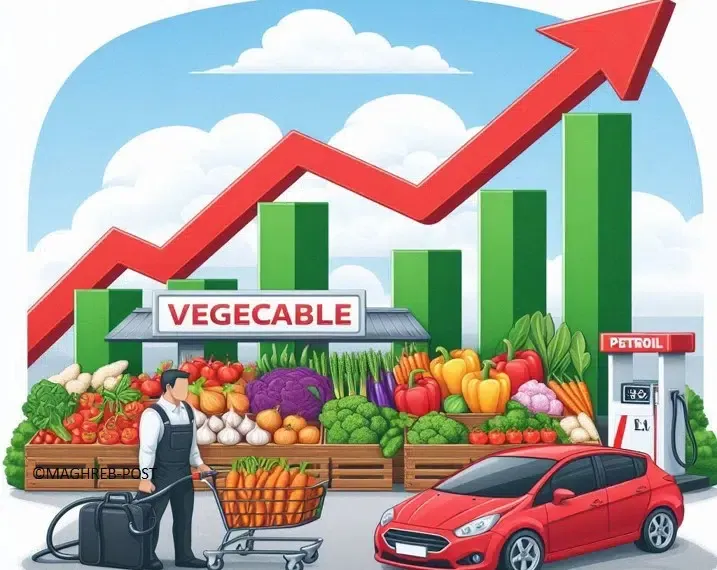

In March 2026, the Moroccan economy demonstrated a controlled inflationary trend, as reported by the national statistics authority, Haut-Commissariat au Plan (HCP). The Consumer Price Index (CPI) experienced a modest year-on-year increase of only 0.9%. This incremental rise can be attributed to a slight increase in food prices, which rose by 0.6%, alongside a 1.1% uptick in the non-food sector. Notably, core inflation, which excludes volatile items, actually decreased by 0.6% compared to the previous year, indicating a stable underlying price trend.
When compared to February 2026, however, the CPI rose by 1.2%. This short-term development was primarily driven by food prices, which surged by 1.9%. According to the HCP report, vegetables recorded the most significant increase, soaring by 9.7%, followed by fruits at 2.6% and meat at 2.4%. Conversely, there was a reprieve in the prices of cooking oils and fats, which decreased by 2.4%.
A critical factor in the non-food sector was the substantial spike in fuel prices, which jumped by 10.7% within a month. This development varied regionally: cities such as Guelmim and Al-Hoceima reported inflation rates of 2.7%, while metropolitan areas like Casablanca and Oujda experienced significantly lower inflation rates at 1.0%. These figures illustrate the heterogeneous development of purchasing power across the Kingdom.
As reported by maghreb-post.de.