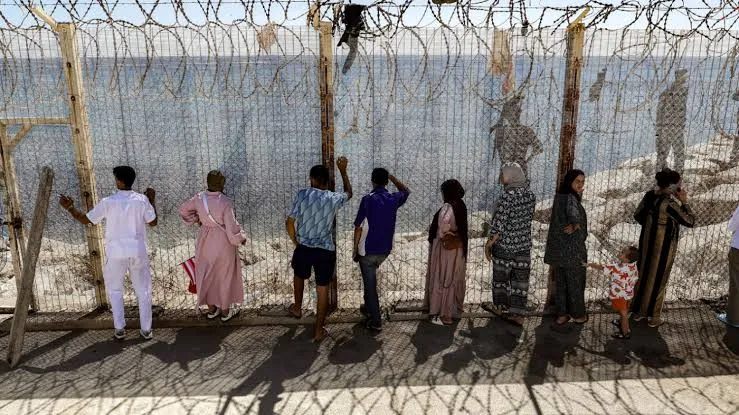

Desperate Searches Along the Moroccan Border
In the border town of Fnideq, Morocco, a heart-wrenching scene unfolds as families gather in hopes of catching a glimpse of their missing loved ones, who embarked on perilous journeys to the Spanish territory of Ceuta. Each returning migrant is greeted with anxious questions from mothers, fathers, brothers, sisters, and friends, all yearning to know: "Have you seen my son? My daughter? My brother?" The emotional toll on these families is palpable, as they cling to hope amidst uncertainty.
Recent reports indicate that of the approximately 72,000 migrants who crossed into Ceuta in a recent surge, nearly all have returned to Morocco, leaving behind a trail of heartache for those still searching. While some families rejoiced at the return of their loved ones, others faced the harsh reality of failed migration attempts, with many still awaiting news. The desperation is compounded by the tragic loss of over 80 lives during this crisis, as individuals risked everything in search of better opportunities.
Families Hold Up Photos, Searching for Answers
As the first migrants trickle back into Morocco, families display printed photographs of their missing relatives, hoping for a miracle. An Associated Press reporter witnessed the emotional scenes as families stopped returnees, desperately seeking any information that could lead to their loved ones. Migrants, many of whom had lost their phones during the treacherous journey, borrowed devices from strangers to reassure anxious relatives back home.
One mother, Ibtissam Chari, shared her agony as she recounted her search for her son Rayan, who crossed into Ceuta with friends after rumors of border openings spread. "He called me when he arrived, and since then I haven’t heard anything from him," she lamented. Another woman, who spoke anonymously to protect her children, stood vigil at the border, grieving for her 12-year-old son who had crossed with his older brother, only to have the older sibling return alone.
The plight of minors remains particularly troubling, with an estimated 1,000 unaccompanied children still thought to be in Ceuta. Spanish authorities lack the legal authority to expel these minors, leaving their fates uncertain. Meanwhile, families are leveraging social media platforms, such as Facebook, to circulate photos of missing individuals in hopes of gathering information. One user, Hiba Nakaax, poignantly posted, "If anyone has seen this girl in Ceuta or Castillejos, please let us know. Her family is going crazy." Such initiatives illustrate the lengths to which families will go in their quest for information and closure.
Migration has long been a part of many Moroccan youths' aspirations, driven by high poverty and youth unemployment rates. For them, Europe symbolizes hope for work and a brighter future. The frustrations surrounding economic inequality in Morocco were glaringly evident during last year’s youth-led protests, which called for better public services and opportunities.
As families continue to grapple with the uncertainty surrounding their missing loved ones, the personal stories of those who returned shed light on the harsh realities of migration. Othmane El Merzoug, a 26-year-old who returned barefoot and hungry, expressed his desperation to communicate with his family. He borrowed a reporter's phone to call his father, who promised to help him return home. Similarly, a traumatized 17-year-old named Mohamed Chakor reached out to his father, who was seeking alternative routes for his son to reach Europe.
As reported by pressreader.com.