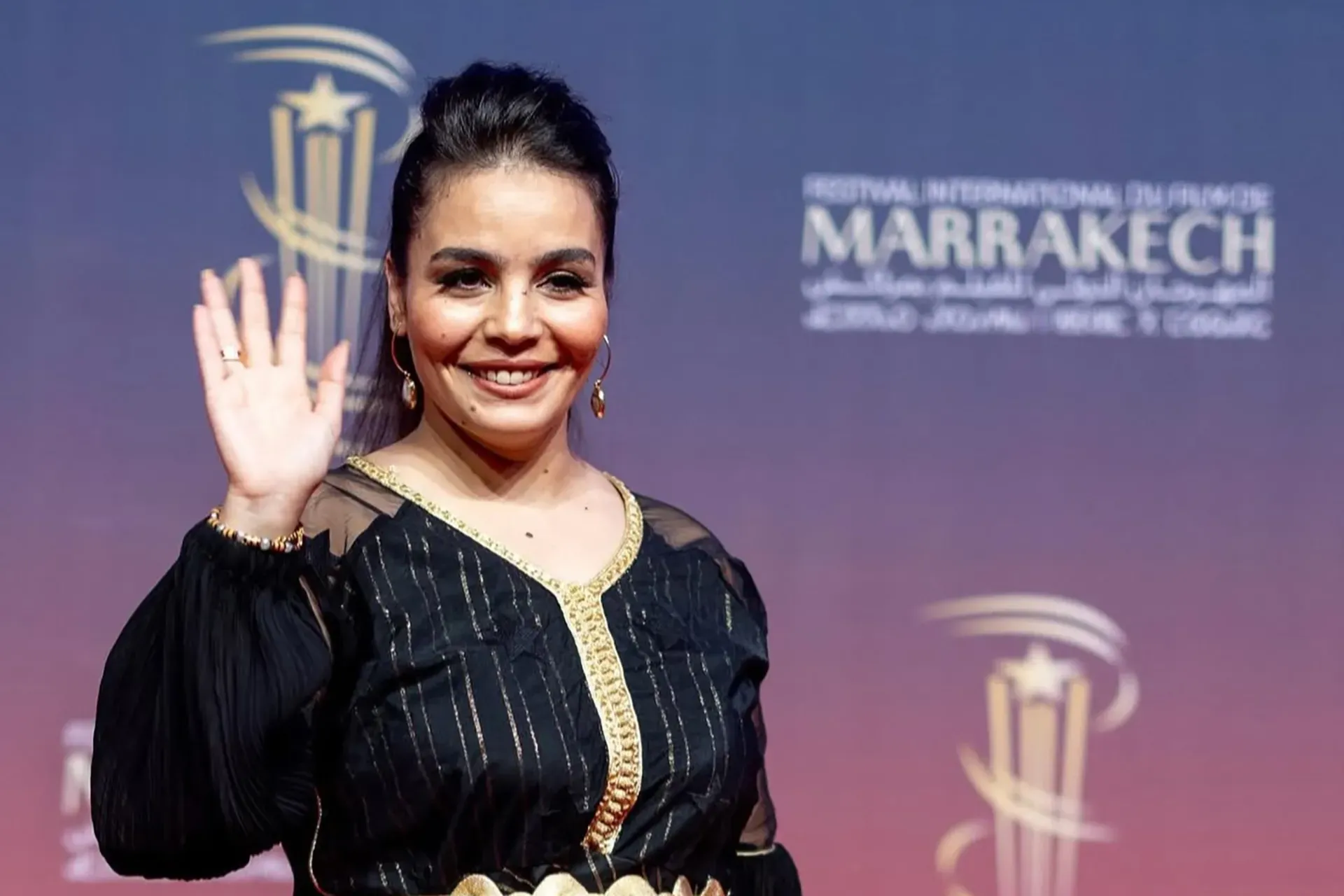

The Hubert Bals Fund (HBF) in the Netherlands has announced the selection of Moroccan director Asmaa El Madiar's project as one of the winning entries for the "HBF+Europe" funding for 2026. Her film, titled "Don’t Let The Sun Go Up On Me," is set within a collaborative production framework involving Morocco, France, Norway, Denmark, and Chile, with the French company Haut et Court Doc at the helm of production. This initiative highlights the fund's commitment to supporting diverse cinematic voices from around the globe.
In addition to El Madiar's project, the fund has chosen seven other cinematic projects from Africa, Asia, Latin America, and Eastern Europe to receive production grants. Each project will receive a grant of 60,000 euros (approximately 65,000 dollars), specifically aimed at facilitating co-productions between European production companies and directors from outside the European Union. This year’s focus is on projects that intertwine personal experiences with social and environmental contexts, showcasing the involvement of European production companies from France, Norway, and Denmark.
El Madiar's film leads the selected projects, following the story of Maryam, who endeavors to honor her sister Fatima Zahra, afflicted with a genetic condition that prevents her from being exposed to sunlight. The narrative unfolds as Maryam seeks to create a care community and embarks on a journey to the Arctic, where sunlight is scarce for prolonged periods. This poignant exploration of familial bonds and environmental challenges sets the stage for significant storytelling.
Other notable projects include Indonesian director Camila Andini's new film, which continues her cinematic journey blending philosophical and social dimensions, and Kosovo’s Kaltrina Krasniqi’s film "Bleach," which delves into the life of a cleaning woman in an advertising agency as she strives to build social connections beyond her economic class. From the Philippines, director Don Joseph Rafael Iblaqan presents "Hum," which follows a young horse rider with the unique ability to mimic animal sounds on a mission to track down an "eco-terrorist." Ethiopian director Biza Haylo Lima brings forth "The Last Tears Of The Deceased," a narrative about a rural priest confronting his past and beliefs. Lastly, Brazilian director Maya da Rin introduces "Nightsong," which portrays the relationship between a child and an Indigenous woman amid the emergence of a pesticide-resistant plant.
The jury emphasized that the selected projects are characterized by a clear visual vision and narratives that transcend geographical boundaries, showcasing prominent female directors like Asmaa El Madiar, Camila Andini, and Maya da Rin. This selection reflects a growing trend toward supporting cinema from the Global South and enhancing its presence in co-productions with European companies, thereby expanding access to financing and distribution networks for these projects.
Asmaa El Madiar stands out as one of the rising cinematic voices in Morocco and North Africa. She gained international recognition with her feature documentary "The Mother of All Lies," which screened in the "Un Certain Regard" section at the 2023 Cannes Film Festival, winning the Best Director award in that category and receiving several international accolades, including a nomination to represent Morocco in the race for the Academy Award for Best International Feature Film.
"The Mother of All Lies" intricately weaves personal memory with collective history, re-examining the events of the "Bread Uprising" in Casablanca in 1981 through an innovative visual approach that employs models, archival materials, and familial testimonies to unveil the silence surrounding the past. Critics have hailed her work as a prime example of the renewal of Arab documentary filmmaking in terms of language and narrative style. El Madiar has also directed numerous documentaries and short films showcased at international festivals.
Graduating from the Higher Institute of Audiovisual Arts and Cinema in Rabat, El Madiar has developed her unique style that blends autobiography with visual investigation, focusing on dismantling individual and collective memory. She utilizes unconventional narrative tools, such as reconstructing events through models or playing with the boundaries between documentary and fiction, positioning her among a new generation of Arab filmmakers who expand the horizons of this film genre.
The selection of her new project for support from the Hubert Bals Fund signifies a continuation of her ascending international journey and her ability to attract European production partners, amidst a growing interest in cinema emerging from Morocco and the surrounding region. Established in 1988 and named after the founder of the Rotterdam International Film Festival, the Hubert Bals Fund aims to support film projects in countries facing production and financing challenges.
The "HBF+Europe" program encourages European producers to engage as partners in projects from Africa, Asia, Latin America, and the Middle East. In the 2026 cycle, the program stipulates that project budgets should not exceed 1.5 million euros (approximately 1.6 million dollars), requiring 50% of funding to be secured upon application, which closed on December 8, 2025, with results announced in March 2026.
The fund's role extends beyond financing; it also connects projects with European production and distribution networks, establishing it as one of the prominent international platforms for integrating cinema from the Global South into the global market. The 82nd Venice International Film Festival is set to take place from August 27 to September 6, 2025, amidst a global cinematic landscape grappling with ethical questions and political fluctuations. The festival will witness a strong Arab presence led by filmmaker Kawthar Ben Hania, reflecting a commitment to high-quality films without quotas.
In the past year, Al Jazeera Documentary has garnered numerous awards, affirming its influential presence in the global documentary production arena. Asmaa El Madiar's film "The Others' Sun" won the Atlas Award for post-production, highlighting the fruits of her collaboration with Al Jazeera Documentary. The film narrates the story of "The Moon Girl" through a family archive that depicts her poignant resilience.
As reported by aljazeera.net.