
Moroccan Graduates Stuck in Degree Recognition Limbo
Since 2024, Moroccan university graduates from the Turkish Republic of Northern Cyprus have found themselves in a precarious situation due to a halt in the recognition of their degrees. This freeze has severely hindered their ability to enter the job market, leading to a series of protests demanding action and clarity from the authorities. The growing unrest has not only affected graduates but has also cast a shadow of uncertainty over current students who had hoped for a smooth transition into their professional lives.
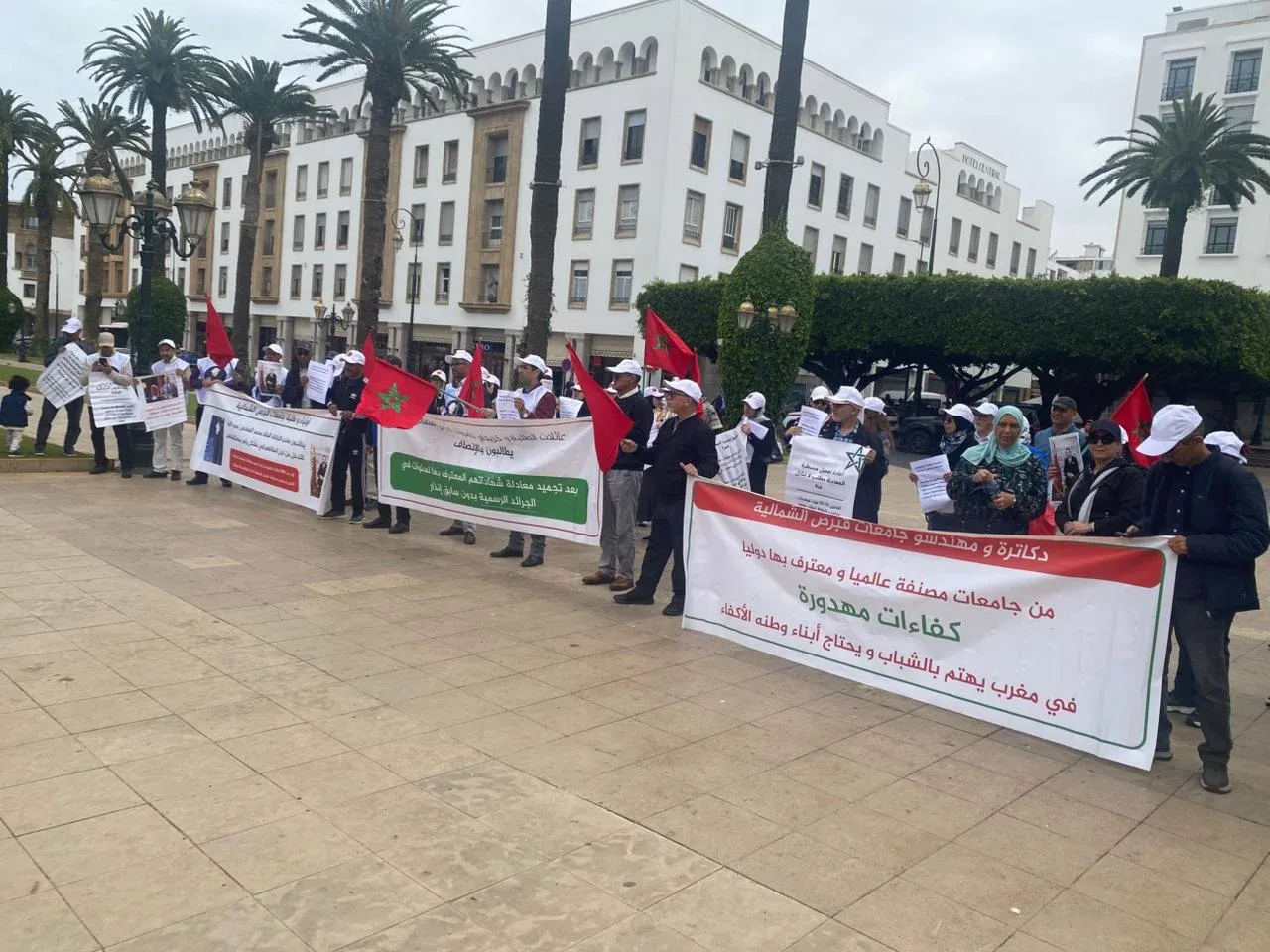
On April 22, a significant protest took place in front of Parliament in Rabat, organized by the Coordination Committee of Parents and Students in Northern Cyprus. This demonstration marked the fifth such event since December 2025 and aimed to represent the interests of approximately 3,500 students and graduates. Asmae, a member of the coordination and mother of a dentistry student, emphasized that students had received official assurances regarding the recognition of their degrees before leaving for their studies. According to her, inquiries made to the Moroccan Ministry of Higher Education confirmed that degrees would be recognized, a promise that has since been broken.
The recognition process, which was previously operational and even supported by an official announcement, suddenly came to a halt in May 2024. Asmae recounted how students initially submitted their applications for degree equivalency only to be met with silence. Subsequently, no new applications were accepted, effectively freezing the entire process. In search of answers, families approached the authorities, only to learn that the freeze was a result of a directive from the Ministry of Foreign Affairs, which stated that Morocco does not recognize Northern Cyprus as a sovereign state, and by extension, neither its universities nor their degrees.
Uncertainty for Current Students and Potential Solutions
In light of this ongoing uncertainty, current Moroccan students in Northern Cyprus are grappling with their futures. Nassima, a master's student in international banking, shared her concerns about the lack of clarity regarding her degree's recognition. She noted that when she arrived, there seemed to be a clear path for degree equivalency based on the experiences of her predecessors. The stress of her situation is palpable, as she expressed hope for a resolution before her graduation this summer, fearing she might have to explore other options in nations where her degree would be acknowledged.
Some students have sought alternative routes by continuing their education in Turkey, where degrees from Northern Cyprus are acknowledged. Othmane, an architecture student, transitioned to Istanbul after graduating from Northern Cyprus in 2025, aiming to secure a master's degree from a university with recognized credentials in Morocco. However, he too is left in a state of uncertainty regarding his qualifications from both Northern Cyprus and Turkey, hoping that his Turkish degree will facilitate his situation.
Despite the prevailing challenges, Moroccan students continue to opt for Northern Cyprus for their studies. Haitam Nkita, a Moroccan residing in Turkey and an ambassador for the Moroccan Youth Council for Diplomatic Cooperation, cautioned potential students about the lack of information regarding the recognition of their degrees. He urged prospective students to conduct thorough research and consider the implications of their choices carefully. Nkita is actively working to provide support for affected students and calls for immediate action from the authorities to conduct a census of affected graduates and devise initial solutions for those already impacted. He emphasized the necessity for clear communication to prevent future cases of unrecognized degrees.
As reported by en.yabiladi.com.