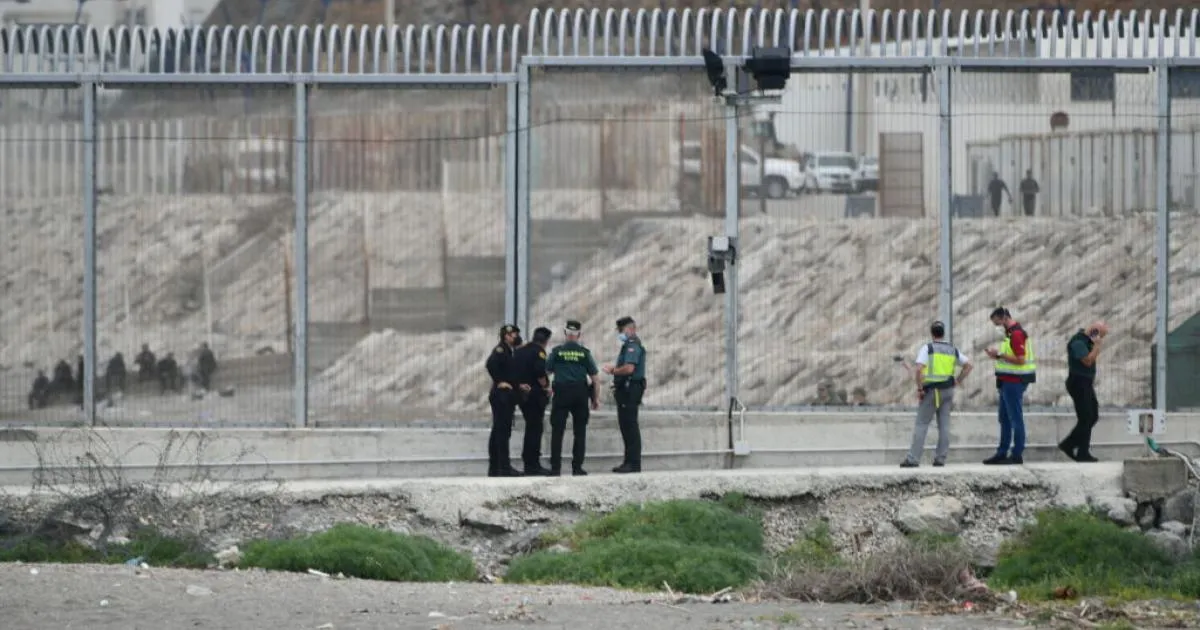

Moroccan Media Voices Strong Criticism of Spanish Police Report
On Friday, Moroccan media outlets expressed their staunch disapproval of a report issued by the Spanish police, which accused Moroccan forces of a "complete lack of response" to the influx of tens of thousands of migrants into the city of Ceuta on July 30 and 31. In contrast, Spanish Prime Minister Pedro Sánchez stated that there is no evidence suggesting that Moroccan authorities planned or orchestrated the crisis. This incident saw over 70,000 migrants crossing from Morocco into Ceuta, an area under Spanish administration, resulting in numerous casualties, predominantly from drowning as many attempted to swim around marine barriers.
The Spanish police report, released last Wednesday, highlighted a "complete negligence" in the response of Moroccan police, asserting that this inaction facilitated the influx of migrants. The report referenced satellite images, publicly available videos, and testimonies from migrants, claiming that the number of police officers near the border crossing was significantly lower than usual and that they made no serious attempts to control the crowds.
Sánchez Dismisses Claims of Moroccan Planning
During a parliamentary session addressing the political and social repercussions of the crisis that followed the arrival of approximately 70,000 migrants to Ceuta, Prime Minister Sánchez reiterated that there is no "conclusive evidence" that Morocco planned or engineered the migrant influx. He noted that no diplomatic entity, the European Commission, or any international organization has provided tangible proof to the Spanish government regarding Morocco's involvement in the incident. Sánchez indicated that over 90% of the migrants who entered Ceuta during the crisis were returned to Morocco, but the repatriation of around 5,000 individuals has taken longer than Spanish authorities desired.
Moreover, Sánchez emphasized that Ceuta and Melilla are "Spanish cities and will remain so forever," criticizing Moroccan Justice Minister Abdellatif Ouahbi and Minister of Islamic Affairs Ahmed Toufiq for asserting a "historical and geographical right of Morocco" to these enclaves. He also addressed the European Commission, expressing disappointment over its perceived lack of solidarity with Spain during the migration crisis and urged for the approval of financial support requested by his country for Ceuta.
In a related context, Sánchez has previously accused Israel, Russia, and far-right groups of being behind disinformation campaigns related to the migrant influx. He suggested in a radio interview on August 31 that these entities might be involved in the current crisis.
Moroccan Media Deems Spanish Report Insufficient
While there has been no official Moroccan response to the Spanish police report, several Moroccan media outlets have criticized its content vehemently. The website "Hespress" argued that the report is based on a "fragile narrative that lacks physical evidence and is riddled with glaring contradictions," aiming to transform Morocco from a "reliable strategic partner" in border management into a "scapegoat" for political and judicial conflicts in Madrid. Similarly, the site "L'Opinion" described the report as a "hastily prepared document," pointing out inaccuracies in certain facts, such as mistakenly referencing June 30 instead of July 30.
Additionally, the report notably refrains from using the terms "state" or "Moroccan government" when attributing responsibilities. The weekly publication "Tel Quel" highlighted that, contrary to widespread media claims, the report does not hold Morocco responsible for "planning and execution" and fails to name any Moroccan officials. Meanwhile, "Média 24" suggested that the report should be viewed from a Moroccan perspective, criticizing the use of the term "negligence" and noting that it relied on satellite images that depict only an instantaneous moment.
On August 7, the Moroccan National Human Rights Council reported that the number of fatalities from the crossing attempts to Ceuta had risen to 14, whereas Spanish data indicated 80 deaths. Estimates of the number of migrants attempting the crossing vary significantly; Moroccan authorities estimated around 40,000, while Spanish sources reported numbers exceeding 70,000. In early August, a high-ranking Moroccan official, who wished to remain anonymous, asserted that there had been no shortfall in Moroccan security measures.
Ceuta and Melilla, along with the Chafarinas Islands and various rocky islets in the Mediterranean, are under Spanish administration, while Rabat considers these areas as "occupied Moroccan territories." The borders surrounding Ceuta have seen repeated attempts by migrants from various countries to cross illegally into Europe in search of better lives amidst economic crises and armed conflicts in their home nations.
As reported by alaraby.com.