
Desperate Struggles of Moroccan Migrants in Ceuta
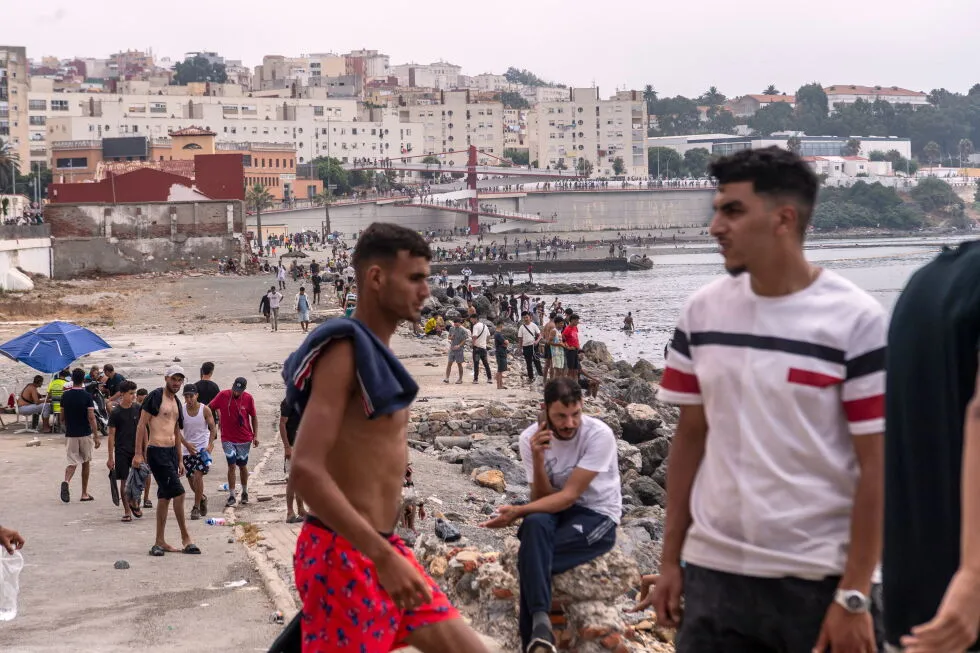
In a striking surge of migration, many Moroccans have attempted to cross into the Spanish enclave of Ceuta, driven by the hope of a better life in Europe. Among them, Abdulah Buji, a 21-year-old aspiring teacher, was inspired by the recent news of a border breach. He swiftly hopped onto his motorbike and raced towards Ceuta, joining the throngs of individuals eager to swim across the perilous waters that separate Morocco from this tiny Spanish territory. Buji articulated a sentiment shared by many of his compatriots, expressing how Spain symbolizes opportunity, a stark contrast to the limited prospects available in Morocco. "Spain gives you the chance to make your future, not like Morocco," he stated, conveying a sense of longing for a chance to prove himself.
However, the initial thrill of reaching Spanish soil for Buji was soon overshadowed by the sobering reality that the journey toward his ultimate goal of reaching mainland Europe was fraught with challenges. Upon arrival, he discovered that the Spanish authorities were not welcoming; instead, they ordered the migrants to return or face the threat of expulsion. Buji recounted a harrowing experience, nearly becoming one of the more than 50 individuals who tragically lost their lives attempting to reach Ceuta. Although he successfully crossed, he faced unforeseen setbacks, losing his belongings and money in the process. Confronted with the likelihood of legal troubles and detention, Buji made the difficult decision to return home.
Buji's story is emblematic of a larger phenomenon, as approximately 60,000 individuals crossed into Ceuta during a brief window, with around 45,000 returning to Morocco within mere hours. This influx represented a staggering 70% of Ceuta's resident population, leading local authorities to call for increased police and military presence to restore order amidst the chaos. Residents of Ceuta recalled a previous migration crisis in 2021, which, although smaller in scale, similarly strained resources and created a humanitarian challenge.
Social Media's Role in the Migration Surge
The recent wave of migration has raised questions about its underlying triggers. Social media played a significant role in encouraging Moroccans to attempt the crossing, with posts circulating that provided insights on how to navigate the border and increase their chances of being granted entry. Myriam Cherti, a senior researcher at the University of Oxford, noted that many of the migrants she has spoken with have experienced a relentless cycle of failed attempts to cross. Driven by desperation, they are motivated not only by personal aspirations but also by a sense of obligation to support their families back home. "They’re doing it out of despair...and that’s possible if they make it to Spain and not necessarily possible if they stay in Morocco," Cherti remarked.
Among those who successfully crossed into Ceuta was Ahmed Karim, 33, who lamented the lack of employment opportunities for Moroccans and the difficulties in traveling abroad. He expressed a shared desire among many of his peers to seek a better life in Europe or America, but highlighted the barriers that prevent them from realizing this dream. Meanwhile, others, like Ikrra Khai, are not just seeking new beginnings but are desperately searching for missing loved ones. Khai, a Moroccan woman with a temporary work permit in Spain, was in Ceuta on a heart-wrenching quest to locate her sister’s son. "I don’t know if he is dead or alive," she said, clutching his residency card as a symbol of her hope amidst uncertainty.
As reported by apnews.com.