
High-Level Meeting in Rabat
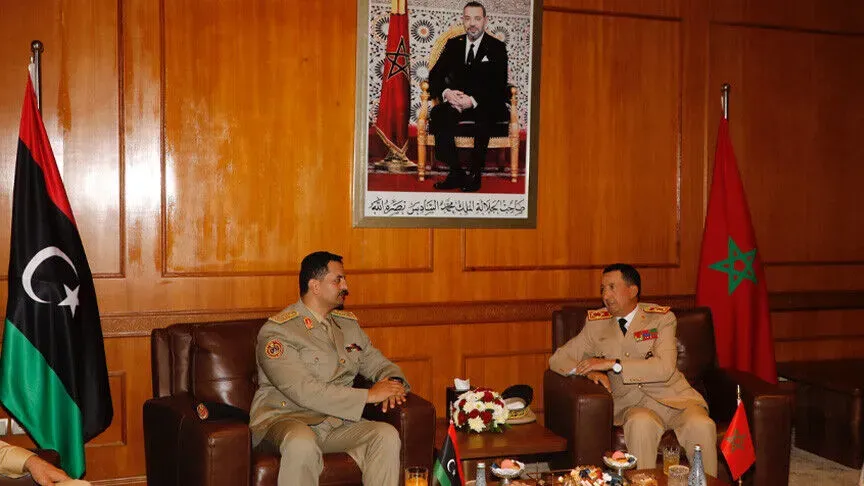
On October 13, 2026, Major General Mohamed Braidy, the Inspector General of the Royal Armed Forces of Morocco, welcomed Khalifa Haftar, the Commander of the Libyan National Army, at the General Headquarters of the Moroccan military in Rabat. This meeting occurred during Haftar's visit to Morocco, which is scheduled from October 11 to October 15, 2026, accompanied by a military delegation. The Royal Armed Forces of Morocco released a statement highlighting that this reception was conducted under the directives of King Mohammed VI, the Supreme Commander and Chief of Staff of the Royal Armed Forces, although it did not disclose further details regarding the discussions held during the meeting.
Historical Context and Ongoing Efforts for Stability
The significance of this meeting is underscored by Morocco's previous role as a facilitator for dialogue among Libyan factions. Notably, Morocco hosted several rounds of discussions that culminated in January 2021 with an agreement on the mechanism for appointing sovereign positions within the Libyan government. Additionally, the country has been a venue for meetings between the High Council of State, which serves as an advisory body, and the Libyan House of Representatives concerning electoral law, alongside various visits by Libyan officials over the past years. The Libyan military establishment remains divided, with forces loyal to the Government of National Unity in the west, and those led by Khalifa Haftar in the east. Since 2020, military leaders from both factions have been engaged in a dialogue under the auspices of the United Nations Support Mission in Libya, within the framework of the Joint Military Commission "5+5," which includes five military representatives from each side.
Compounding the military divide is the political struggle for power in Libya, which is currently characterized by two rival governments: one led by Abdul Hamid Dbeibah, based in Tripoli, and the other appointed by the House of Representatives in early 2022, headed by Osama Hamad, which operates from Benghazi. For years, the United Nations has been spearheading efforts to conduct elections aimed at concluding the transitional phases and ongoing political and armed conflicts that have plagued Libya since the overthrow of Muammar Gaddafi in 2011.
As reported by aa.com.tr.