
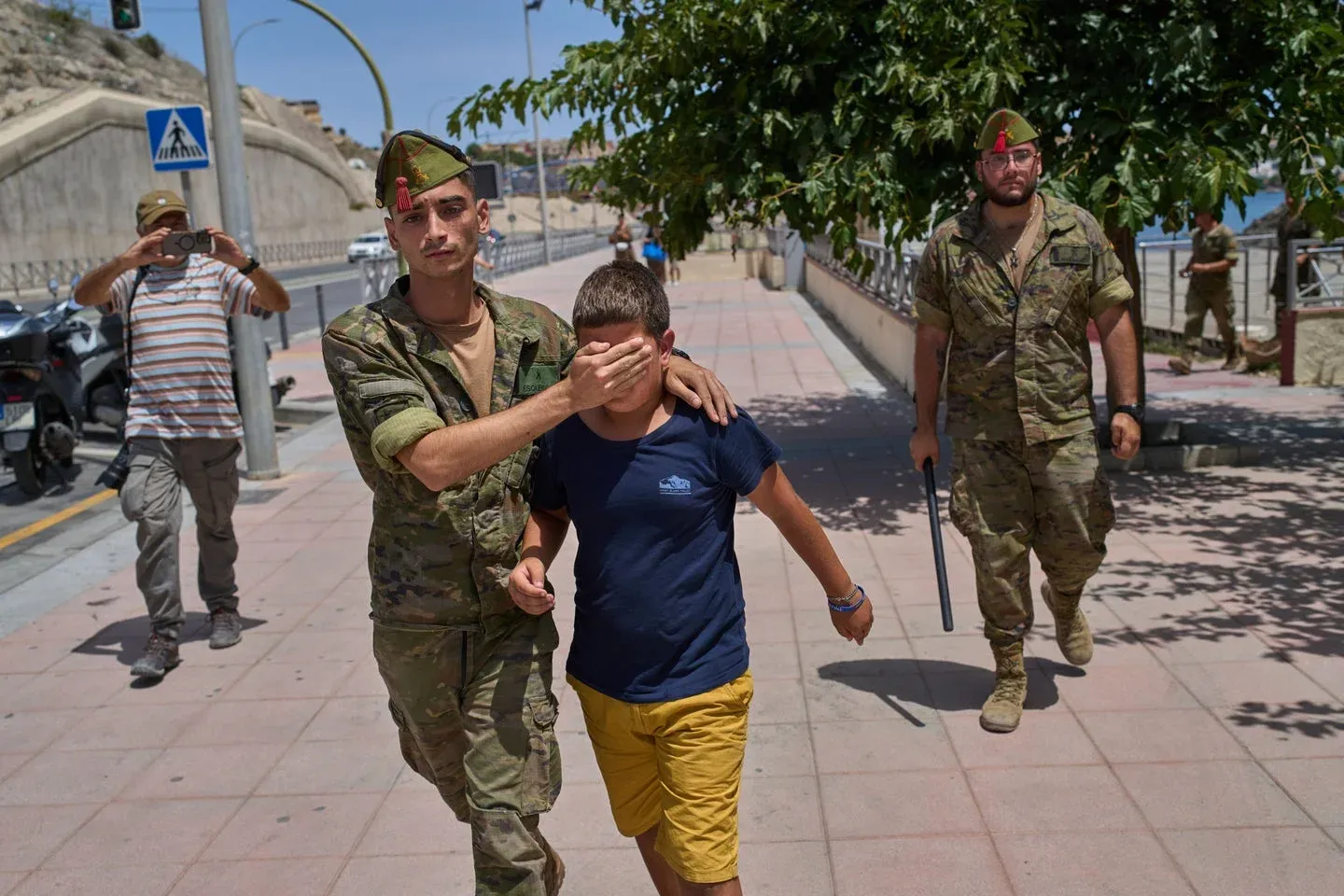

Moroccan Justice Minister Abdellatif Ouahbi has emphasized the urgent need for the repatriation of Moroccan minors currently residing in Spain, particularly those who reached Ceuta during the recent surge of migration. His statement comes in the wake of royal directives mandating relevant Moroccan ministries to expedite the identification and return process for these children. However, the exact count of minors involved remains ambiguous. As of the latest updates on August 12, Spanish authorities have recorded 1,527 unaccompanied minors in Ceuta following the crisis; this number does not necessarily reflect those who arrived on July 30 and 31, as some had already been present in the city prior to these mass crossings.
Existing Framework for Cooperation Between Rabat and Madrid
Despite common misconceptions, Spanish legislation does not prohibit the return of Moroccan minors. Since 2007, an established agreement between Madrid and Rabat has been in place to enhance cooperation in preventing irregular migration of unaccompanied minors, ensuring their protection, and facilitating their "agreed return." This agreement outlines collaborative efforts to trace the minors' families, allowing for their return to relatives or placement in appropriate Moroccan care services, provided that all necessary conditions are fulfilled.
It is important to note that this agreement does not permit collective or automatic returns. Spanish law mandates a careful assessment of each case to ascertain whether returning a child serves their best interests. Authorities are required to gather detailed information regarding the child's family background, consult with Moroccan officials, and allow the child an opportunity to voice their perspective. The involvement of the public prosecutor's office is also a necessary component of this process.
This requirement for individualized assessments accounts for the reason minors cannot be treated in the same manner as adults during immediate border pushbacks, as entering Spanish territory irregularly does not strip them of their status as minors entitled to protection under Spanish law.
Significance of the 2021 Precedent
The cautious approach taken by the Spanish authorities is largely influenced by the events of the previous crisis in Ceuta. In August 2021, following another significant influx of migrants, Spanish officials returned several hundred minors to Morocco. However, Spanish courts later deemed these returns unlawful. In a ruling issued in January 2024, the Supreme Court reaffirmed that the 2021 returns violated legal protections, particularly highlighting the lack of thorough individual assessments for each minor's unique circumstances.
This legal precedent presents a considerable hurdle to any collective repatriation efforts. Although Rabat seeks the return of its nationals and Madrid wishes to alleviate the ongoing pressures in Ceuta, Spanish authorities must ensure that every return adheres to the requisite legal standards.
Exploring Alternatives: Relocation Within Spain
As the process for potential returns is evaluated, the Spanish government is concurrently addressing the immediate challenge of overcrowding within Ceuta's reception facilities. Mechanisms have been activated to facilitate the transfer of some unaccompanied minors to other autonomous communities. This strategy does not preclude the simultaneous consideration of their return to Morocco, as both processes can operate independently.
The situation is already contributing to heightened political tensions in Spain. The central government supports the redistribution of minors among different regions as a means to alleviate the pressure on Ceuta, while the People’s Party advocates for prioritizing their return to Morocco. Melilla President Juan José Imbroda has also urged for the implementation of the 2007 agreement with Rabat.
Consequently, the issue appears less about the Spanish government’s refusal to return the minors and more about navigating the complexities imposed by legal requirements. Rabat has expressed its readiness to accept the minors back, but Madrid must carefully assess and organize each return on an individual basis.
The coming weeks will be pivotal in determining whether cooperation between Morocco and Spain can facilitate prompt identification of families and fulfill the conditions necessary for the minors' return. Nevertheless, the precedent set in 2021 underscores the risks associated with any hastily arranged collective operations, which could expose Spanish authorities to renewed legal challenges.
As reported by en.yabiladi.com.
