
In a recent official ceremony commemorating the birth of the Prophet Muhammad, a Moroccan minister questioned Spain's sovereignty over the contentious enclave of Ceuta. Ahmed Toufiq, who serves as the Minister of Habous and Islamic Affairs, made these remarks at the Royal Palace in Rabat during an event attended by King Mohammed VI. His statements come in the wake of heightened tensions between Morocco and Spain, particularly after a tragic incident on July 30, where at least 141 migrants lost their lives attempting to cross into Ceuta.
During his speech, Toufiq lauded various scholars from Ceuta who have shaped the understanding of the Prophet Muhammad throughout history, mentioning significant works like Al-Shifa by Qadi Iyad and Al-Durr al-Manzum by Al-Azafi. He emphasized that the collection of prayers, Dala’il al-Khayrat, symbolizes the Moroccan people's mobilization efforts to reclaim what they term 'occupied cities' along the Atlantic coast, referencing historical resistance against Portuguese and Spanish colonial expansions during the 15th and 16th centuries.
These declarations have provoked a strong reaction from Spanish officials. Spanish Migration Minister Elma Saiz firmly countered Toufiq's assertions, stating unequivocally, "Ceuta and Melilla are Spanish. They are our southern borders, as well as the borders of Europe. There is nothing more to add." This assertion aligns with Spain's longstanding position of rejecting any claims to sovereignty over the two cities, which share the only land borders between the European Union and Africa.
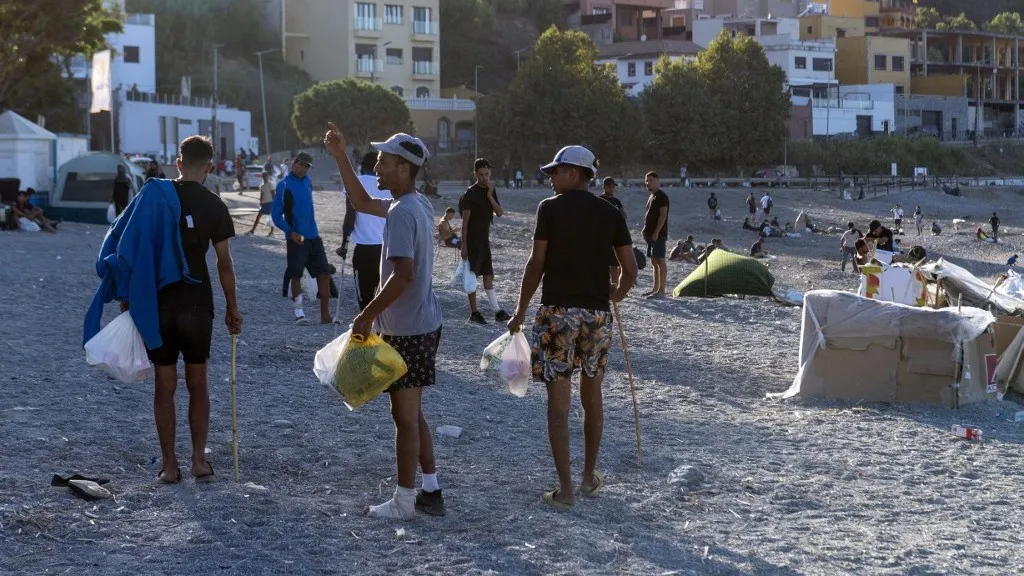
In recent weeks, Morocco has witnessed a surge of migrants attempting to cross into Ceuta, with Spanish officials estimating that over 72,000 individuals, including approximately 7,000 children, made the perilous journey during the July crisis. Many migrants were seen swimming towards the enclave, some equipped with flotation devices. Although most returned to Morocco shortly after crossing, a significant number of individuals, including unaccompanied minors, chose to remain in Ceuta, prompting the Spanish government to initiate an emergency plan to transfer the most vulnerable children to the mainland.
Rabat's refusal to recognize Spanish sovereignty over Ceuta and Melilla has been a longstanding issue, and the recent comments from Moroccan officials only serve to escalate the ongoing diplomatic tensions. As both countries grapple with the implications of migration and sovereignty, the situation remains precarious, with both nations standing firm in their respective positions.
As reported by middleeasteye.net.