On July 30 and 31, over 70,000 migrants made their way to Ceuta, either swimming or walking from Morocco, with more than a hundred casualties reported during this significant influx, according to data from Madrid and Rabat. While most of the migrants were returned to Morocco, thousands remain in Ceuta, where the situation has deteriorated amidst clashes and protests from local residents.
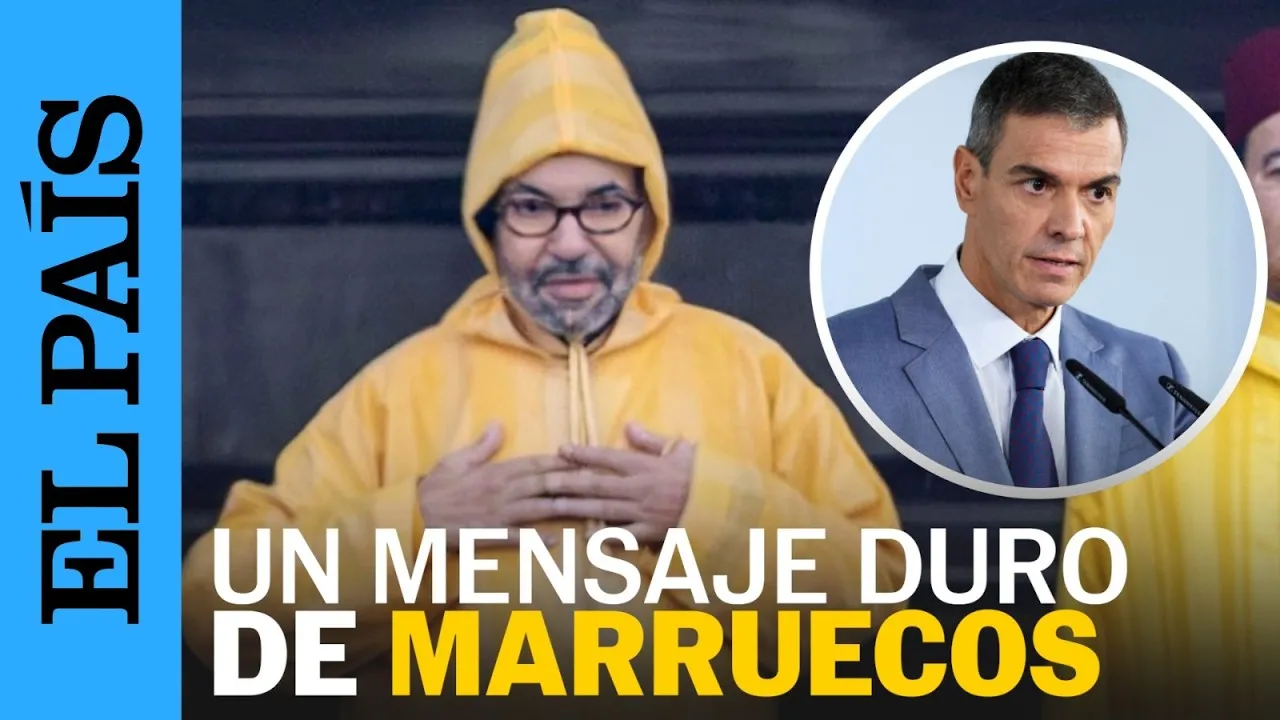
In a speech delivered to parliamentarians during the opening of the legislative session, the Moroccan King stated, "In light of irresponsible statements and the blatant exploitation by certain political and media circles, we affirm that partnership is a sovereign choice and a voluntary commitment that will never be subject to pressure, threats, or blackmail." He emphasized that the partnership with Spain has undergone significant developments across various sectors, including the fight against illegal immigration.
However, he noted that this cooperation currently faces substantial challenges, particularly due to outdated legal provisions and judicial decisions disconnected from reality, which unfortunately hinder the repatriation of unaccompanied minors and individuals posing as refugees, thereby fueling the ambitions of criminal networks. The King, who appeared using a medical crutch upon entering the parliament, announced that Morocco would provide its partners with a document outlining a clear and practical strategic vision aimed at establishing a new direction that bolsters mutual development, economic competitiveness, and regional stability.
Building Constructive Approaches
Fouad Yazough, the Director General of International Political Affairs at the Moroccan Foreign Ministry, explained to AFP that Morocco would propose a model of cooperation to its partners, particularly Spain, that aligns with current realities. He highlighted that this is the first time such an initiative has been made by a Southern country towards Northern countries, describing the King's initiative as a constructive approach.
The migrant crisis in Ceuta has escalated diplomatic tensions among European Union nations, especially between Spain and Italy, and has increased pressure on the Socialist Prime Minister Pedro Sánchez, who is already accused by the right-wing opposition of failing to address immigration issues and relations with Morocco adequately. Amid this controversy, the Spanish royal palace announced in early October that King Felipe VI and Queen Letizia would visit Ceuta and Melilla on October 13 and 14. The last visit by a Spanish monarch to these cities was in 2007 by King Juan Carlos, which had sparked a diplomatic crisis with Morocco, which claims sovereignty over the enclaves.
Simultaneously, this crisis has brought renewed attention to the issues of unemployment and social disparities, particularly affecting the youth demographic.
Youth Issues at the Forefront
In this context, the King, in his speech—the first after the election of a new parliamentary council on September 23—called for placing youth issues at the forefront of public policies and developing a comprehensive vision that ensures equal opportunities encompassing education, vocational training, and economic integration. He asserted that this vision should enhance confidence in their ability to achieve social mobility and trust in their national institutions within the framework of freedom, dignity, and stability.
The elections held in Morocco on September 23 presented a challenge to trust in elected institutions, especially among the youth, with the turnout rate being merely 38%, the lowest in two decades. Conversely, this demographic had previously led daily protests organized by the "Generation Z 212" movement, initiated by anonymous activists online, which lasted for about two weeks, demanding reforms in the health and education sectors and anti-corruption measures, and were accompanied by incidents of violence.
King Mohammed VI also urged the national private sector to be more proactive, innovative, and capable of creating job opportunities. He emphasized that the real challenge for the upcoming phase is on-the-ground action at the local level, addressing the genuine issues of each region. In addition to social disparities, regional inequalities remain one of the foremost challenges facing the Moroccan government in the coming five years, which King Mohammed VI tasked Prime Minister Fatima Zahra Mansouri with addressing following her party's victory in the elections.
As reported by france24.com.