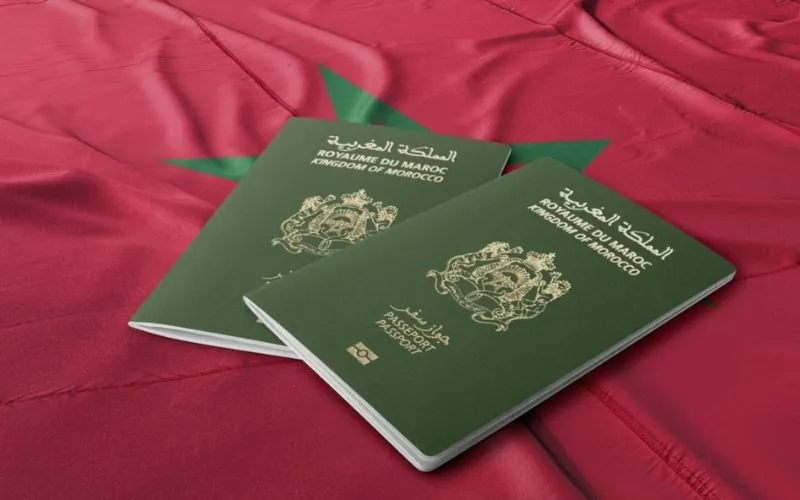

The Moroccan passport has seen a notable advancement in 2026, now ranking 65th globally according to the Henley Passport Index. This improvement enables Moroccan citizens to access approximately 72 international destinations, either without the need for a visa or with the option of obtaining a visa upon arrival. This upward trajectory is a testament to the kingdom's expanding diplomatic relations and the establishment of numerous bilateral agreements aimed at facilitating travel for its citizens.
Historically, the Moroccan passport occupied lower standings in the global rankings, but a steady enhancement has been observed over the years. This positive shift can be attributed to the increasing number of countries that permit entry with simplified visa processes or upon arrival, thereby boosting its ranking on the Henley Passport Index. The index itself utilizes data from the International Air Transport Association (IATA) and serves as a prestigious global benchmark for measuring passport strength based on visa-free access to various destinations.
Analysts suggest that this improvement, albeit modest, signifies a notable advancement in Morocco’s diplomatic influence and an enhanced openness to new global partnerships, particularly within Africa, Asia, and Latin America. This progress positively impacts the mobility of Moroccan citizens, especially students and business professionals, broadening their horizons for travel and opportunities. However, the Moroccan passport still trails behind the leading global rankings, which are primarily held by European and Asian countries, underscoring ongoing challenges in expanding visa exemptions and bolstering the passport's international strength.
Experts emphasize that the strength of a passport is increasingly linked to a variety of factors that include political and economic stability, the quality of international relations, and the trustworthiness of a country’s administrative and security systems. Moroccan passport holders can enjoy access to numerous countries without the necessity for prior visas or through simplified electronic permits, with destinations spanning across several continents.
In Africa, prominent travel options include nations such as Senegal, Tunisia, Mauritania, Côte d’Ivoire, Gabon, Mali, Niger, Benin, Guinea, Madagascar, and Rwanda—each offering varying degrees of travel facilitation based on the length of stay. In Asia, Moroccans can visit countries like Turkey, Indonesia, Malaysia, the Philippines, Thailand, Georgia, and Albania, with different entry stipulations that may include visas upon arrival or electronic permits.
Latin America presents a range of opportunities as well, with countries such as Brazil, Ecuador, Bolivia, Haiti, Dominica, Grenada, and Saint Vincent and the Grenadines, all of which offer diverse travel facilitation options through bilateral agreements. Additionally, several other enticing travel destinations, including the Maldives, Sri Lanka, Nepal, and Laos, also provide the possibility of obtaining visas upon arrival or through simplified electronic applications.
As reported by tanja7.com.